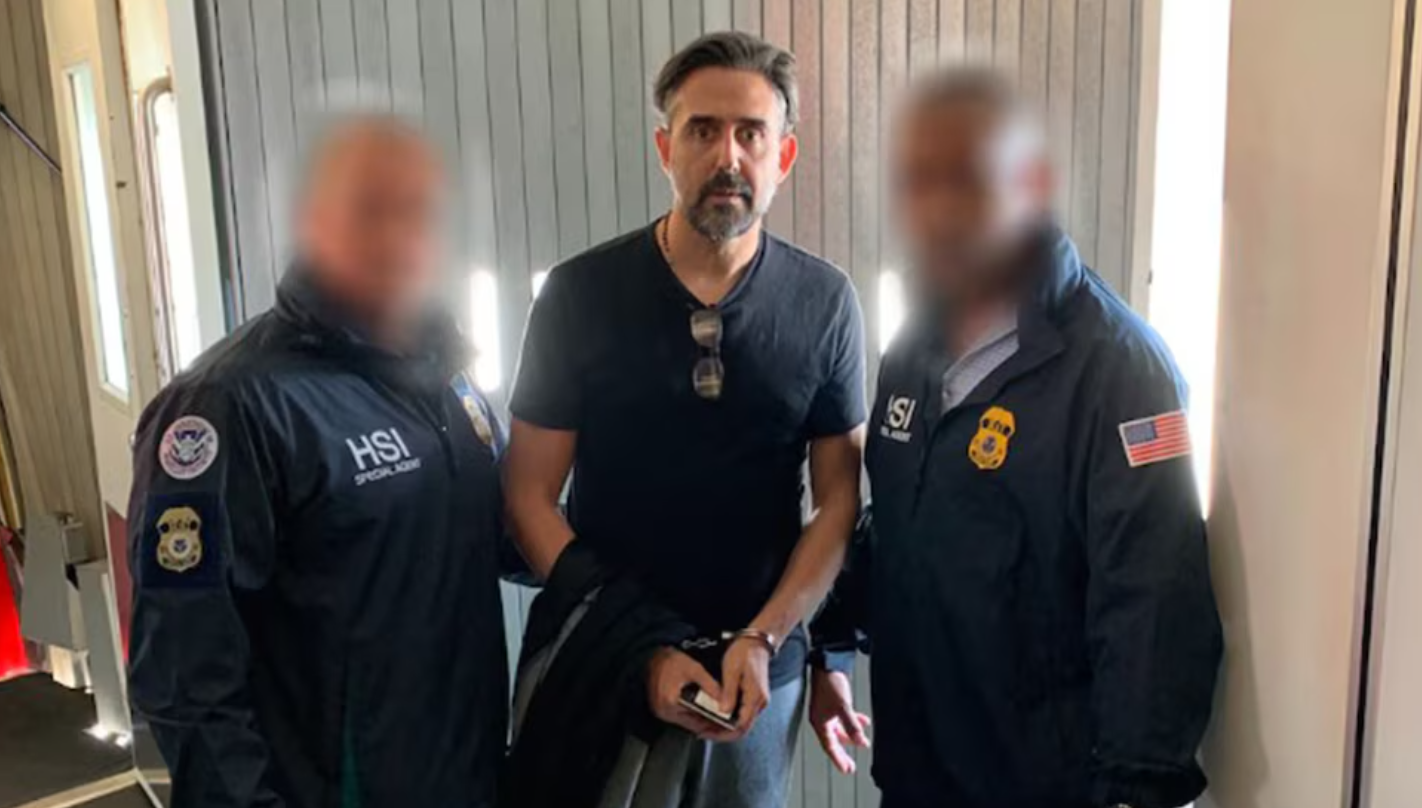
The Daily Journal.- Argentine courts have formally charged Buenos Aires financier Luis Alejandro Vuteff , son-in-law of former Caracas mayor Antonio Ledezma . The measure is part of a complex international investigation into the laundering of funds allegedly derived from bribery involving the state oil company Petróleos de Venezuela S.A. (PDVSA) , according to a report by the news outlet Infobae .
According to judicial documents reviewed by the media outlet, Vuteff was charged in Buenos Aires following an investigation launched in 2019 by Argentina’s Prosecutor’s Office for Economic Crime and Money Laundering (Procelac).
The criminal case examines a network of “corruption and money-laundering events allegedly involving former officials of the Bolivarian Republic of Venezuela and the state company Petróleos de Venezuela S.A.”
Economic Crimes Judge Marcelo Aguinsky decided to worsen the financier’s legal status without ordering pretrial detention, charging him with “laundering criminally derived assets carried out on a habitual basis.”
The judge also ordered the seizure of his assets worth $5.1 million , while partially dismissing charges against two women from his family circle who were involved in his commercial firms.
The trail of the funds
Financial tracing uncovered a series of suspicious transactions in Argentina that included the purchase of bonds, luxury vehicles such as a BMW , foreign exchange transactions totaling $1.3 million , and the movement of an additional $261,000 through bank transfers originating from accounts in Switzerland and the United States .
Among the real estate assets under judicial scrutiny is farmland in the Buenos Aires locality of Pellegrini , purchased in October 2015 for $575,000 —with $75,000 paid in cash and the remaining balance through Investment Deposit Certificates (CEDIN) —as well as two properties in the City of Buenos Aires valued at nearly half a million dollars more .
The Argentine operations are linked to a broader global network. In 2018 , U.S. authorities had already accused Vuteff of conspiring to launder $1.2 billion connected to corruption involving the Chávez-era government. After being extradited from Switzerland in 2022 , the financier reached a plea agreement with the U.S. Department of Justice , receiving a 30-month prison sentence in mid-December 2024 .
At the same time, authorities in Spain linked him to the Swissinvest group—alongside Swiss-Argentine businessman Ralph Steinmann —a firm suspected of channeling 5.5 million euros associated with Nervis Villalobos , former Deputy Minister of Electric Energy under Hugo Chávez .
According to Aguinsky’s ruling, Swissinvest “was allegedly controlled by Luis Fernando Vuteff” and was “presumably used to launder assets in Spain and internationally using funds derived from corruption crimes committed by senior PDVSA executives.”
Simulated consulting services and the court ruling
During his questioning, Luis Alejandro Vuteff rejected the accusations against him, denied the existence of criminal conduct, and argued that the allegations had already been examined in other judicial proceedings.
Despite his defense, Judge Aguinsky upheld the existence of a scheme involving simulated commercial activity intended to reintroduce illicit funds into Argentina’s legal economy through false claims of business operations.
“Under the appearance of consulting services to companies, or expenses related to work such as travel, hotel stays, office costs, administration, and so forth, Vuteff sought to link the sums illegitimately obtained by individuals connected to the Venezuelan state company—as previously referenced—as proceeds from real activity, and thus also simulate that his profits from such work were legitimate and apply them in this nation,” the judge ruled.
The court decision concludes that the defendant lacked any internal commercial justification for the volume of capital moved within Argentina.
“The money obtained and brought into Argentina would have been the consequence of profits generated abroad, since within this country the individual did not receive any type of income,” the judge stated in support of the money laundering charges.
Based on information from Infobae.