By Julio A. López, Editor-in-Chief.
Listen to the editorial audio here: https://clyp.it/zf55rh50
Washington, June 2, 2026 — Donald J. Trump’s opponents have always underestimated him. They did so in 2016, when they insisted he would never reach the White House. They did so during his first term, when many analysts considered it impossible for him to reshape the ideological composition of the United States Supreme Court. They continue to do so today, interpreting each of his decisions as impulsive rather than as components of a long-term political strategy.
Trump comes from a family of builders. In that world, people do not improvise major projects. The construction of a skyscraper begins years before workers lay the first brick. It requires planning, financing, permits, engineering studies, and disciplined execution. Those who understand the real estate sector know that great projects emerge from strategic vision and a carefully designed sequence of moves.
Many critics view Trump’s political career as a succession of isolated events. A broader perspective, however, reveals a consistent pattern: the gradual occupation of institutional centers of power.
First came the Supreme Court.
During his first term, he appointed three justices—Neil Gorsuch, Brett Kavanaugh, and Amy Coney Barrett—thereby securing a conservative majority that will likely shape American political life for decades.
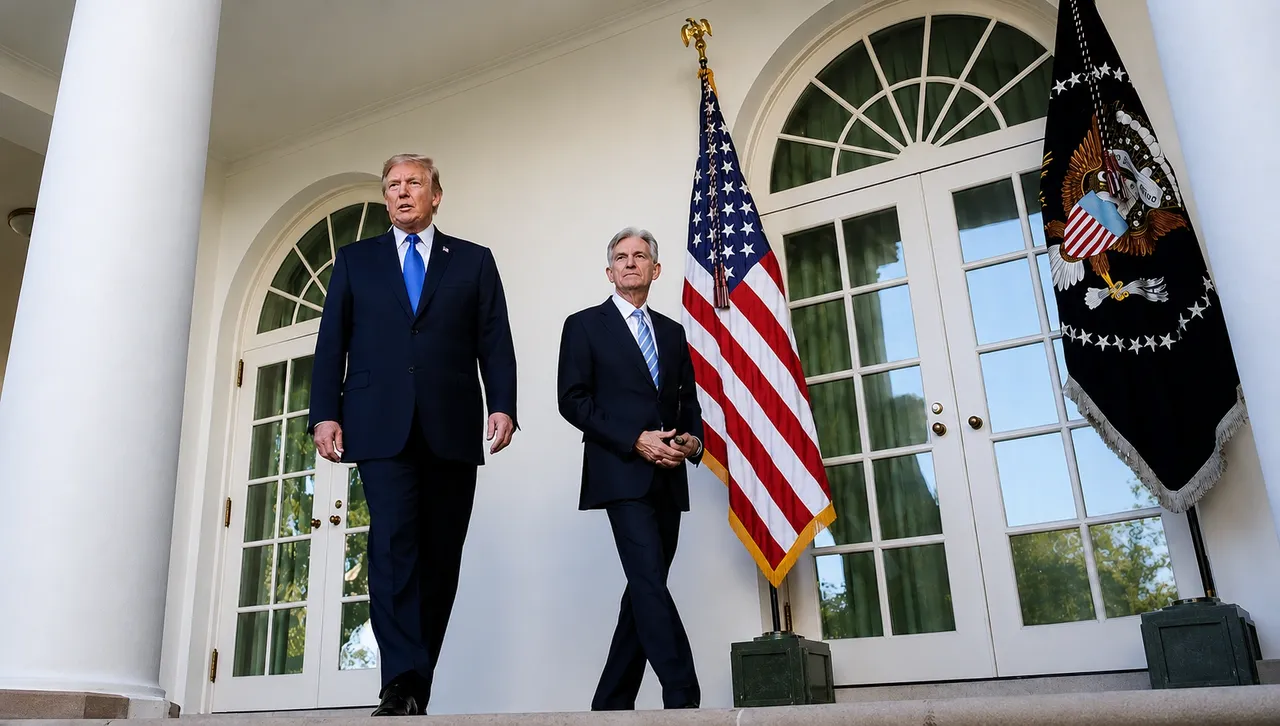
Now he appears to have set his sights on an even more important center of power: the Federal Reserve.
Political control of the White House is one thing.
Influence over the Federal Reserve’s future direction is entirely different.
And that is where history begins to offer interesting parallels.
One of the most studied episodes among economists and historians took place during the 1972 presidential campaign. At the time, President Richard Nixon sought reelection and fully understood that a strong economy represented his greatest electoral asset.
Arthur Burns, a brilliant economist and former Nixon adviser, served as chairman of the Federal Reserve. Numerous historical studies, including works by economists Allan Meltzer and Burton Abrams, argue that Nixon exerted intense political pressure on Burns to pursue an expansionary monetary policy before the election.
Burns significantly reduced interest rates and expanded the money supply.
The results appeared quickly.
Credit became more accessible. The housing market accelerated. Consumer spending increased. Economic activity strengthened. Unemployment declined. Citizens noticed a tangible improvement in their financial situation.
The economy grew by approximately 7 percent in real terms during 1972.
Nixon won reelection in one of the largest electoral victories in American history, carrying 49 of the 50 states.
Voters rarely analyze complex macroeconomic models.
They vote according to how they perceive their economic situation.
If mortgage rates fall, stock markets rise, credit expands, and employment remains strong, the political benefits for the White House could prove enormous.
That is why the battle surrounding the Federal Reserve extends far beyond a technical debate over inflation or interest rates.
It is a struggle for control of the planet’s most powerful economic lever.
Viewed from that perspective, Trump’s strategy acquires a much broader logic.
The White House already controls the Executive Branch.
A conservative majority dominates the Supreme Court.
The Republican Party maintains a strong position in Congress.
If Trump also gains decisive influence over the Federal Reserve’s future direction, he could achieve something very few modern presidents have: simultaneous alignment among the principal political, judicial, and economic centers of power in the United States.
That possibility explains why the current debate generates so much concern among his opponents and so much enthusiasm among his supporters.
The great question is whether history will repeat itself.
Arthur Burns helped Nixon secure a historic reelection victory in 1972.
Today, a growing number of observers in Washington ask whether aggressive interest-rate cuts during the coming months could help Trump consolidate a new political majority in the 2026 midterm elections and complete an unprecedented cycle of economic power concentration.
Because perhaps the real objective no longer centers merely on governing.
Perhaps the objective centers on controlling the fundamental variables that determine how the world’s most important economy functions.