Audio: https://clyp.it/enjqmvrp
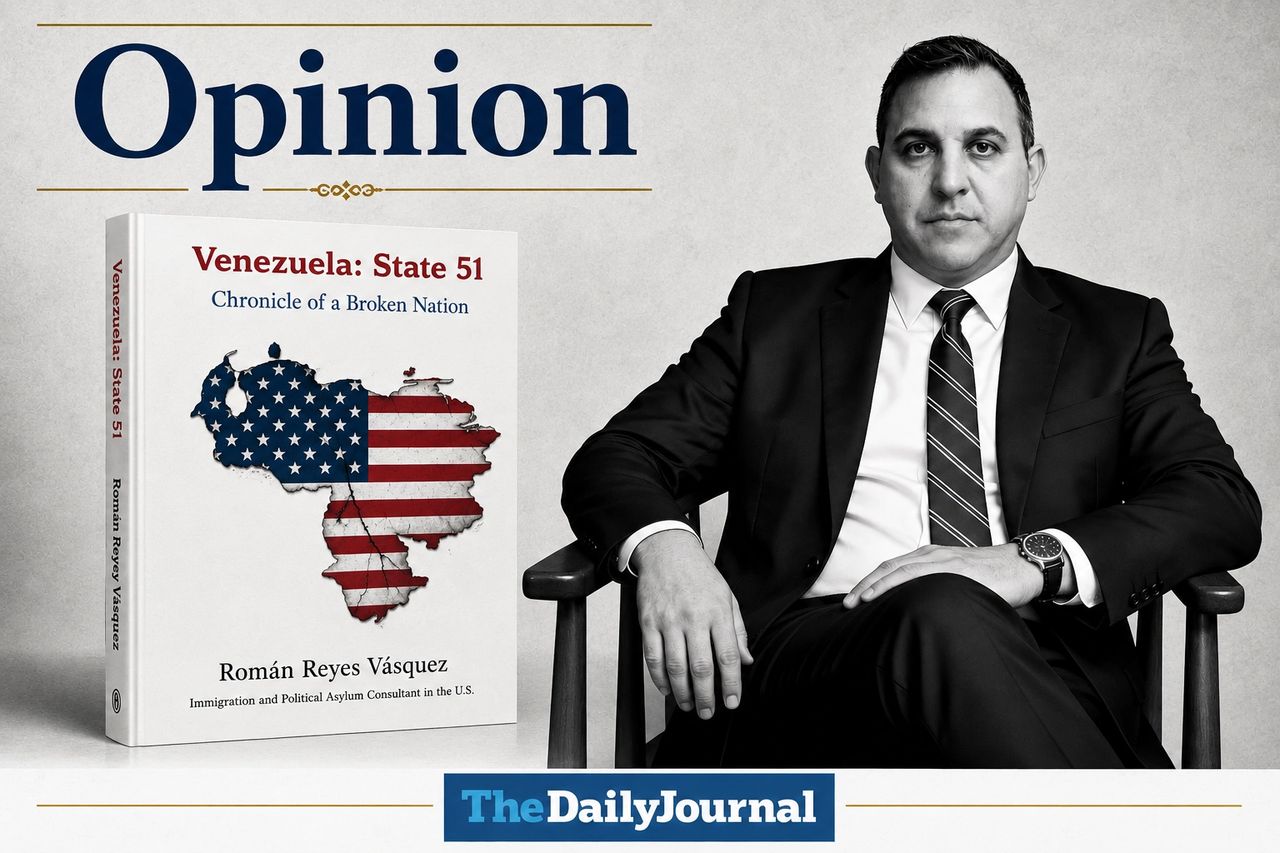
Dr. Román Reyes Vásquez.— For decades, the mere idea that Venezuela could seriously debate any form of political integration with the United States would have triggered a national heresy. A country shaped by the Bolivarian imagination, deeply influenced by oil nationalism and by a historical narrative of Latin American sovereignty, would hardly have tolerated such a public discussion without immediate outrage.
However, Venezuela’s tragedy transformed not only the economy and institutions but also the nation’s collective psychology.
Today, the debate exists. Not necessarily as an immediate legal project or as a formal annexation proposal, but as a political, emotional, and civilizational symptom of an exhausted society. That reality raises the question that deserves analysis: how did part of the Venezuelan population even begin to consider reasonable an idea that, twenty years ago, would have sounded delusional?
The answer does not lie only in geopolitics. The answer lies, above all, in the progressive collapse of the Venezuelan State.
Venezuela holds the largest proven oil reserves on the planet, a privileged strategic location, and enormous natural resources. Yet, within a single generation, the country transformed from one of Latin America’s most prosperous economies into an epicenter of hyperinflation, mass migration, institutional decay, and social fragmentation.
More than nine million Venezuelans left the country. The currency lost almost all real value. Public services collapsed. National infrastructure deteriorated dramatically. Citizens stopped trusting the judicial system, security institutions, legal stability, and, in many cases, even the Republic’s future viability as a functional state.
When a state loses its ability to provide order, security, and predictability, societies begin to explore extreme solutions.
That reality explains why previously marginal concepts started circulating in daily conversations, social networks, academic debates, and political spaces. Not necessarily because most Venezuelans want to renounce their national identity, but because a significant part of the population now associates the United States with everything Venezuela lost: institutional stability, a strong currency, democratic continuity, legal certainty, and economic opportunity.
The discussion also carries an uncomfortable historical dimension for Latin America. During 215 years of republican life, Venezuela experienced barely 43 years of relatively stable democracy. Dictatorships, militarism, caudillismo, coups, and deep governance crises shaped most of the country’s history. That historical reality generates a legitimate concern among many Venezuelans: even if the country partially rebuilds itself, another authoritarian cycle could emerge within a few decades.
While the United States maintained constitutional continuity for almost two and a half centuries, Venezuela repeatedly replaced or rewrote constitutions, often after abrupt power shifts or clashes between incompatible ideological projects. That structural instability gradually eroded public confidence in the Venezuelan political system’s ability to sustain strong, durable institutions.
From that perspective, the debate surrounding “Venezuela as the 51st State” functions less as a literal project and more as a metaphor for national exhaustion.
The idea reflects a society that fears endlessly repeating the same historical cycles: populism, economic collapse, militarization, polarization, and institutional destruction. It reflects a society that watches entire generations emigrate in search of opportunities and stability that disappeared within the country’s borders.
Of course, the legal, constitutional, and geopolitical complexities surrounding any formal integration would become enormous in the short term. Such a transformation would require historic international changes and extraordinary political consensus in both Venezuela and the United States.
But the true core of this debate is not legal. It is moral and psychological. When citizens of a wealthy nation begin to consider placing their future under another flag, they are not saying they stopped loving their country. They say they feel their country has stopped protecting them.
And that may represent the most dramatic sign of how deeply Venezuela fractured during the twenty-first century.