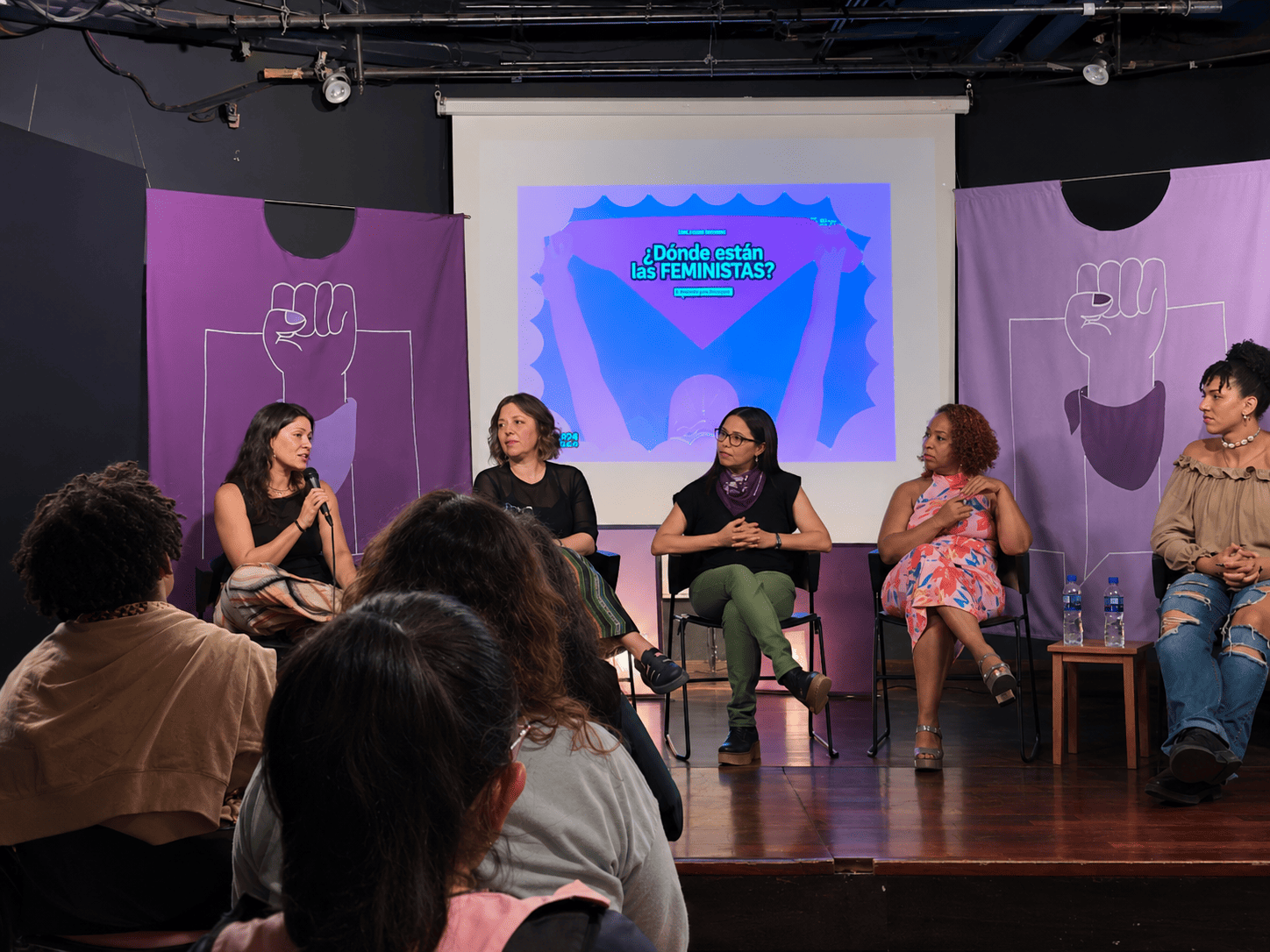
The Daily Journal.- Recently, the self-managed platform Encuentros Feministas celebrated its anniversary edition by addressing a question that often bursts into public opinion whenever a major event shakes the country:
“Where are the feminists?”
To answer it, the organizers invited four prominent voices from local activism, opening a space for reflection on the many ways the movement is currently engaging with Venezuelan society.
This independent initiative was born on June 3, 2023, inspired by the Feminist Cycles of the Red Mérida Feminista in the Andean region, in response to the urgent need to establish a permanent space for learning and action concerning women’s rights.
Throughout these three years of work, the project has become a forum for exchange and contemporary social struggles in the country, recording a balance of 15 gatherings, 72 panelists, and more than 700 attendees.
The project, co-created by journalist Ariadna García, international relations specialist Lety
Tovar, and attorney Victoria Capriles, embraces its plural identity— “Encuentros Feministas” (“Feminist Encounters”)—under the premise that there is no single current of feminism nor any absolute doctrine.
Participating in this special edition were journalist Gabriela Rojas, creator of Venezuela’s first feminist media outlet, Redsonadoras ; anthropologist Aimé Zambrano, director of Utopix’s Femicide Monitor ; ecofeminist Liliana Buitriago; and trans activist Adriana Carvajal.
More Than a Label, a Way of Being in the World
Journalist Gabriela Rojas offered a provocative interpretation of the question that gave the gathering its title. Drawing inspiration from Shakira’s song Where Are the Thieves? , she invited the audience to transform the question into a personal and collective reflection.
“What if it is them? What if it is me?” she asked.
For Rojas, feminism is not limited to an organization, formal activism, or an institutional space of power. Rather, it permeates everyday life and the ways people relate to their surroundings.
“Feminism is not a category; it is not a section. Our lives are crosscut by this reality,” she affirmed.
Drawing on her experience in journalism and university teaching, she defended the need to incorporate a gender perspective into all areas of society, including those often considered unrelated to such discussions.
Making Violence Visible in Order to Combat It
Anthropologist Aimé Zambrano approached the question through the work carried out by Utopix’s Femicide Monitor , an initiative that documents the murders of women in Venezuela based on press reports, given the absence of disaggregated official statistics.
According to Zambrano, one of the principal challenges is combating the revictimization that often accompanies these cases.
“Before asking where the feminists are, what often happens first is that the murdered woman is blamed,” she noted.
For Zambrano, feminism has played a fundamental role in making visible the fact that femicides are neither isolated incidents nor crimes of passion, but rather expressions of structural violence associated with the patriarchal system.
“We began speaking about this as a structural problem and not as isolated cases of a man who went mad or was jealous,” she explained.
The researcher also defended the diversity of currents within the feminist movement.
“There is no single feminism; there are feminisms,” she affirmed, highlighting the need to build alliances around common objectives despite differences.
Feminism, Territory, and the Defense of Life
From an ecofeminist perspective, Liliana Buitriago argued that struggles for women’s rights are deeply connected to the defense of territories and nature.
“Bodies and territories are united; everything that happens to the earth happens to women,” she stated.
The activist emphasized the importance of Latin American community-based and territorial feminisms, which place care and the sustainability of life at the center of political action.
In that sense, she questioned extractivist models that, in the name of economic development, intensify forms of violence against communities and ecosystems.
“Neither territories nor bodies are sacrifice zones,” Buitriago asserted, warning that extractive policies often disproportionately affect women and vulnerable populations.
A Struggle That Also Includes Diversity
For her part, Adriana Carvajal defended the need to fully incorporate the experiences of trans women and other gender identities within feminist struggles.
The activist pointed out that high levels of misinformation about trans realities still persist and denounced the scarcity of research and data concerning this population in Venezuela.
Carvajal stressed the importance of building bridges among different social movements based on shared concerns. “We must connect through what unites us, not through what separates us,” she said.