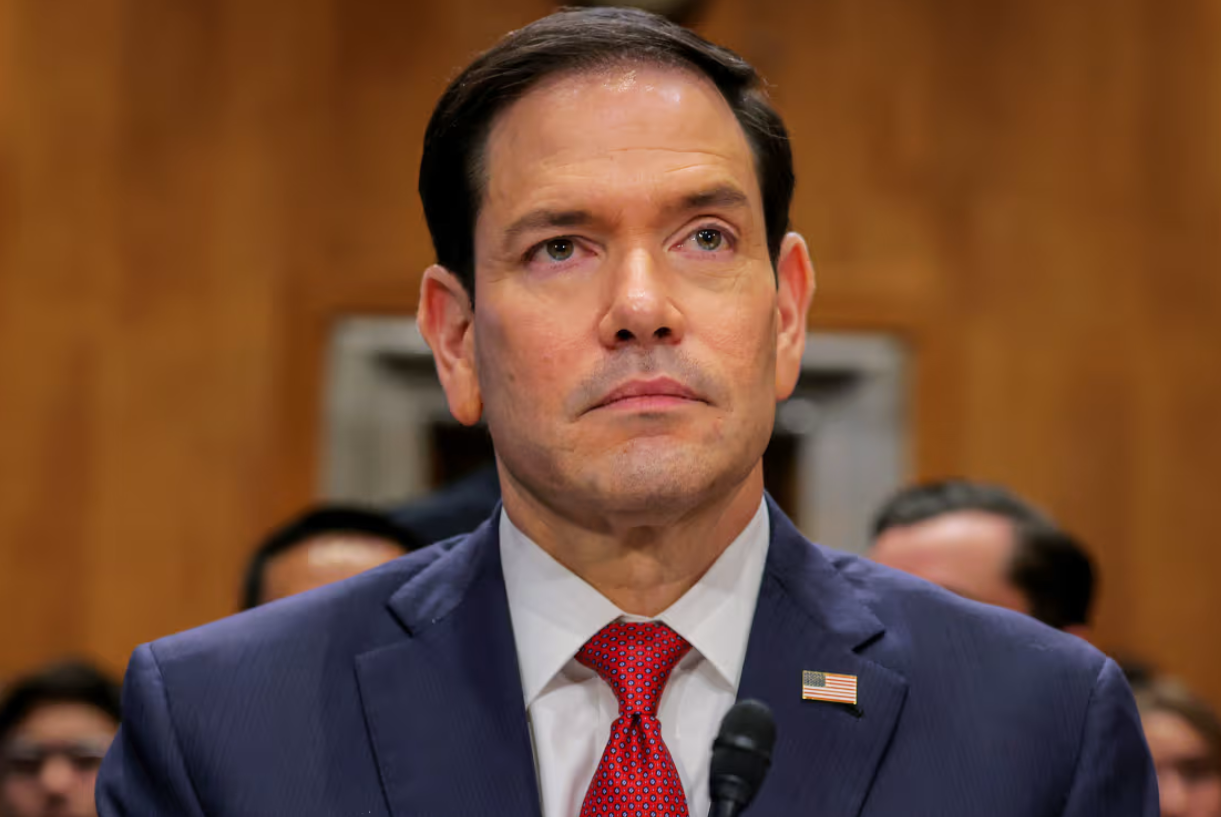
The Daily Journal — U.S. Secretary of State Marco Rubio gave lawmakers on Tuesday an update on Washington’s Venezuela policy during a hearing before the Senate Foreign Relations Committee.
The top U.S. diplomat defended the results achieved five months after a military operation that led to the arrest of Venezuelan leader Nicolás Maduro and his wife Cilia Flores, both now held in a New York prison on charges of “narco-terrorism conspiracy.”
Rubio acknowledged that the administration has not yet reached all final objectives, but he insisted the process remains on the right track.
“Tomorrow marks five months. I know it feels like five years, three years, seven years… but it has only been five months. That is the time we have spent in this process. Venezuela does not stand where we want it to stand for its people, but it follows a trajectory I consider very positive,” Rubio told the Senate committee.
Stabilization as the First Priority
When senators questioned the administration’s initial goals, Rubio outlined the early priorities that shaped the plan, focused on preventing a large-scale humanitarian and security collapse.
“Our priority focused on stabilization. We did not want mass migration. We did not want civil war. We did not want social collapse. That required us to work, as much as possible and with caution, alongside existing institutions—not to preserve them, but to prevent systemic collapse,” Rubio said.
Audited Accounts by KPMG
Rubio also addressed the management of Venezuelan energy revenues under new operating licenses overseen by the U.S. Treasury Department. He said the financial structure now blocks diversion of funds.
“For the first time—certainly since the pre-Chávez era, maybe ever, and certainly since the post-Chávez era—the country’s oil wealth does not face theft. That oil wealth now goes directly to pay public workers and to buy medical equipment, all audited by KPMG. That marks a major step forward,” Rubio said.
Reform Assessment
On human rights and internal political reforms, Rubio listed institutional changes that the White House has verified, including the closure of the main intelligence detention facility in Caracas, known as El Helicoide, and changes within government structures.
“They implemented reforms. They closed the infamous prison at El Helicoide. About 400 political detainees remain, but authorities released many others, including several high-profile figures,” Rubio said.
He also described new officials in government as “clearly better than the people they replaced.”
Confidential Cooperation
Rubio ended his remarks by telling senators that the United States and Venezuela maintain limited confidential cooperation on certain issues.
“There exists a level of cooperation on a couple of matters that I cannot discuss in this setting, but I would gladly discuss them in the appropriate forum,” he said.