The Daily Journal — The Venezuelan government has restructured its legal defense abroad as part of its efforts to prevent the loss of one of its most valuable assets. According to Reuters, Venezuelan authorities hired the international law firm Greenberg Traurig to represent the country in its multibillion-dollar legal dispute with Canadian mining company Crystallex.
The law firm that previously represented Venezuela formally notified a U.S. appeals court of the change in counsel. The case remains a top priority because it leads a list of more than a dozen international creditors seeking to seize state-owned assets as compensation for past expropriations.
According to official correspondence cited by Reuters, Venezuela’s Attorney General, Arianny Seijo, sent a letter to Munger, Tolles & Olson—the outgoing law firm—stating that attorneys Daniel Pulecio and Dominic Draye had assumed leadership of the defense team. As a result, Munger, Tolles & Olson formally requested permission from the U.S. Court of Appeals for the Third Circuit to withdraw from the case.
The Origin: From the Las Cristinas Mine to the risk of losing Citgo
The lengthy legal battle, now in the hands of Greenberg Traurig, dates back to 2011, when the government of then-President Hugo Chávez unilaterally terminated Crystallex’s operating contract for the Las Cristinas gold mine, one of the largest gold deposits in Latin America. Following arbitration before the International Center for Settlement of Investment Disputes (ICSID), the tribunal ruled in Crystallex’s favor in 2016 and ordered Venezuela to pay $1.202 billion plus accrued interest.
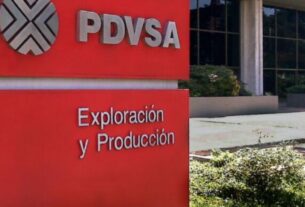
When Venezuela failed to make the payment, Crystallex brought the dispute before the U.S. Federal Court in Delaware in 2017. There, the company achieved a significant legal victory by advancing the “alter ego” theory. Judge Leonard Stark accepted the argument and concluded that the state-owned oil company PDVSA and its U.S.-based refining subsidiary, Citgo Petroleum Corp., operate under the direct control of the Venezuelan state.
That ruling cleared the way for creditors to link shares of PDV Holding, Citgo’s parent company, directly to the Republic’s debts. The decision triggered a broad legal race in which other international creditors joined a forced asset-sale process that now involves more than $20 billion in consolidated claims.
Political shift and its impact on U.S. courts
The change in legal representation comes at a pivotal political moment. Reuters noted that the transition followed the Washington administration’s formal recognition of President Delcy Rodríguez and her government as the authority in control of the Venezuelan state in March. That institutional decision reshaped Venezuela’s legal standing in foreign litigation.
“A decision by the President (of the United States) to recognize a party as the sole head of state of a foreign government is conclusive and binding upon the courts,” Munger, Tolles & Olson argued before the appellate court.
In recent months, Venezuela has revised its legal representation in several international jurisdictions, placing particular emphasis on high-profile cases moving through U.S. courts. According to Reuters’ analysis, the strategy forms part of a broader institutional reorganization through which the government seeks to build a comprehensive framework for negotiating and ultimately paying its sovereign and commercial debt obligations.