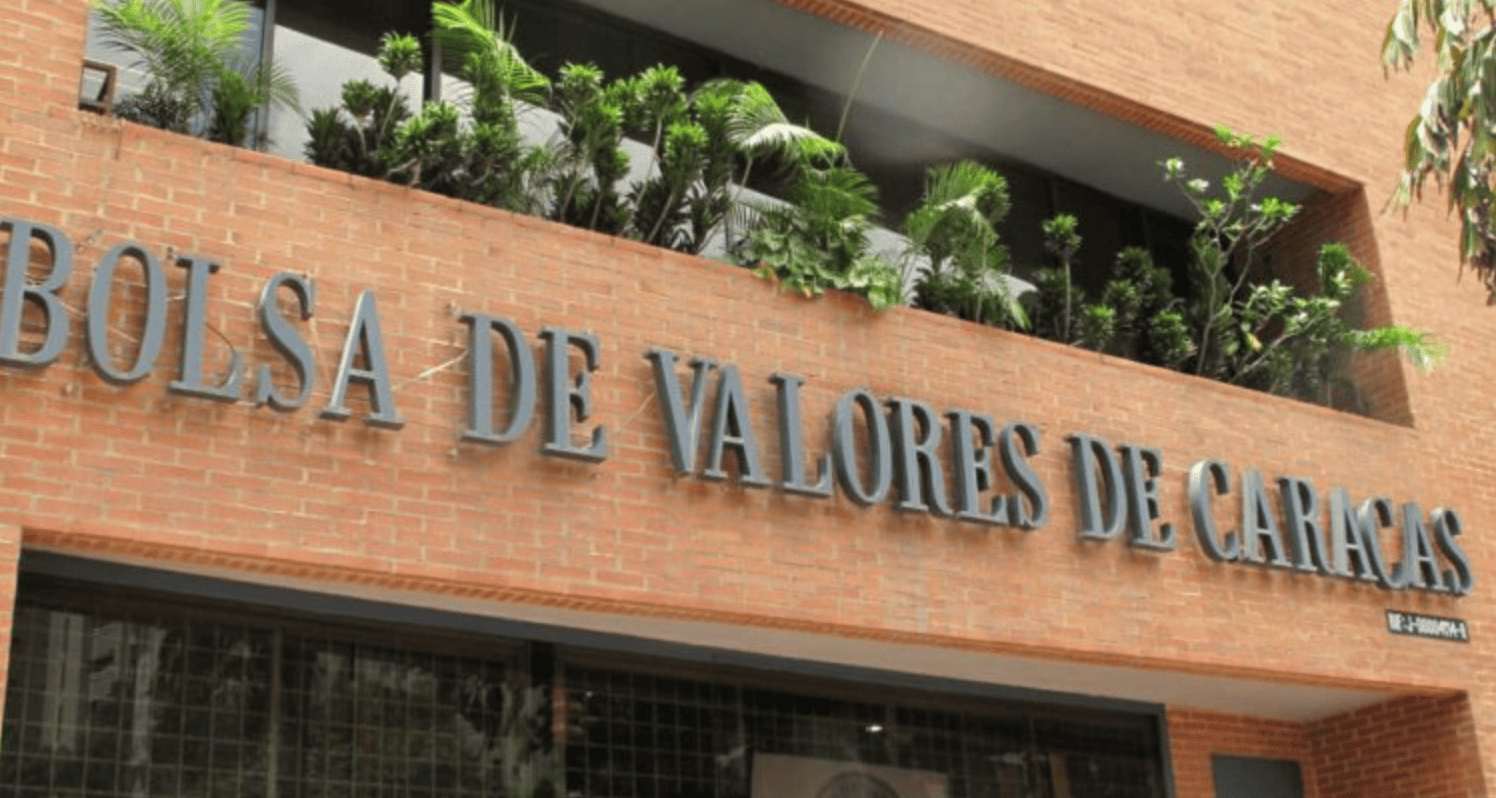
The Caracas Stock Exchange stagnates in bolivars and bleeds in dollars while the country looks the other way.
Julio A. López.— If the stock market is the thermometer of a nation’s economic health, Venezuela has a high fever, and nobody is taking its temperature. The Caracas Stock Exchange (BVC) is experiencing critical stagnation that raises concerns not only for what it reveals but also for what it conceals: a deeply sick financial system, a forced de-dollarization policy that is not working, and a historic opportunity for reconstruction that fades day after day.
The IBC: A silver line hiding a deadly decline
Since February of this year, the BVC’s IBC Index has remained perfectly horizontal in bolivars. To the average citizen, it may look like stability. To anyone who understands markets, it is a warning signal.
“A market that does not move in local currency while the currency loses value is not stable: it is dying in silence.”
The truth is relentless: between February 27 and June 19, the official exchange rate published by the Central Bank of Venezuela surged by 45%. During that same period, the IBC lost 40% of its value in dollars. The result is a negative spread of five percentage points, turning Venezuela’s main stock market indicator into an instrument of value destruction rather than the “hedging instrument” that some have tried to sell it as.
The BVC does not protect against inflation: Inflation devours it
Fixed Income: Anemic Growth in a Hungry Market. The numbers behind private debt in the BVC are no better. If anything, they reveal the structural paralysis more clearly.
The data scream an uncomfortable truth: the mere $3.8 million increase between the second half of 2025 and the first half of 2026 represents a brutal slowdown. After a rebound during the second half of 2025, the market is losing momentum again. Worse still, two companies left the market over the past six months, at a time when new issuers should be arriving, not leaving.
The BVC: Less relevant than a neighborhood savings fund
Here comes the figure that should make any economic policymaker tremble:
- Venezuela’s universal banking sector holds an estimated loan portfolio of $3.5 billion.
- The BVC does not even reach the $90 million granted by the microfinance banking sector.
Numbers speak for themselves:
- The BVC represents just 1.2% of the universal banking sector’s loan portfolio.
- The BVC equals only 46.9% of microfinance lending.
- With 24 issuances and $42 million in outstanding debt, the BVC carries less financial relevance than a provincial savings and credit cooperative.
This is not a capital market. It is a financial anecdote.
What is happening? The painful hypotheses
1. The ghost of dedollarization
The policy of forcing transactions in bolivars amid persistent hyperinflation has turned the BVC into a children’s playground market: companies do not want to issue debt in a currency that loses value hour after hour, and investors do not want to buy assets denominated in the local currency.
2. The flight of issuances
Two fewer issuances in six months are not a statistic; they are a vote of no confidence. Companies prefer to finance themselves in the informal market, through cash, or simply choose not to grow rather than subject themselves to the bureaucracy and uncertainty of a dying stock market.
3. Bank credit as unfair competition
When the universal banking sector manages 83 times more resources than the entire stock market debt sector, and when interest rates likely compete with market returns in an illiquid environment, why would a company go to the BVC?
The answer is that it does not.
And the numbers confirm it.
4. The absence of foreign investment
A $42 million stock market does not attract international investment funds. It does not appear on the radar screens of Bloomberg or Reuters.
The BVC is invisible to global capital precisely when Venezuela needs, more than ever, fresh dollars entering through formal channels.
The question is not whether the BVC can recover.
The question is: has anyone with decision-making power realized that it is dying?
“Things that cannot be hidden are those that, by their nature and by rule, are public and become known immediately.”
Numbers do not lie.
The flat line of the IBC is not stability.
It is a flatline on an electrocardiogram.
The Caracas Stock Exchange does not need makeup.
It needs a resuscitation team.
And it needs someone, at long last, to pick up the phone and call the doctor.
What is happening at the BVC?
What happens when a capital market loses its reason for being, loses its trusted currency, and—most seriously—loses the attention of those who should save it.
Venezuela cannot afford a toy stock exchange.
Time is running out.