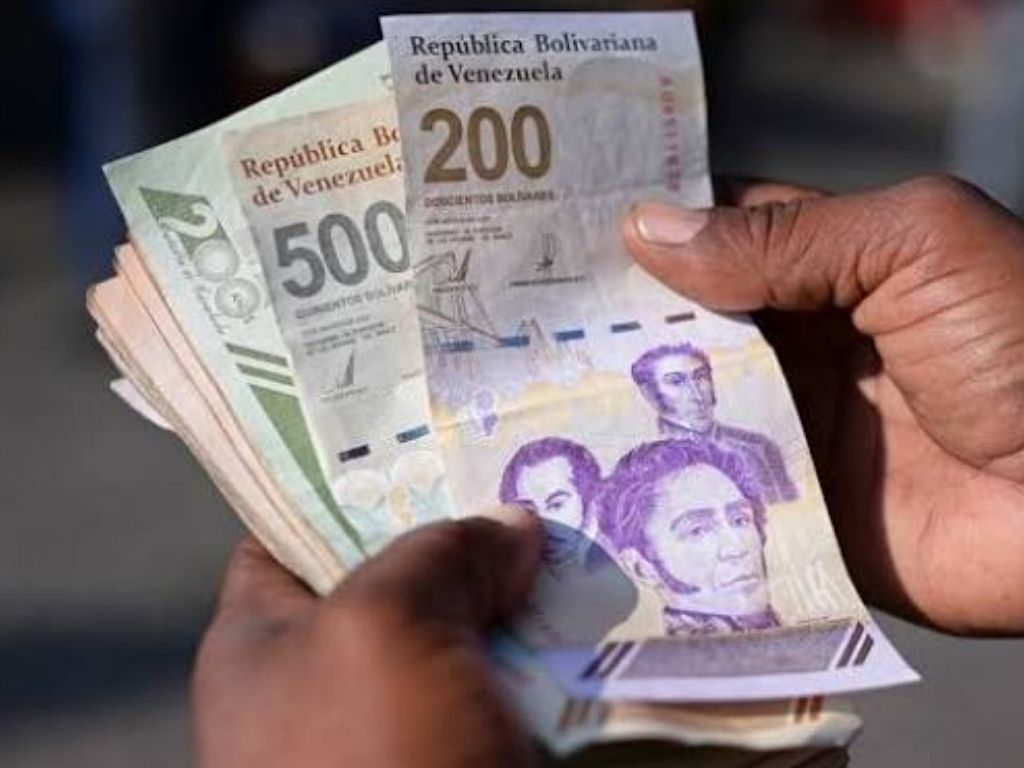
The Daily Journal – The official exchange rate broke the 800-bolivar-per-dollar barrier on Wednesday, September 2, reaching Bs. 801.18, according to the rate published by the Central Bank of Venezuela (BCV).
The U.S. dollar rose by 2.86 bolivars (0.36%) in a single day after closing Tuesday, September 1, at 798.32 bolivars. The euro also climbed to 929.09 bolivars.
This increase forms part of an accelerating depreciation trend that has affected the bolivar throughout 2026. The national currency opened the year at 301.37 bolivars per dollar, meaning the dollar has gained 163.7% so far this year, equivalent to a depreciation of approximately 62% to 63% for the bolivar against the dollar.
The bolivar lost 5.8% of its value in August, marking a slowdown from the 15% plunge recorded in July, when the country faced the emergency caused by the June 24 earthquakes. However, the depreciation trend has continued for more than 20 consecutive months.
Cumulative inflation through July reached 175.5%, with prices rising 19.9% that month, highlighting the loss of purchasing power for income denominated in local currency.
Economist Hermes Pérez said the Venezuelan currency has lost 63% of its value against the dollar in 2026, reflecting sustained depreciation despite the temporary slowdown in August. He also warned that annual depreciation remains above 440%.
Economist José Guerra, a former lawmaker and financial analyst, expects the pace of the bolivar’s devaluation to slow over the coming months, which could help moderate inflation. He said August showed a shift in exchange-rate policy that appears to be slowing the currency’s depreciation. However, he warned that strong inflation and devaluation characterized the first half of the year despite increased oil production.
Guerra described this year’s inflation as “very aggressive” and said price increases have severely affected Venezuelans’ purchasing power.
Economist and university professor Douglas Becerra explained that the banking system automatically passes the national currency’s daily devaluation on to product prices. He warned that the banking sector’s day-to-day depreciation rate now stands at or near 1%, pointing to a minimum inflation rate of 250% for this year. Becerra also said the Venezuelan government must pay its outstanding debts to multilateral organizations before it can gain access to international financing.
Economist Agustín Berríos highlighted a significant narrowing of the exchange-rate gap, from nearly 200% at the beginning of the year to 10% or less today. He said official and parallel dollar rates have gradually stabilized around 800 bolivars, which he described as a key economic achievement. Berríos argued that the exchange-rate gap should disappear completely before the end of the year.
Meanwhile, economist and University of Los Andes professor Leonardo Argüello said available statistics show that the bolivar has lost around 62% of its value since January. He projected that devaluation would reach 74% by the end of the first half of 2026. Argüello also highlighted the lack of transparency surrounding the Central Bank of Venezuela’s foreign-exchange interventions.
Economist and former minister Rodrigo Cabezas projected that inflation could approach 200% and the exchange rate could reach 1,000 bolivars per dollar by the end of the year. He said the government lacks the instruments and financial resources necessary to stop inflation-driven devaluation.
Carlos Ramones, an economist and professor at the University of Zulia, said Venezuela’s economy contracted by 73% between 2012 and 2025, while the country’s overall poverty rate currently stands at 68.5% of the population.
U.S. economist Steve Hanke, whom the National Assembly appointed as special adviser on Economic Affairs, proposes full dollarization, which would eliminate the bolivar as a currency in circulation and replace it with the U.S. dollar. Hanke estimated a 50% to 80% probability that Venezuela will officially adopt dollarization.
The dollar’s steady rise directly increases the cost of living by eroding the purchasing power of wages and income denominated in local currency. This gap primarily affects people who earn income in bolivars, the currency authorities continue to use for public utility rates and government payrolls. This dynamic further worsens living conditions for Venezuelan families amid accelerating inflation and currency depreciation.