The former Caracas metropolitan mayor views the dialogue between the acting government and the 2015 National Assembly as a first step toward restoring the country’s institutions. Still, he warns that the process must also address social demands.
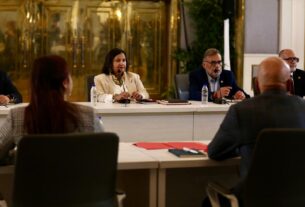
The Daily Journal.- Former Caracas Metropolitan Mayor Juan Barreto believes that the dialogue between Venezuela’s acting government and an opposition faction representing the National Assembly elected in 2015 marks an initial step toward restoring the country’s institutions. However, he warns that the process risks focusing exclusively on agreements among political elites while failing to address the population’s demands.
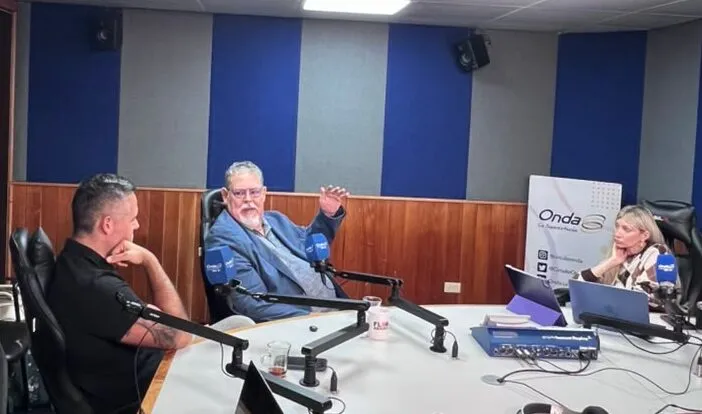
“I welcome the dialogue and discussions that have begun between the 2015 National Assembly and the 2025 National Assembly. I believe this forum represents a first step. It is not perfect, it is not ideal, but it is what we have,” Barreto said in an interview with journalist Shirley Varnagy.
The political leader argued that the process allows two political factions to recognize each other and develop a common agenda. Among potential achievements, he mentioned establishing a “reasonably balanced” Supreme Court of Justice (TSJ) and a National Electoral Council (CNE) that can outline a path toward future elections.
However, he warned that political agreements do not necessarily lead to immediate improvements in Venezuelans’ living conditions.
“So two worlds are moving forward. One is the political world, where agreements are beginning to take shape and come together (…) and the other is the world of the swamp, the reality and uncertainty of everyday life, where people cannot find solutions to their problems,” he said.
Barreto described Venezuela’s political landscape as one characterized by “American tutelage” and claimed that the United States oversees a governance model that serves its geopolitical and economic interests. In his view, Washington’s use of oil licenses and permits also limits the possibility of establishing a transparent economic relationship on equal terms.
The university professor argued that although the negotiating table brings together two political factions capable of engaging in dialogue, it does not represent the country’s full political and social diversity. He pointed to the absence of workers, left-wing groups, and representatives of organizations that lack access to decision-making forums.
In this context, he proposed establishing parallel dialogue forums to address wages, working conditions, pensions, trade union issues, and the recovery of Guayana’s basic industries.
“The proposal, then, would be to create alternative dialogue forums that simultaneously discuss people’s real problems, the issues of everyday life, the ones that affect what families have in their pantries,” he explained.
Barreto also questioned the public debate’s narrow focus on María Corina Machado’s participation as an opposition representative. Although he acknowledged her influence and her representation of a segment of Venezuelan society, he maintained that discussions must also address restrictions affecting other political leaders, parties, and organizations.
The political leader argued that the negotiating table should address political disqualifications and government interventions in political parties to ensure that interested organizations and individuals can compete in elections. In his view, the process should move toward a “political amnesty” that would broaden participation.
An electoral roadmap and social reforms
Barreto said Venezuela needs elections “as soon as possible,” but clarified that this does not mean calling them immediately without first establishing the necessary conditions.
Among the outstanding issues, he highlighted the participation of Venezuelans living abroad, updates to the electoral registry, and political disqualifications. He argued that the negotiation agenda must include deadlines and procedures to overcome these obstacles.
“Let us establish that roadmap and those timelines. That is one of the responsibilities of this negotiating table,” he said.
The former metropolitan mayor emphasized that the process’s legitimacy will also depend on its ability to address labor and social conflicts. As an example, he referred to workers at Guayana’s basic industries who, according to his account, remain on company payrolls but do not receive regular wages and wait outside factories for employers to call them back to work.
He also criticized the lack of trade union elections and restrictions that, in his view, affect workers who disagree with union leaders whom the authorities recognize.
For Barreto, political stability cannot rely solely on agreements among political leaders. It also requires addressing the demands of those seeking better wages, public services, and opportunities for participation.
“Change is not merely cosmetic,” he stated, emphasizing that society must actively support the dialogue process by exerting pressure to ensure that agreements lead to tangible transformations.