Leonardo Salazar
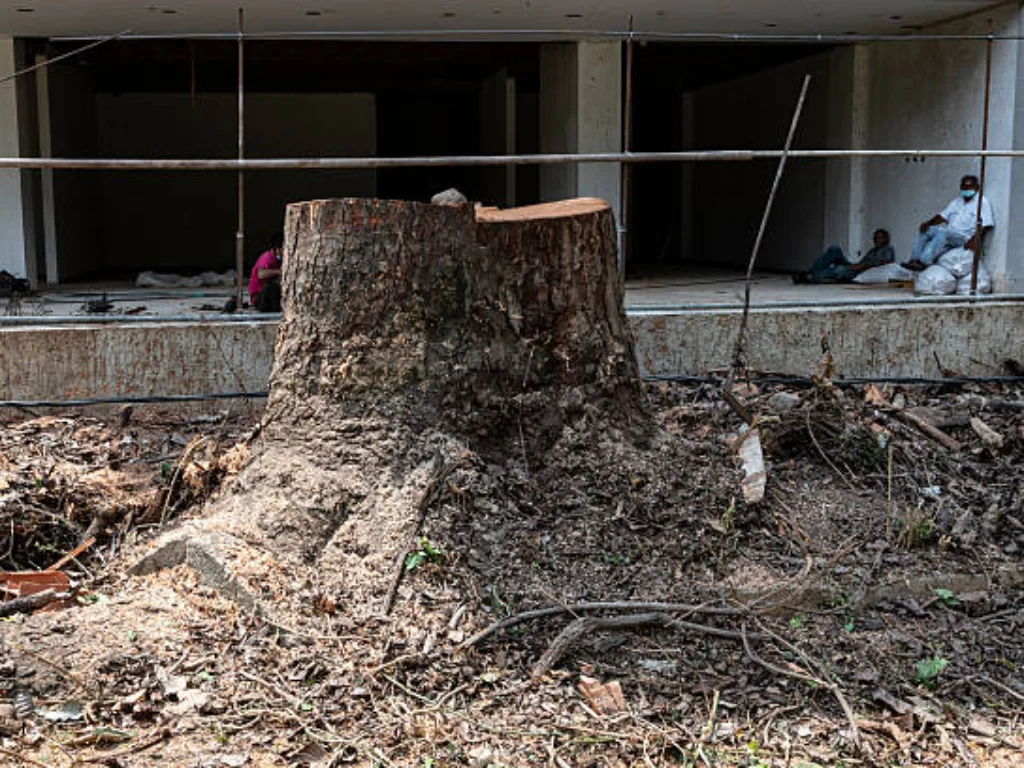
“We all want to enjoy nature, but not all of us are willing to take care of it.” This maxim takes on alarming relevance when walking through the streets of Venezuela’s major cities. What should be a vital ecological asset for public health has become the target of a silent yet devastating practice: the indiscriminate cutting down and pruning of urban trees.
Across the country, citizens and environmental organizations continue to raise the alarm. Emblematic cases in cities such as Valencia, Maracaibo, San Felipe, and the capital, Caracas, reveal a troubling reality: uncontrolled development, a lack of technical standards, and indifference threaten to wipe out urban tree cover.
Mapping the mutilation of urban greenery
Caracas, once described as a “branch of heaven” for its magnificent greenery and biodiversity, now suffers what experts define as uncontrolled deforestation. Reports emerge daily of severe pruning of century-old rubber trees in public squares and the removal of lush trees along highways and in residential neighborhoods to “improve the view” or make way for billboards and commercial establishments. Venezuela’s capital has long struggled with a chronic shortage of green spaces, falling far below the standards recommended by the World Health Organization (WHO).
Meanwhile, Zulia state — particularly its capital, Maracaibo — faces one of the most dramatic situations in the country. With extreme temperatures that easily exceed 40°C (104°F), the loss of its urban tree canopy severely intensifies the “urban heat island” effect. Tree cutting justified by electrical infrastructure or commercial expansion deprives residents of the few oases of shade that help alleviate Zulia’s relentless heat.
Further west, in Yaracuy, complaints extend beyond strictly urban areas, such as Carabobo Avenue in San Felipe, to the growing destruction of trees in protected river zones and surrounding woodlands that sustain life in local communities. The pattern repeats: healthy trees fall under the pretext of prevention or, worse still, to satisfy private aesthetic preferences or because of poorly executed work by local maintenance crews.
Between negligence and the need for technical expertise
The underlying problem is not whether we should prohibit all intervention in vegetation, but rather how we carry it out. Pruning is a routine maintenance practice that helps ensure road visibility and reduce the risk of falling branches or trees during storms, but it requires qualified supervision. Civil society organizations report that municipal authorities and contractors in Venezuela often resort to “topping”—drastic cuts to the main trunk—that ultimately kill trees or leave them vulnerable to pests.
Adding to this problem is the alarming paradox of shared responsibility. While many citizens demand cooler surroundings and green lungs for their communities, many others privately pay to remove trees in front of their homes because they “make a mess with their leaves” or lift sidewalks with their roots. This directly contradicts environmental stewardship: we seek the shade but reject the roots.
Ensuring our cities’ survival requires an urgent shift in perspective. Municipal governments must adopt transparent, automated procedures for requesting and authorizing tree maintenance and removal, ensuring proper risk assessments in coordination with environmental organizations before anyone starts a chainsaw.
But beyond laws and regulations, we urgently need collective environmental education. A tree cut down in Caracas, Maracaibo, or San Felipe is not an aesthetic issue; it is a direct assault on air quality, the climate, and the future of urban life in Venezuela.