Everything points to unusually warm Pacific waters during the 2026–2027 period, which for Venezuela means less water and more heat. International organizations urge countries to prepare.
Vanessa Davies
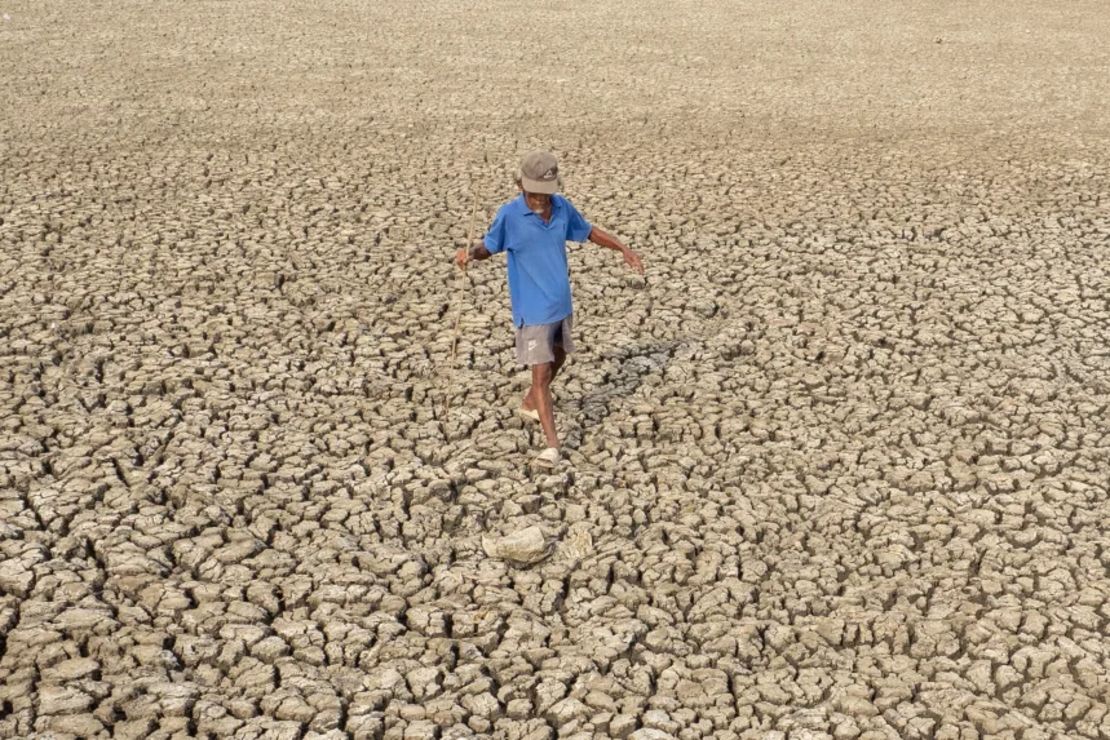
No photographs capture the delivery of household goods to replace what people lost. Politicians cannot kiss grandmothers for the cameras. No rivers drag away vehicles, and no dramatic footage dominates headlines the way floods do. Droughts stand opposite to floods, not only because one lacks water while the other suffers from excess. As Omar Bello, disaster risk assessment focal point at ECLAC, summarizes it, droughts are not “sexy disasters.”
When meteorological forecasts point toward a “Super El Niño,” the lack of drama surrounding droughts creates a second problem: people discuss the issue less and neglect planning for its consequences.
“Drought is a silent killer. It infiltrates, exhausts resources, and devastates lives in slow motion. Its scars run deep,” Ibrahim Thiaw, executive secretary of the United Nations Convention to Combat Desertification, stated in 2025.
A Stronger El Niño
The threat of a “Super El Niño” raises alarms across Latin America. As the United Nations recalled, when El Niño develops, “sea surface temperatures rise above average in the central and eastern tropical Pacific. Winds along the equator, which usually blow from east to west, may weaken or even reverse direction.”
Scientists know that El Niño “typically brings drought to southern Africa, southern and southeastern Asia, northern South America, Central America, and Australia,” the UN explained in the report Drought Hotspots Around the World (2023–2025).
Experts use the term “Super El Niño” when Pacific temperatures climb two degrees Celsius above average. Juan Odriozola, principal economist in CAF’s socioeconomic research division, noted in an article published on May 19 that modern measurements have recorded only three Super El Niño events: 1982–1983, 1997–1998, and 2015–2016. Will a fourth emerge?
The Climate Prediction Center of the U.S. National Oceanic and Atmospheric Administration, in a May update, estimated an 82% probability that the phenomenon will emerge between May and July and a 96% probability that it will persist between December 2026 and February 2027.
The Competition Among Disasters
During the Fifth Workshop on Disaster Risk Management in the Caribbean: Strengthening Systemic Resilience Through a Social Approach, organized by the Latin American and Caribbean Economic System and held this week in Caracas, conversations focused on the relationship between natural phenomena and human factors.
Media coverage often describes furious hurricanes and earthquakes as if they were enraged people. “Hurricanes do not target people or specific sectors. An earthquake is simply an earthquake,” emphasized Alonso Brenes, researcher with the Social Studies Network for Disaster Prevention in Latin America and the Caribbean. According to modern perspectives, disaster emerges from “a failure in how human communities adapt to their environment.”
A natural phenomenon remains a natural phenomenon, Brenes stressed. Yet once it intersects with human factors, disaster follows. He argued that the insistence on living in high-risk areas, the lack of preventive measures, and a limited understanding of nature’s behavior transform events such as volcanic eruptions into painful experiences for thousands of families.
As an economist, Bello seeks to estimate the financial burden disasters impose on governments. Hurricane Melissa, for example, which crossed Jamaica in 2025, cost the country approximately $12 billion, Bello indicated. “Earthquakes carry very high costs,” and “on average they cost more than hurricanes, although hurricanes occur more frequently.” Meteorologists know hurricane seasons and can track their paths and development.
Droughts occupy no lower place among impactful phenomena, yet “we have not had the opportunity to evaluate them because droughts are not sexy disasters; they do not destroy infrastructure, and presidents do not carry children during droughts. Countries usually do not request drought assessments.”
Paradoxically, as Bello emphasized, droughts rank among the region’s most frequent phenomena, “and we consider evaluation important because drought can produce fundamental effects in rural sectors, which usually include the least favored populations.”
Between Water and Scarcity
A “Super El Niño” would carry two faces. In northern Venezuela and Colombia, throughout the Caribbean, and across Central America, drought and heat would dominate, Odriozola estimated. Meanwhile, southern Brazil, central Chile, and the coasts of Ecuador and Peru would face intense rainfall and, consequently, flooding.
If harvests suffer, food prices will rise. Insufficient water may reduce electricity generation because rivers lose flow. Bridges, roads, and other infrastructure will face the consequences of volatile weather. Disease-carrying mosquitoes will proliferate. Water service, already limited, could shrink further as reservoirs dry out. Wildfires may intensify. Heat will increase.
While droughts represent an ominous and decidedly unsexy warning this year, the striptease of consequences has only begun.