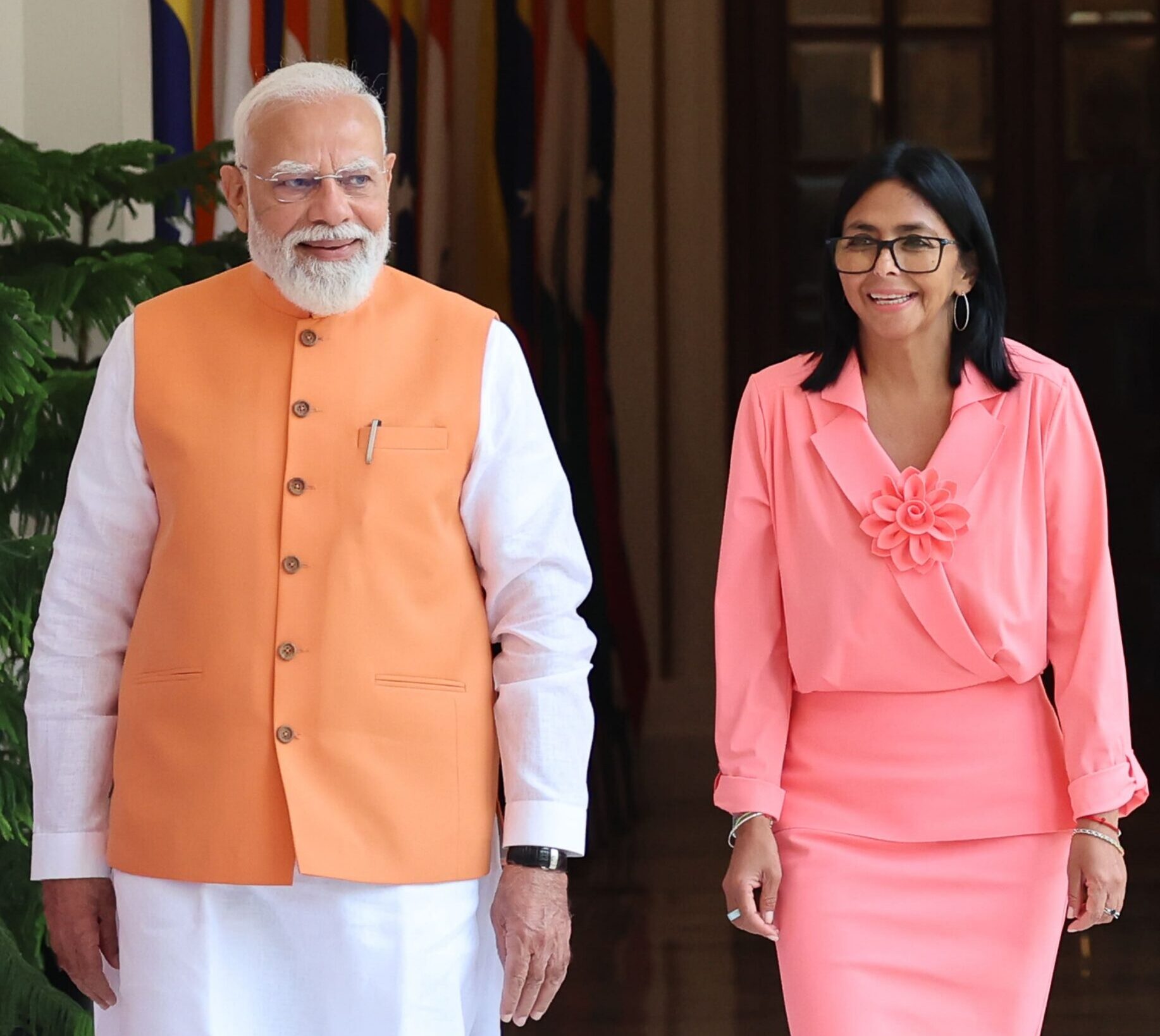
The Daily Journal — The Government of India confirmed that discussions during Venezuelan Acting President Delcy Rodríguez’s visit to New Delhi included one central issue: outstanding debts owed to Indian companies, especially in the oil and pharmaceutical sectors, most of which accumulated before and during international sanctions on Caracas.
During a press briefing, Rudrendra Tandon, Secretary for Latin America at India’s Ministry of External Affairs, said Indian companies’ financial claims “remain on the table” in bilateral talks with Venezuela and stressed that Rodríguez’s government “fully understands” these obligations.
More Than $600 Million in Oil Dividends
The main claim comes from the Indian state-owned oil company ONGC Videsh, which invested in Venezuelan oil projects that were partially frozen by sanctions and operational problems at Venezuela’s state oil company, PDVSA.
Estimates cited by specialized media outlets indicate that Caracas currently holds between $600 million and $1 billion in dividends linked to ONGC Videsh’s participation in Venezuelan energy projects.
The Indian official avoided setting a payment timeline but confirmed that both governments continue active talks on the issue as part of a broader effort to reset bilateral relations.
Pharmaceutical Debt Reaches Up to $800 Million.
The pharmaceutical sector represents another major point of contention. Before international financial sanctions were imposed, several Indian companies supplied generic medicines and essential products to Venezuela’s public health system.
Local media questions during the briefing put the outstanding obligations to these companies at between $700 million and $800 million, accumulated largely during Venezuela’s deepest economic contraction and amid restricted access to global financial systems.
Tandon said both sides discussed this issue and framed it as part of a “broader package” of historical financial commitments between the two countries.
Sanctions, Payment Blocks, and Financial Collapse
Trade debts between India and Venezuela reflect Venezuela’s broader financial isolation, especially since 2017–2018, when U.S. and European sanctions restricted the country’s access to international banking and foreign currency settlement systems.
These restrictions affected foreign companies with investments in Venezuela’s energy sector. Many companies faced unpaid invoices, frozen dividends, and blocked capital repatriation.
In the case of ONGC Videsh, its stakes in projects in the Orinoco Belt and other Venezuelan oil assets faced operational delays and financial strain amid declining production at PDVSA and the restructuring of the national oil industry.
The Indian Foreign Ministry stressed that Venezuela shows awareness of and willingness to address these obligations, but offered no details on payment mechanisms, debt restructuring, or possible compensation arrangements involving oil shipments or future investments.