The Daily Journal.- The recognition by the multilateral institution opens doors for Venezuela to emerge from its economic crisis, but it also leaves many questions unanswered.
José Gregorio Yépez
Mentioning the International Monetary Fund (IMF) frightens some people, while others see it as an opportunity. For younger generations, it is probably something new, unfamiliar — a distant name for something that exists, without really knowing what it does or what it has to do with the country.
Some may remember the phrase coined in the late 1980s: “the claws of the International Monetary Fund,” which many blamed for creating an “economic adjustment package” that triggered the Caracazo.
Indeed, less than a month after Carlos Andrés Pérez took office for his second term, the announcement of a “Letter of Intent” to pursue an “Extended Fund Facility Agreement” with the multilateral institution generated strong reactions.
The events of February 1989 were not sparked by the implementation of the measures themselves; merely announcing them increased public anxiety, leading to a popular uprising that left victims and a mark on Venezuelan history.
Debt? No!
On April 16, the IMF announced in a press release that it was restoring relations with Venezuela after they had been suspended since March 2019.
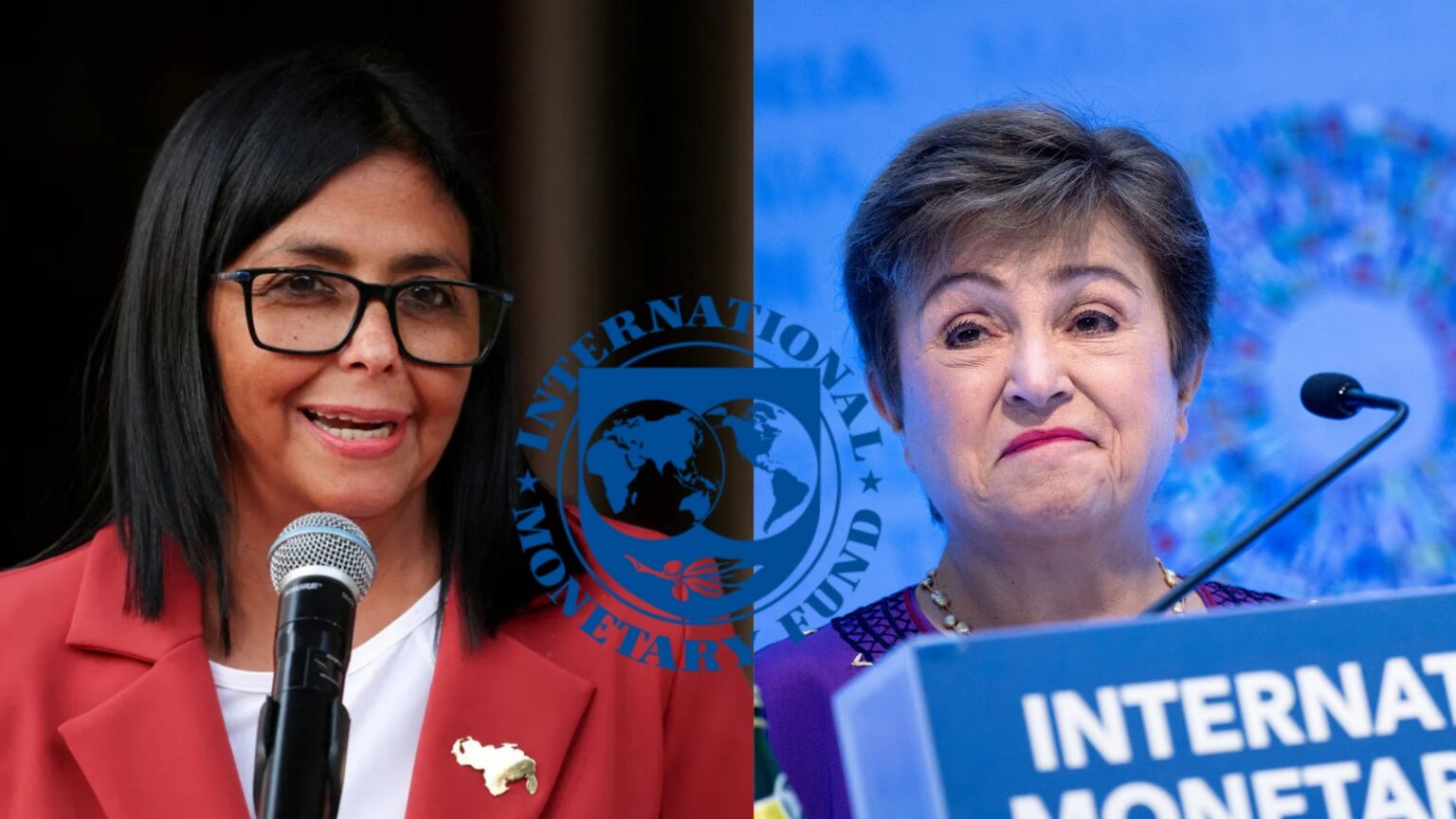
From that moment, a new scenario opened for the government of Delcy Rodríguez, along with many questions: “Are we going back to the claws of the IMF?” “Did Chávez not once say Venezuela would leave the Fund?” “Is the global financial system reopening for Venezuela?” “Are our financial problems over?”
These and many other questions are circulating, and optimism is mixed with doubt.
Skepticism has taken hold amid the events following January 3, 2026, in Venezuela.
In Miraflores, the announcement was received with enthusiasm and as a diplomatic victory. However, Delcy Rodríguez quickly stated on April 17 that her government does not plan to pursue a debt program following the resumption of relations with the IMF.
From the hardline wing of the ruling party, Diosdado Cabello, secretary general of the United Socialist Party of Venezuela (PSUV) and Minister of Interior, Justice and Peace, ruled out “an IMF adjustment package.”
Likewise, on his program Con el mazo dando on April 23, he challenged critics of the renewed relationship with the multilateral institution, saying: “If any of those so-called intellectual individuals have a different formula to recover the 5 billion dollars… please say it. Don’t be selfish.”
What Economists Say
Macroeconomists agree that this is an important signal for Venezuela to reintegrate into international financial markets. IMF recognition is a key credential for participation in that system.
Venezuela currently has an external debt estimated between $150 billion and $170 billion , depending on the source, and its renegotiation is a cornerstone for enabling new financing options for the country.
Economist and professor José Guerra argues that reopening relations with the IMF could pave the way for external debt restructuring.
He also notes that it would be beneficial to enter financing programs with the IMF and the World Bank at interest rates of around 3%, compared to Venezuelan debt issued at rates of up to 10%.
He highlights the low cost of multilateral debt and the transparency and oversight that come with IMF monitoring and technical assistance.
“When you enter into an agreement with the IMF, you must adopt a certain level of discipline. First, you must comply with Article IV of the IMF, which requires member countries to undergo a review—not supervision—of their macroeconomic data,” Guerra explained.
Economist Manuel Sutherland, for his part, states that returning to the IMF “opens the possibility of restoring interaction with markets and bringing in certain fresh assets immediately.”
One such asset is Venezuela’s Special Drawing Rights (SDRs) at the IMF, valued at around $5 billion .
He explains that this amount represents nearly half of the country’s international reserves, which had been non-liquid because they were held at the multilateral institution.
Access to these resources is not conditional on a program and becomes available once the country is recognized.
Sutherland adds that this amount is roughly equivalent to what the Central Bank of Venezuela injected into the foreign exchange market during all of 2024, providing support to the exchange rate.
With this strength, the state could have more liquidity to supply foreign currency to the domestic market and free up resources from current natural foreign currency providers (oil companies such as Chevron and other multinationals) to redirect them toward social investment.
He suggests that Venezuela could build medium and large outpatient clinics similar to “Salud Chacao” in eastern Caracas to handle primary care and minor emergencies, reserving hospitals for more serious cases.
It’s Not That Simple
However, the issue is not as simple as “blowing and making bottles,” as the saying goes.
IMF Managing Director Kristalina Georgieva has stated that achieving macroeconomic and financial stability in Venezuela “will represent a major challenge.”
Among the obstacles are persistent triple-digit inflation and the severe cumulative economic contraction the country has experienced.
“In recent years, the economy has contracted by two-thirds, inflation stands at triple-digit levels, and starting from these levels to restore macroeconomic and financial stability will be a very difficult path,” she said.
“After the euphoria comes harsh reality; this will not be an easy process,” she added in mid-April, noting that discussions with Delcy Rodríguez have focused on gathering data needed to resume relations.
What Next?
The ball is now in the court of the Rodríguez administration.
The U.S. Treasury Department’s Office of Foreign Assets Control (OFAC) has eased conditions allowing Venezuela to hire consultants and advisory services in the United States to begin debt renegotiation.
It was also reported that Petróleos de Venezuela (PDVSA) hired the international law firm White & Case to defend its interests in the CITGO-related process, the country’s main foreign asset.
Such a move would not have been possible without IMF recognition of the government of Delcy Rodríguez and the implicit “green light” from the White House.
Now the question remains: what is Miraflores’ strategy to take advantage of these openings? Will the results translate into real improvements for the population?
We don’t have crystal balls to determine that; we simply keep our feet flat on the ground, firmly grounded in reality, to understand the country’s political, economic, and social situation.
The game continues.