Américo Briceño Dos Santos, political scientist and university professor
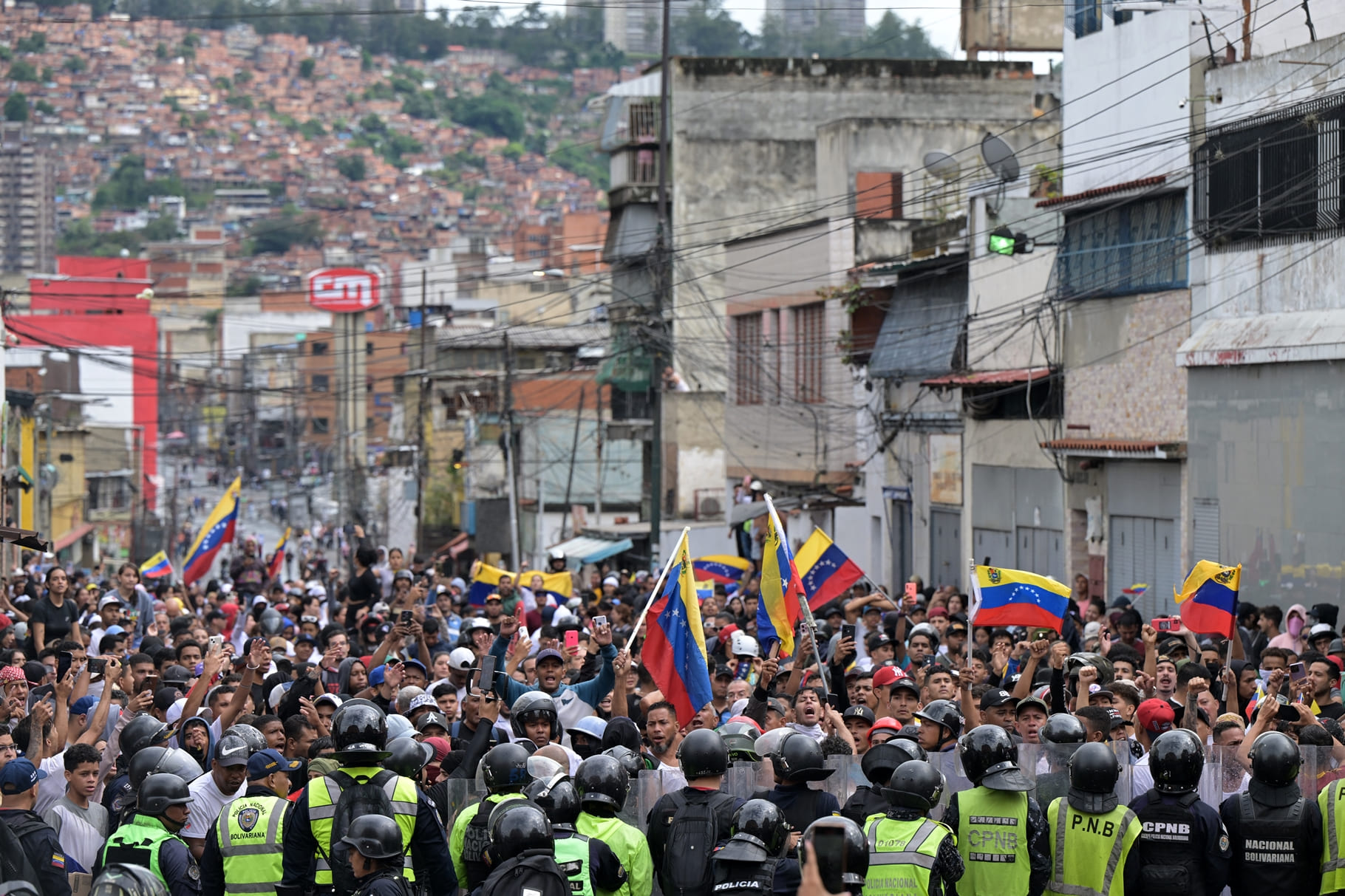
In a social context that continues to resign vast sectors of Venezuelan society to a relative deprivation of their material conditions, and with political violence shaping the social order—becoming somatized in bodies and undermining the collective mood—the civic spirit shifts its horizon of expectations from the possibility of fulfillment toward precariousness, and from persistent scarcity of services toward encounters with foreign interests.
Within this framework, January 3, 2026 did not only constitute an unprecedented milestone in contemporary Venezuelan history; it also represents an interruption of the system that invalidated the interpretive frameworks traditionally used to understand politics. This event imposed a reconfiguration of the political class, forcing competing actors to transcend conventional categories and classifications that, in these times, are insufficient to understand the new reality of power.
In this reality, the narratives of political leaders converge as they attempt to reshape common sense through strategic definitions and terms. This mechanism simultaneously seeks to translate the material situation and articulate operational action for the mobilization of supporters and party bases. These concepts are: “political opportunity,” “new political moment,” and “political transition,” which function as structuring axes of a narrative that grants identity and provides a place of enunciation from which political leaders legitimize their actions.
3-E: An Opportunity
From a sociological perspective, a “political opportunity” emerges from certain social facts or phenomena. In this regard, Eisinger (1973) argues that such opportunities are often expressed through collective actions, generally disruptive, driven by sectors with limited political power that seek to increase their bargaining capacity and influence within the political process through direct participation of the actors involved.
In our case, the U.S. military intervention of January 3 (3-E) constituted an interruption of the systematic process of marginalization and deprivation that had denied the exercise of political rights to various organizations and to many opposition leaders.
In this regard, political prisoner and opposition leader Enrique Márquez has stated that what happened in January “was not desired by anyone.” In an interview with journalist Margarita Oropeza, Márquez said: “but it happened, because in some way the government closed itself off, did not seek a solution, and a solution emerged that I believe no one expected.” For the leader, that solution “is a factual event” that opens the door to “an opportunity to recognize that we all must change.”
In another interview, this time with CNN, Márquez stated that Venezuela “is a different country after January 3,” since “an external factor became an event that dramatically altered the internal landscape.” Thus, “there is a new dynamic: the players have changed.”
Given this, Márquez’s proposal to capitalize on the “political opportunity” left by 3-E is an understanding among broad sectors opposed to the government: “if we understand each other under a sufficiently broad global framework, we can fully agree that our objective is to give the country the opportunity to recover its institutions, freedoms, economy, and ultimately democracy.”
Márquez envisions a Great National Agreement that transcends political parties. His strategy is to “find, within these complex times, a shared path.” This is a maneuver that requires great patience to build trust among the population.
Similarly, political scientist John Magdaleno, in a virtual event organized by the firm Medianálisis, stated that in Venezuela “what is on the table is an opportunity.”
The analyst asserted that Venezuela “is not witnessing the beginning of a transition to democracy,” but rather that what occurred after January 3 is “a change in trajectory.”
For Magdaleno, the government of Nicolás Maduro was “an electoral autocracy,” and its continuation—under the administration of Delcy Rodríguez “continues to constitute hegemonic authoritarianism.”
The scholar, specialized in political transition processes, cautiously warns that “signs of possible flexibilization” can currently be observed within the political system. However, he argues that the changes observed are better understood as “an autocracy in transformation,” since most civil liberties and political rights have not yet been fully restored.
The New Political Moment
The expression “new political moment” first appeared on Wednesday, January 14 of this year, when acting president Delcy Rodríguez stated in a press conference that “Venezuela opens itself to a new political moment that allows understanding from divergence and ideological diversity.”
But what does this really mean?
A “political moment” can be understood as a “foundational juncture” or a “historical turning point,” in which different social and political dynamics converge to produce significant change. According to Narayanan Ganesan (2015), such periods temporarily break with institutional stability and may mark the beginning of new stages in a society’s historical evolution.
Based on Ganesan’s definition, the term “political moment” can be interpreted as referring to the convergence of several factors: the military action of January 3, the complex economic situation, and the country’s political-institutional events. Together, these elements were presented as the beginning of a new stage of change and reform that, for various sectors, remains insufficient in the face of broad national demands.
However, the Rodríguez siblings—Delcy and Jorge—appear aware of the aspirations for change present in large sectors of society. In this sense, the current situation is not presented as a mere political accident, but as a process of forced learning. As Jorge Rodríguez expressed: “i believe that from traumas come many lessons and much learning.”
Under this logic, a transformation of power structures is promoted, modifying the reproduction of the system and the form of governance, thereby establishing a new starting point in its political trajectory.
In the same vein, the president of the legislature stated in an interview with El País that what is happening in Venezuela should not be understood as a political transition. When asked directly, he replied without hesitation that the country is going through “a new political moment.”
What does this phase involve? The legislator speaks of “healing the wounds of the economic war” and “rapidly increasing oil production to obtain more revenue in order to rebuild a welfare state that Venezuelans once learned to live with.”
Although Rodríguez emphasizes the economic dimension, he does not ignore the creation of mechanisms aimed at fostering a different political environment from the one before January 3.
In this regard, he highlights the creation of the Program for Peace and Democratic Coexistence, which promotes dialogue among social, economic, and political sectors, as well as the implementation of an amnesty law for political prisoners.
Rodríguez also stated that this moment “involves reaching agreements, working to strengthen state institutions, and building an institutional reality that will later lead to organizing whatever elections need to be held.”
This apparent correction seeks to consolidate a new rationality that redefines relations between actors and strengthens institutionalism as a necessary step toward future electoral processes under a framework of stability.
The Transition
At this point, it is necessary to address the concept of transition, widely developed in the literature on political change. We turn to scholars Guillermo O’Donnell and Philippe Schmitter, who define transition as the period of passage “between one political regime and another.” For them, this process begins when “the institutions and norms that define the previous regime” start to be questioned by either government actors or opposition sectors.
Based on this definition, various Venezuelan political actors have tried to interpret recent events as signs of an eventual transition. Among them, the leadership of María Corina Machado has argued, both before and after 3-E, that “the transition to democracy has begun in Venezuela,” claiming that citizens challenged power first on October 22 and later on July 28, when—according to her—a “mortal wound” was inflicted on the regime.
Machado, identified with the most demanding sectors of the Venezuelan opposition, even called 3-E “the hour of freedom.” In her public statements, she defended the foreign military operation, arguing that it targeted Nicolás Maduro so that he could “face international justice for crimes committed against Venezuelans,” and claimed that, given the refusal to accept a negotiated solution, “the United States government has fulfilled its promise to enforce the law.”
From this perspective, her position implies setting aside the principle of self-determination of peoples and relativizing the characterization of external aggression against national sovereignty. It also implies accepting the sacrifice of remaining republican institutional structures and disregarding more than eighty years of development in contemporary international law.
This sector of the opposition considers the transition to be urgent and unavoidable. However, we must not overlook “wishful bias,” because—as political scientists Steven Levitsky and Lucan Way point out—many transitions do not lead to democracy but instead result in regimes that combine democratic institutions with authoritarian practices.
In the same discourse, Machado argues for “advancing in the dismantling of the repressive apparatus that for years persecuted, imprisoned, and tortured thousands of Venezuelans,” as well as “dismantling structures that still sustain the regime in order to restore institutional dignity.” From this perspective, the emphasis is on a profound transformation of the state apparatus associated with repression and political control.
However, this formulation introduces a clear tension in the political debate: the relationship between justice, security, and governability for the current administration. It is no secret that the security apparatus remains cohesive, and Machado’s proposal is, in practice, a direct threat of prosecution for those currently in power.
For Machado, the transition unfolds in phases, and one of the most important steps is, in her words, “establishing a clear, credible, and verifiable electoral calendar” to provide certainty that the country is moving toward democracy. However, without a strategy that manages the “exit costs” of key actors, the likelihood that they will relinquish control of institutions is reduced, since elite survival is closely tied to remaining in power.
In this sense, Machado’s strategy appears to contrast with Robert Dahl’s theory, which argues that “the lower the cost of tolerance, the greater the government’s security,” while conversely “the higher the cost of suppression, the greater the opposition’s security.” He adds that when the costs of suppression exceed those of tolerance, the chances of a competitive regime increase.
From this point of view, confrontation appears inevitable, caught between democratic theory and political stubbornness. The key is to make all parties understand that any political transformation will occur only when those in power conclude that repression no longer guarantees security but instead leads to isolation and pressure. Only then will real political change become possible. The process is long, but it is a real path for political competitiveness to cease being an illusion and become reality again. Finally, the ability to build bridges of dialogue and understanding is a reasonable price for those who wish to avoid exiting the political game.