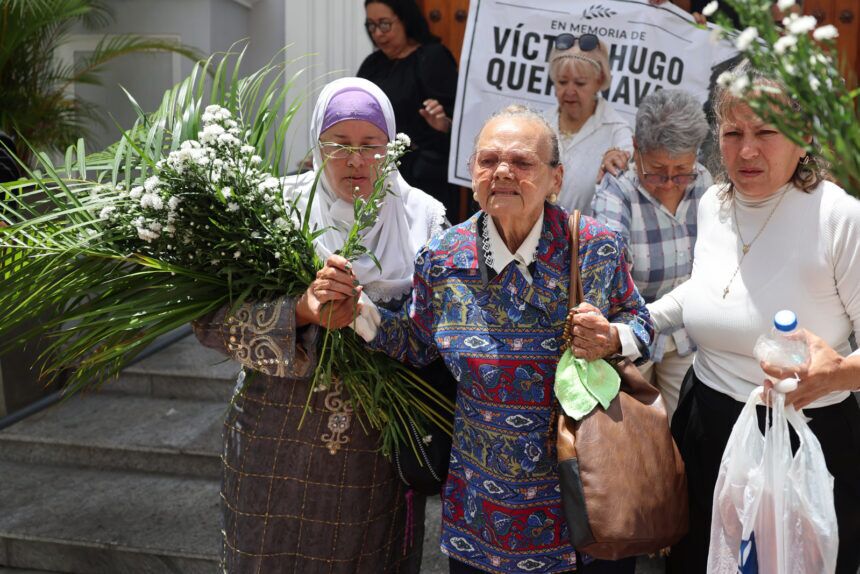
For Carmen Teresa Navas, it was enough to gather the strength to find out where her son was. After finding him dead, sadness, helplessness, and perhaps rage seemed to have drained the health from her 82-year-old body.
José Gregorio Yépez
She was not looking for culprits. She was only looking for her son.
In that search, she encountered neglect, indifference, failures in information, and an institutional system lacking the seriousness and efficiency that a population—one that has resisted being swept up in the violence of a polarized political environment—deserves.
She had a name and surname: Carmen Teresa Navas.
From the day her son disappeared, she went from prison to prison, institution to institution, from the Prosecutor’s Office to the Ombudsman’s Office, searching for answers, until she finally received the worst news: her son, Víctor Hugo Quero, had been dead for 10 months.
On May 17, 2026, she passed away.
She passed away while seeking, alongside Victor, the justice that the land where she was born and lived denied them. For 10 days she stood before a wall where, presumably, sadness, anger, disappointment, and helplessness ended up destroying what remained of her health at 82.
The Search
Mrs. Carmen Teresa searched everywhere: from Tocorón in Aragua, to El Helicoide, Boleíta’s Zone 7, the Directorate of Military Counterintelligence (Dgcim) in Caracas, and the Rodeo I, II, and III prisons in Guatire, Miranda state.
The answer was always the same: “He is not here.”
Carmen Teresa then called a press conference in Altamira Square. She publicly denounced that she had received no information about her son’s whereabouts and demanded a proof-of-life after 15 months without knowing his location.
She had received a copy of a certificate dated October 24, 2025, from the Ombudsman’s Office stating that her son was “detained at El Rodeo I Penitentiary Center,” charged by the 67th Prosecutor’s Office of the Caracas Metropolitan Area with terrorism, conspiracy, and treason.
The document is signed by Dionita Coronado, Third Ombudsman of the Investigation, Mediation, and Conciliation Unit of the Ombudsman’s Office.
At that time, Víctor Hugo Quero had already been dead for three months, according to a communication issued by the Ministry for the Penitentiary Service on May 7, 2026, which states that he died on July 24, 2025.
Another contradiction in the case is that just two days before the Ministry confirmed his death, a request for amnesty—submitted under a law enacted by the executive branch—had been rejected.
The Second Court of Control with jurisdiction in terrorism formally rejected the amnesty request submitted by the defense, arguing that the charges (terrorism, treason, and conspiracy) were excluded from the law’s benefits.
When Did It Begin?
The story began with Quero’s arrest in January 2025, which Carmen Teresa learned about through a third party who told her that her son had been detained by hooded men.
According to figures from the Venezuelan Program for Education-Action in Human Rights (Provea), enforced disappearances in Venezuela increased by 196% in 2025 compared to the previous year.
“We are concerned about the drastic increase in enforced disappearances in 2025,” said sociologist Lissette González, coordinator of Monitoring, Research, and Media at Provea, during the organization’s annual report presentation. She noted that 160 victims were recorded compared to 54 in 2024.
According to this NGO, more than 130 union leaders were “arbitrarily detained” in 2025 and “many were subjected to enforced disappearance.”
However, Quero was not a union leader and is included in these statistics reported by Provea.
An Interpretation
Antonio González Plessman, co-director of the organization Surgentes, stated that the Victor Hugo Quero case “generates collective indignation, not only because of the disappearance—which was already becoming normalized—but because of the prolonged suffering of an elderly mother and the outcome. I imagine there was a mix of negligence, repressive inertia, and a political decision.”
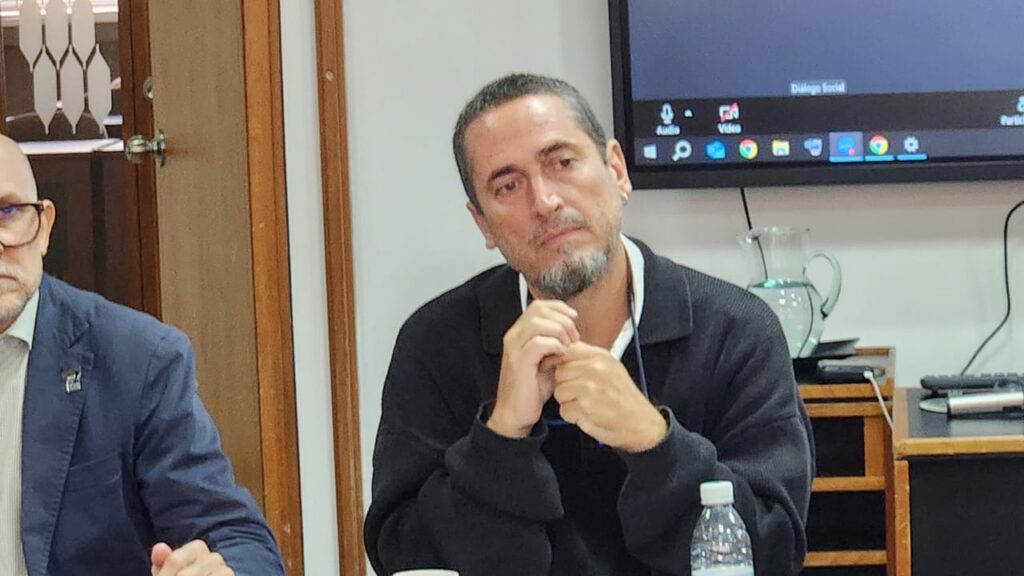
He added that the case shows “a society that broadly rejects barbarity, but also a network of complicities, through actions and omissions, that sustain a reprehensible repressive apparatus.”
When asked about responsibility, he identifies several groups of officials.
First: “Those who detain, isolate, and make people disappear.” He states that the Dgcim carried out an arbitrary detention and kept Víctor Hugo Quero incommunicado.
He also includes: “Those who prosecute, initiate trials, and those who fail to defend.” Among them, he mentions the 67th Prosecutor of Caracas, who allegedly charged Quero “without evidence (because that was the order),” and the Second Terrorism Control Judge, who also without evidence ordered the trial and continued pretrial detention.
He adds that neither ensured communication with family, and that a public defender assigned to the case also failed to contact the family.
He further identifies responsibility among “those who must ensure the life and conditions of detention,” including prison authorities and the Ministry for the Penitentiary Service.
He also assigns responsibility to the Public Prosecutor’s Office for failing to investigate properly and for not informing the mother.
He criticizes the Ombudsman’s Office for misclassifying the complaint and failing to treat it as enforced disappearance.
He also notes that habeas corpus petitions were not accepted by courts in Caracas, describing this as a political practice.
Finally, he includes “those who decided not to inform,” including prison staff and authorities who withheld information from the mother.
Another Interpretation
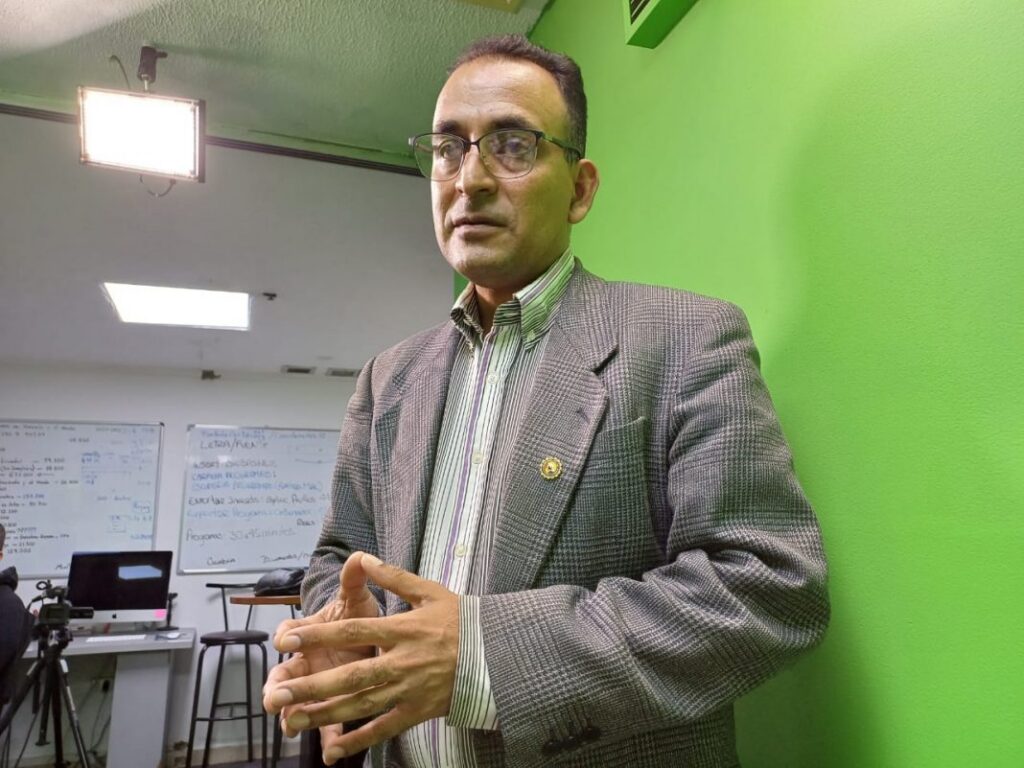
Human rights lawyer and former political prisoner Eduardo Torres called the case “a manifestation of state terrorism” and part of crimes against humanity under investigation in Venezuela.
He describes a pattern: arbitrary detention without warrants, enforced disappearance, isolation, and torture in custody.
He also criticizes the justice system, stating that habeas corpus is not effectively accepted in practice and that investigations are not conducted according to international standards.
He further argues that the Prosecutor General’s Office does not act independently and instead defends the interests of those in power.
The Outcome
After enduring numerous injustices, Carmen Teresa faced something that deeply affects even the journalistic distance from such a case.
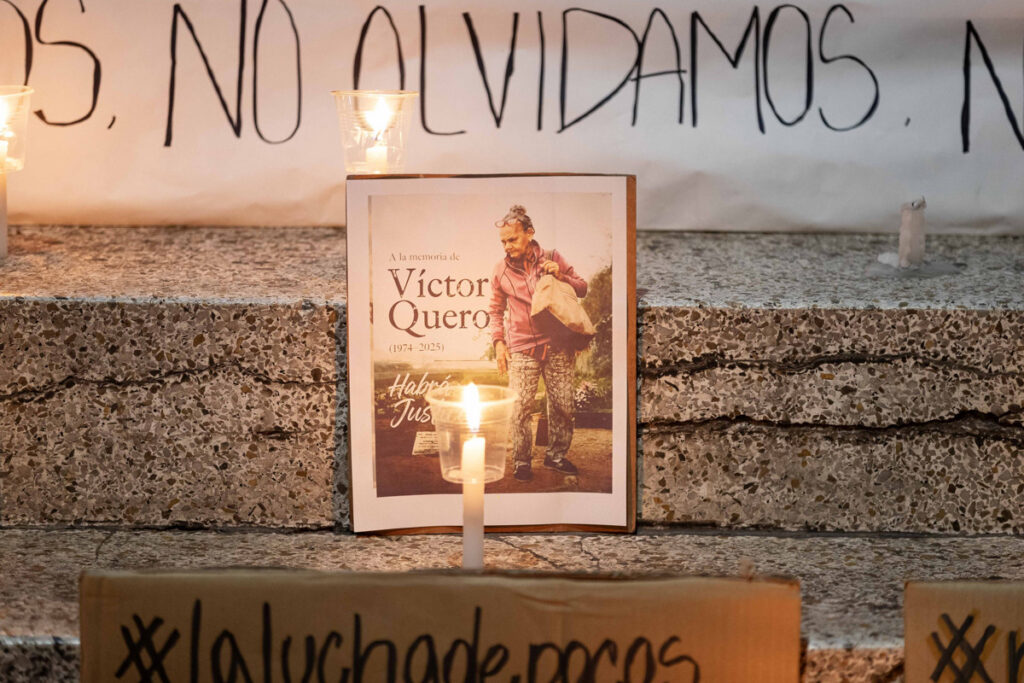
The elderly mother had to identify her son’s remains after 10 months.
According to journalist Maroyrin Méndez, who followed the case daily, Carmen Teresa Navas, upon seeing what remained of her son, placed the socks he had worn during her search and left his cap beside his body.
The Víctor Hugo Quero case—also seen as the story of Carmen Teresa Navas—does not end here. Instead, it opens a path for continuing to demand answers about human rights conditions in the country and documenting them so they are never repeated again.