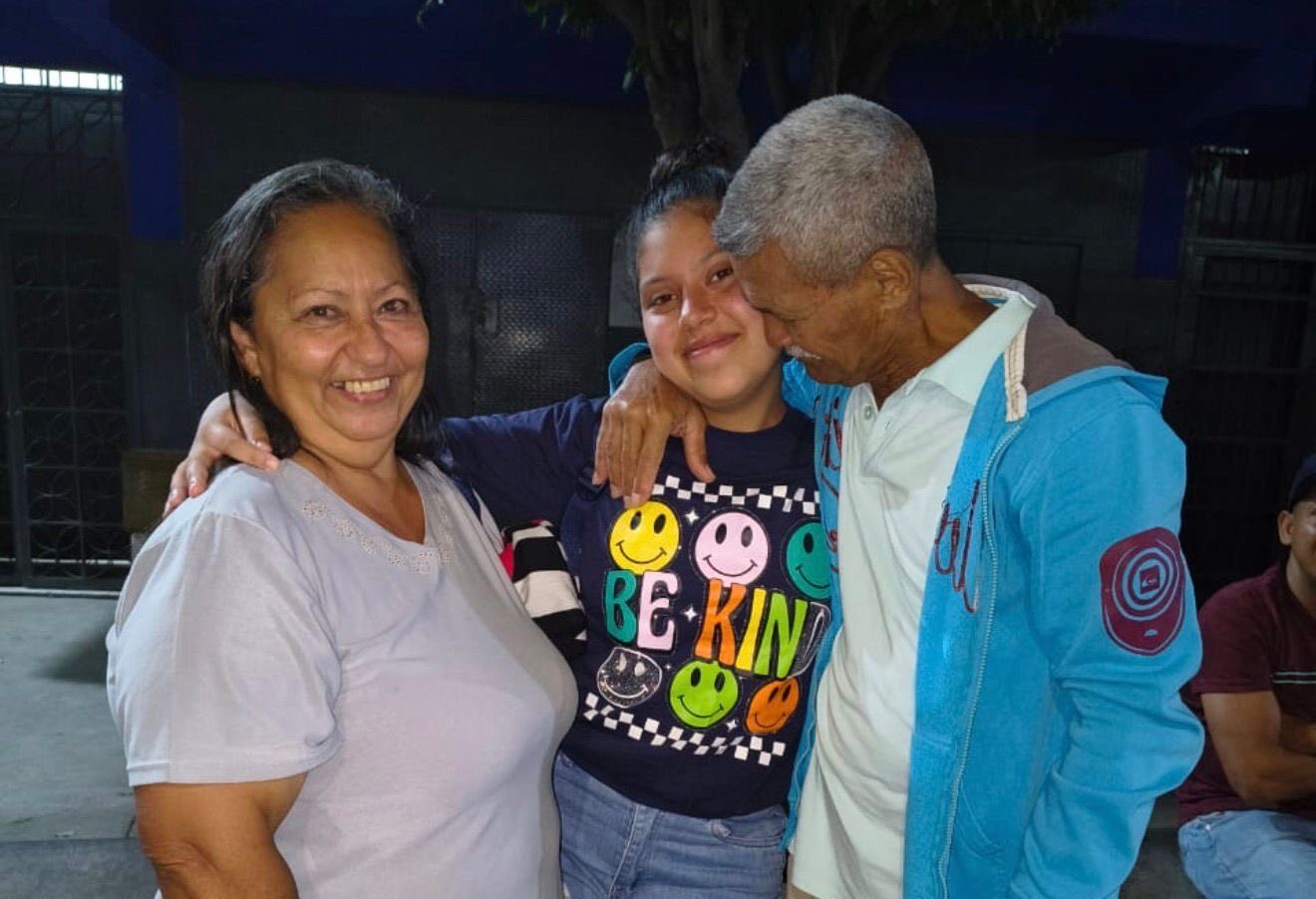
The Daily Journal.- The Committee for the Freedom of Political Prisoners (Clippve) confirmed the release of teenager Samanta Sofia Hernández Castillo on the night of Monday, May 18. Through its social media accounts, the organization stated that the young woman “is now with her family after being released from an unjust prison sentence imposed for political reasons.”
Hernández Castillo had been detained on November 19, 2025, when she was only 16 years old, after being taken from her home in El Valle, Caracas, by hooded officers from the General Directorate of Military Counterintelligence (Dgcim).
The arrest of the minor was allegedly carried out to pressure her uncle, a former military officer accused of rebellion, into surrendering to authorities.
Because of these circumstances, the human rights platform denounced that the teenager was held at the Antímano Detention Center “amid a policy of persecution and family punishment targeting individuals considered dissidents by the Venezuelan State, or Sippenhaft.”
The young woman represents the most recent case of minors arbitrarily detained during the escalation of repression that followed the announcement of the 2024 presidential election results and extended through the end of 2025.
Recently, the non-governmental organization Provea presented its annual report on the human rights situation in Venezuela.
The NGO documented 596 alleged violations of the right to personal liberty during 2025. Of that total, 513 cases—equivalent to 86%—were linked to political motives.
Provea emphasized that although overall detentions decreased by 77.4% compared to the peak of repression in 2024, individual detentions increased by 31.5% above the historical average of recent decades, reflecting “a more targeted and selective policy of persecution.”
The report identifies men, political leaders, and social activists as the principal victims, in addition to workers and laborers. The highest peaks in detentions occurred in January, in the context of the presidential inauguration, and between May and June, during regional and legislative elections.