The Daily Journal — The Corpus Christi Dancing Devils stand among Venezuela’s most emblematic cultural and religious traditions. This celebration blends elements of Christianity with Indigenous and African influences. In December 2012, the United Nations Educational, Scientific and Cultural Organization (UNESCO) recognized the tradition as an Intangible Cultural Heritage of Humanity.
The Dance of the Devils traces its origins back more than 400 years to the colonial era, when Catholic brotherhoods incorporated theatrical and festive elements into Corpus Christi celebrations to honor Christ’s presence in the Eucharist. Through striking masks and elaborate costumes, participants portray the cosmic struggle between good and evil, in which heavenly forces ultimately triumph over the demons represented by the dancers.
Although the ritual preserves its essential structure, each generation has enriched it with distinctive styles of dance, music, and costume that reflect the character of each region.
The dancers, known as promeseros, move backward in penance while a church representative approaches them, carrying the Blessed Sacrament.
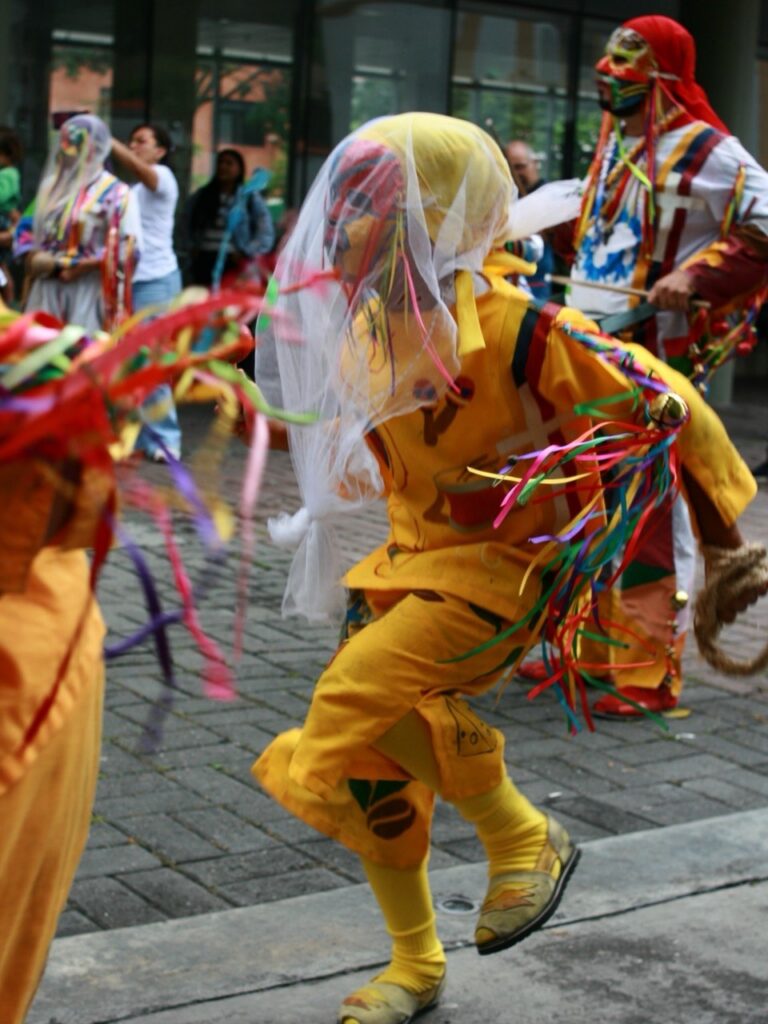
PHOTO: Oswaldo Rivero. A child dances during the Corpus Christi religious celebration.
During the ritual, the devils also carry maracas, rattles, handkerchiefs, and ribbons that serve as protection against evil spirits.
The Daily Journal visited two local brotherhoods in Miranda state to observe how devotion, penance, and respect for tradition continue to unite these communities.
The Dancing Devils of El Hatillo: Tradition and ecclesiastical influence
The Brotherhood of the Dancing Devils of El Hatillo is a relatively young organization that dates back seventy years. It maintains a distinctly conservative character due to the strong influence of the Catholic Church, which continues to guide its activities. Around 120 residents, mostly young people along with some adults, belong to the group. They gather in the El Calvario neighborhood, where artisans handcraft their costumes. Members perform acts of penance through dance on Corpus Christi Thursday and again on the following Sunday.
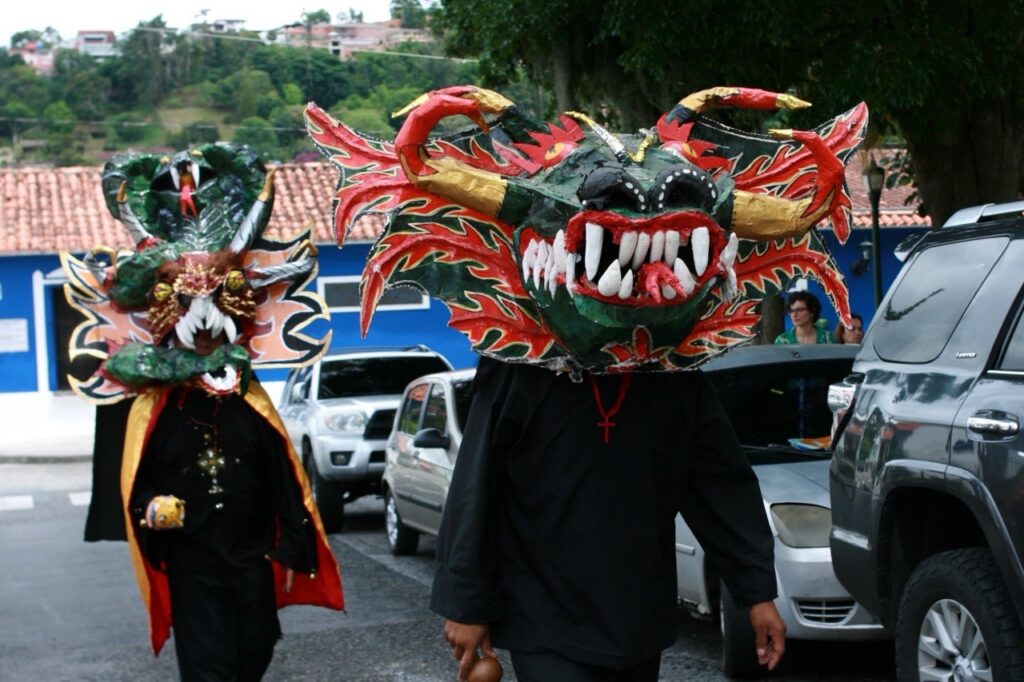
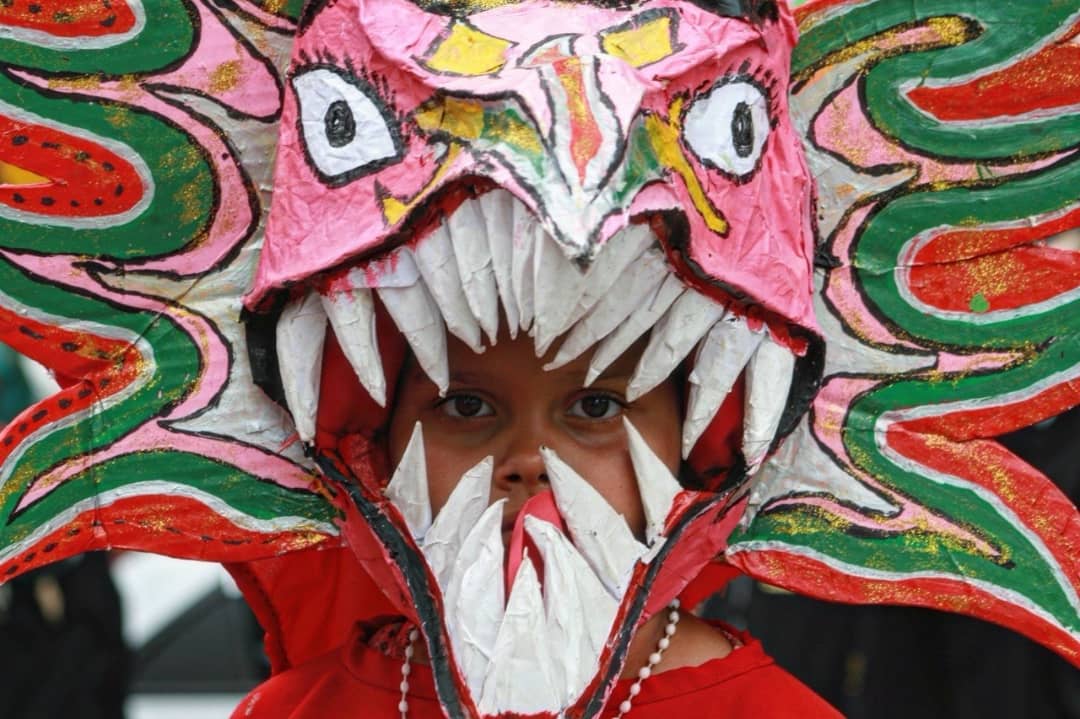
PHOTO: Oswaldo Rivero. Promeseros of El Hatillo on Thursday, June 4.
The photo gallery reveals the distinctive nature of their attire compared with other brotherhoods throughout the country. The Devils of El Hatillo wear large and imposing masks crafted from papier-mâché using traditional techniques. These masks depict monstrous or animal-like faces in dark tones, vivid greens, and bright reds, enhanced by sharp fangs, curved horns, and forked tongues.
Unlike the entirely red costume worn in San Francisco de Yare, the El Hatillo tradition emphasizes black robes or black ensembles that highlight the grandeur of the mask. The promeseros also wear a crucifix over their chests as a symbol of spiritual protection during the ritual dance.
The Devils of Baruta: Community resilience
The Brotherhood of the Devils of Baruta has experienced an intermittent history. During Cipriano Castro’s presidency, local organizers established the tradition, but tensions and conflicts between the president and the Catholic Church halted the celebration. Cultural organizations, schools, and community councils revived it formally in the early 1990s. Today, the brotherhood brings together approximately 150 dancers and sustains its activities independently, without financial support from the municipal government or the national administration.
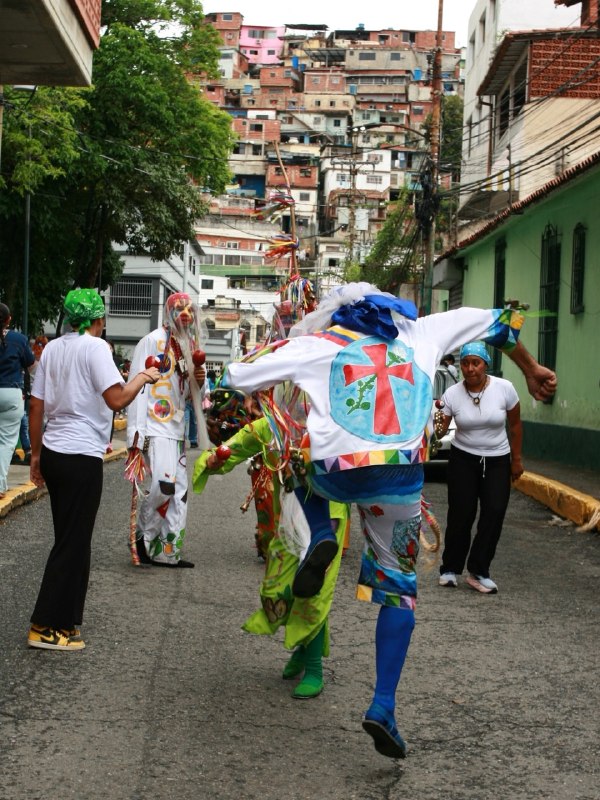
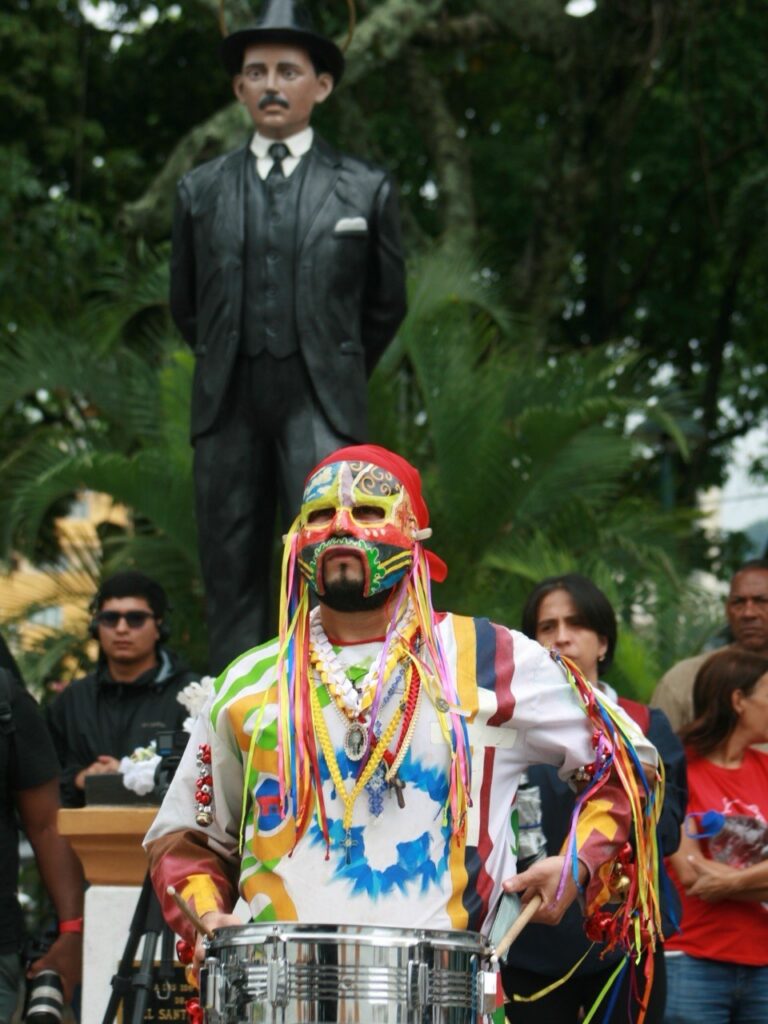
The dancers of Baruta wear hand-painted costumes created on white fabric and decorated with colorful geometric motifs, crosses, circles, and multicolored patterns in shades of yellow, blue, pink, and green.
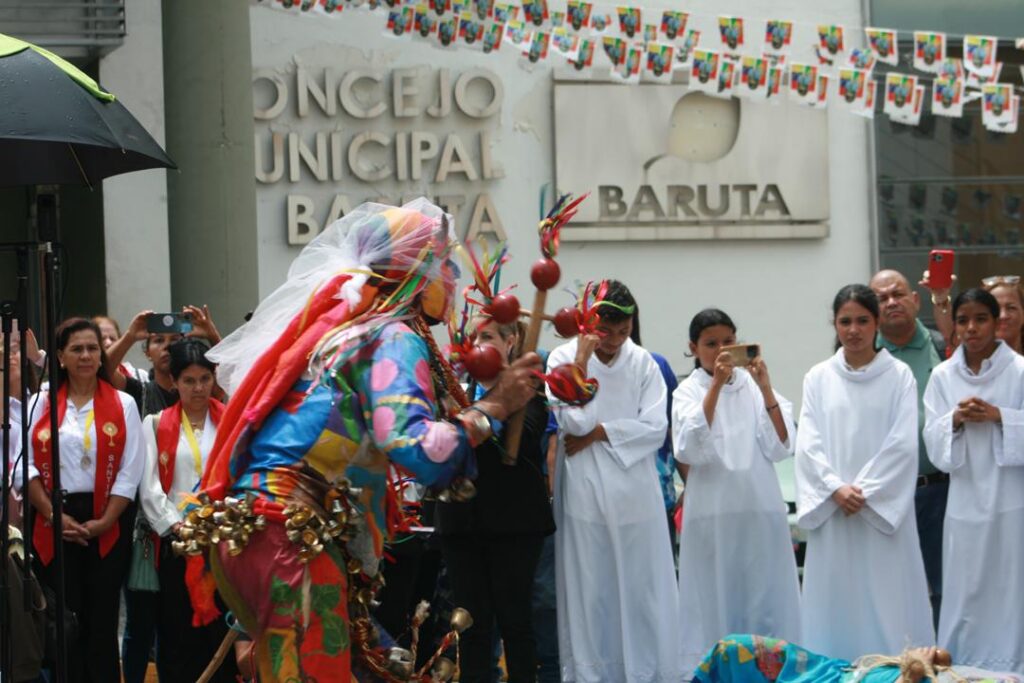
PHOTO: Oswaldo Rivero. A dancing devil bows before the power of the Blessed Sacrament.
Their attire also includes multicolored ribbons cascading from the head, woven espadrilles, rows of bells attached to the waist or legs to mark the rhythm, and maracas decorated with ribbons. The dancers shake them vigorously as they bow in reverence or fall to the ground in a gesture of submission.