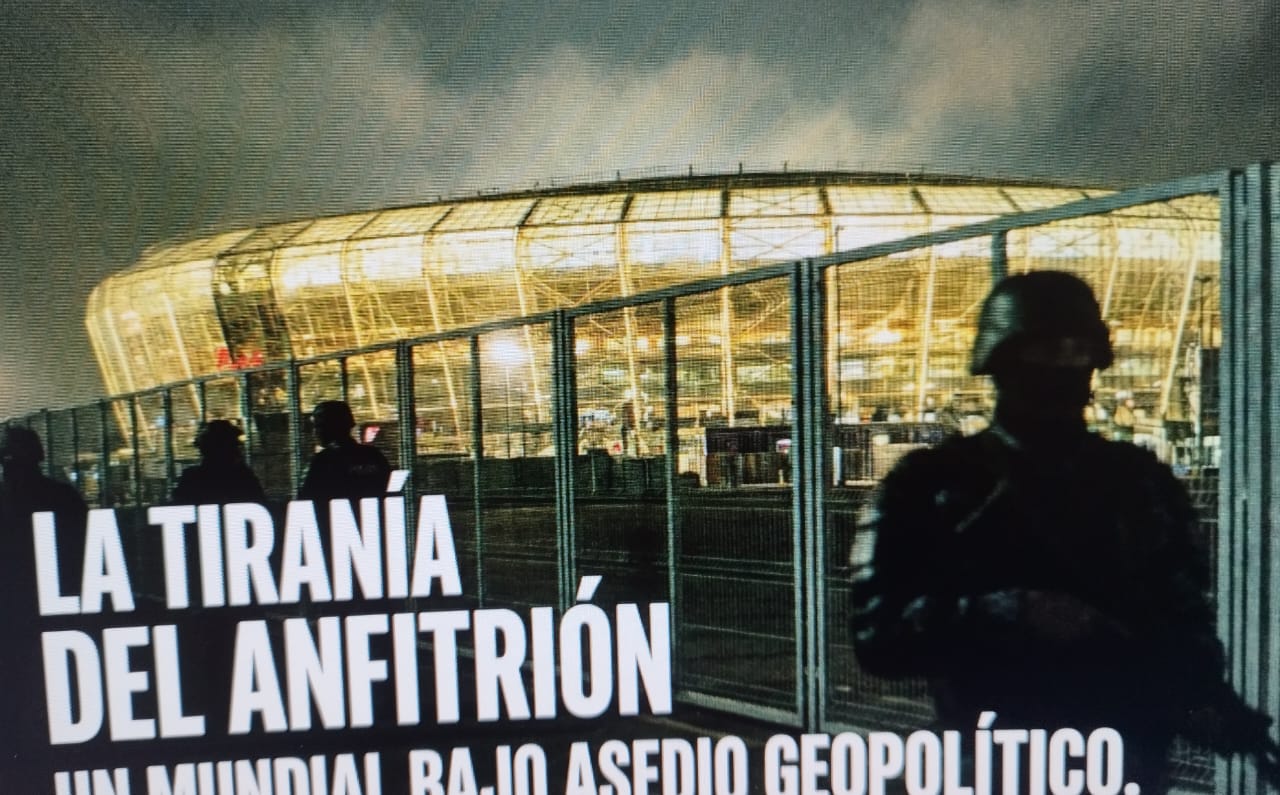
Héctor Sánchez, Sociologist — Commentators have repeatedly described the 2026 FIFA World Cup as historic because three countries are jointly hosting it. Yet behind the rhetoric of sporting unity lies an unprecedented contradiction: for the first time in history, one of the host nations—the United States—maintains a state of open military hostility toward another participating country, the Islamic Republic of Iran.
Canada and Mexico, its fellow hosts, also operate under the shadow of a power that treats them as de facto colonies, threatening them while simultaneously demanding that they share the stage of football’s greatest celebration.
History inevitably recalls the 1936 Berlin Olympics. At that time, Adolf Hitler’s regime used sport to cleanse its image and showcase a supposed doctrine of racial superiority. Yet a fundamental difference separates the Nazi spectacle from today’s World Cup under the U.S. administration. Hitler at least attempted to conceal his racism and violence to project an image of respectability before the world. Washington’s regime does not merely refuse to hide them—it displays them as trophies of its hegemony.
This tournament does not fit the conventional definition of sportswashing. The host nation bombs a participant while the competition begins, threatens its own partners, and still demands global applause for its organizational efforts. The irony could hardly be greater.
The sporting spirit has given way to a national-security framework that borders on paranoia. Foreign supporters and delegations encounter not hospitality, but a system of exclusion and surveillance.
Migration Harassment: A Somali referee faced deportation upon arrival, while members of Iraq’s national team endured nine-hour interrogations at U.S. airports.
Iran in Exile: Visa denials and ticket cancellations have forced Iran’s national team to establish its base in Tijuana, Mexico. The squad may enter and leave the United States only on the day of its matches, without the option to reside in the host country.
Excessive Surveillance: National teams such as Senegal, Uzbekistan, and Belgium have arrived to find tracking dogs inspecting even players’ personal luggage.
The spectacle now unfolds under what can only be described as a FIFA dictatorship—one that prohibits political expression by players and coaches except when the organization itself approves the message, as in positions directed against Russia or in support of Israel. Football, which began as a popular game rooted in beauty and belonging, has evolved into a cold financial calculation administered by elites who have transformed it into a commodity for consumers while ignoring genuine supporters.
That reality recalls both racism and the events of 1936, when African American athlete Jesse Owens humiliated Nazi supremacism by winning four gold medals before an enraged Hitler. Yet upon returning to the United States, Owens did not receive a hero’s welcome. Instead, he confronted segregation imposed by his own government, endured neglect from President Roosevelt, and struggled through poverty.
In 2026, Owens’s feat may find an unexpected parallel in the American people themselves. The militarization of public spaces, censorship directed at critical media, exorbitant ticket prices, and the deportation of supporters are opening the eyes of citizens who once believed in the slogan “America First.”
Far from becoming the celebration of unity that organizers promised, this World Cup has become a gallery of supremacism and exclusion that may lead many Americans to recognize their own government as an enemy of coexistence.
Then again, this would not mark the first time that part of the American people has come to view its own government as the adversary. It happened during Vietnam. It happened during the 2008 financial crisis. It happened during the wars in Iraq and Afghanistan. And it may be happening once more, in the midst of a World Cup that should have embodied unity but has instead become a showcase for supremacism, exclusion, and unilateralism.