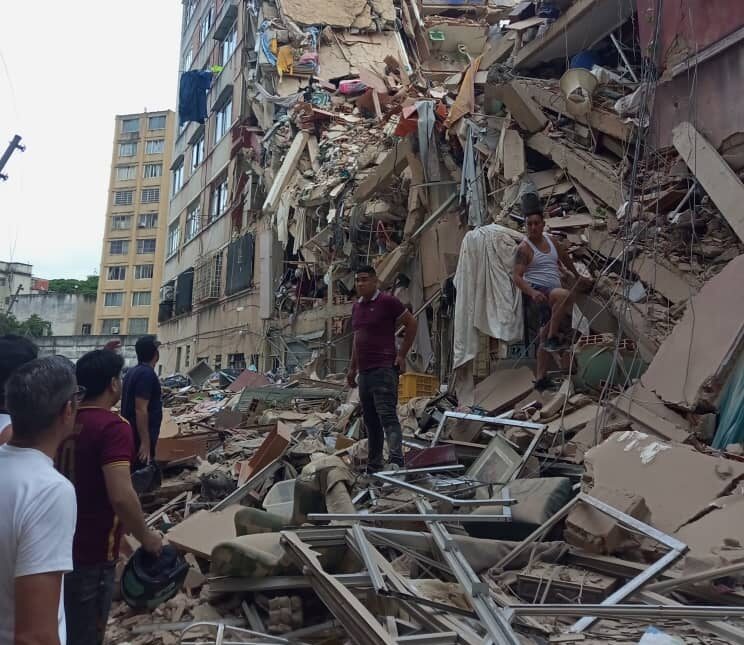
Venezuela may have faced one of the most destructive seismic phenomena: a nearly simultaneous seismic doublet.
Julio A. López. — The two earthquakes that struck Venezuela on June 24 not only surprised observers because of their magnitude, but also because they occurred extraordinarily close together in both time and location. Early analyses suggest the country may have experienced a nearly simultaneous seismic doublet, an exceptional phenomenon that multiplies the destructive potential of a major earthquake.
In seismology, a seismic doublet occurs when two earthquakes of comparable magnitude strike almost simultaneously or within a few minutes of each other, with epicenters located very close to one another. Under these circumstances, neither event qualifies as a simple aftershock because each releases enormous amounts of energy capable of destroying itself.
What makes the Venezuelan case particularly significant is that both events occurred within moments of each other in the same tectonic zone. As a result, vast areas of the country were struck by two powerful trains of seismic waves generated by the earthquakes within moments, placing even greater stress on buildings and infrastructure that had barely begun to absorb the first shock.
Structural engineers explain that when a building endures two powerful tremors within such a short interval, it quickly loses its ability to withstand additional stress. Buildings that remain standing after the first earthquake may suffer irreversible damage when the second one strikes, greatly increasing the risk of collapse.
This type of event also creates one of the most challenging scenarios for emergency operations. Communications often fail, transportation systems collapse, and search-and-rescue teams must work under the threat of additional seismic activity while thousands of people remain trapped beneath the rubble.
Although seismological authorities will ultimately determine the official classification of both earthquakes, the combination of their close timing, the proximity of their epicenters, and the intensity of both events makes this sequence one of the most unusual and potentially destructive ever recorded in Venezuela’s recent history.
Specialists emphasize that in a scenario like this, the consequences depend not only on the magnitude of each earthquake but also on how quickly they occur, the vulnerability of buildings, and the effectiveness of emergency response in the first hours after the disaster. It is precisely this combination of factors that makes a seismic doublet one of the most dangerous natural phenomena a nation can face.
The Venezuelan event could become one of the most unusual seismic doublets ever documented because of the extraordinarily short interval separating the two earthquakes.