By Diviana Márquez — In the dim light of a makeshift produce stand in Catia La Mar, a woman clutches a wrinkled $20 bill as though it were a shield. Around her, the coastline of La Guaira still breathes the dust of buildings that gave way just five days ago under the historic 7.2 and 7.5-magnitude double earthquake. The aftershocks have not stopped—the latest, a magnitude 5.1 tremor, rattled the early hours of Monday—but on the streets, the most urgent concern is no longer finding shelter. It is finding enough food for the day.
“If I pay the ten dollars they’re asking for the water jug and the candles, I won’t have enough left for a carton of eggs,” she says aloud as the shopkeeper reminds her that there is no Pago Móvil, no card terminals, and no bank transfers today.
After the collapse of the electrical grid and communications infrastructure, cash in foreign currency has become the undisputed king of the ruins. Those who do not have it simply do not eat.
The disaster, which the United Nations estimates caused $6.7 billion in material losses, has instantly reshaped the country’s survival economy. In a nation that already struggled with a Family Food Basket costing $772 per month, the earthquake triggered an immediate supply shock. With cracked highways and restricted access designed to facilitate rescue operations, filling a grocery bag with only the essentials needed to survive a week has become a macroeconomic challenge at the household level.
The emergency basket
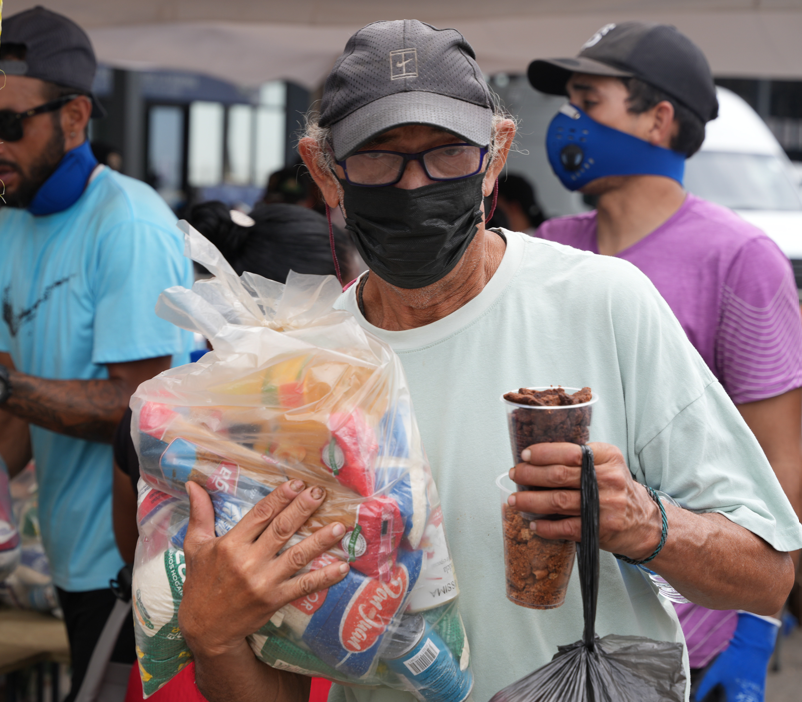
Under current conditions, the traditional idea of grocery shopping has disappeared. Massive power outages have eliminated refrigeration, while severe shortages of household gas have forced families to adopt a survival diet based on nonperishable, calorie-dense foods that require little or no cooking.
Price monitoring across the affected areas of the country’s north-central region—Distrito Capital, La Guaira, and Carabobo—shows that a Weekly Emergency Food Basket for an average family of four now costs between $37.50 and $48.00.
That cost structure exposes a harsh reality. For a household living on the average private-sector salary—about $200 per month—just two weeks of emergency food consume an entire month’s income, leaving nothing for medicines, debris-removal tools, or basic hygiene supplies. The earthquake knocked down walls, but emergency inflation is now suffocating family pantries.
Broken arteries: Logistics collapse and the informal market
The real squeeze on household budgets does not happen on economists’ spreadsheets. It happens along cracked highways. The double earthquake did more than shatter thousands of homes—it severed the supply corridor linking the country’s western and central agricultural and industrial hubs with its main population centers.
Road access to the hardest-hit areas has turned into a maze of emergency detours. The collapse of the critical bridge serving the parish of Caraballeda severely disrupted relief operations along the La Guaira coastline during the first days after the disaster. At the same time, cracked sections of the Morón Highway in Carabobo and landslides on roads leading to the Aragua coast, including Choroní, brought the normal flow of heavy cargo to a standstill.
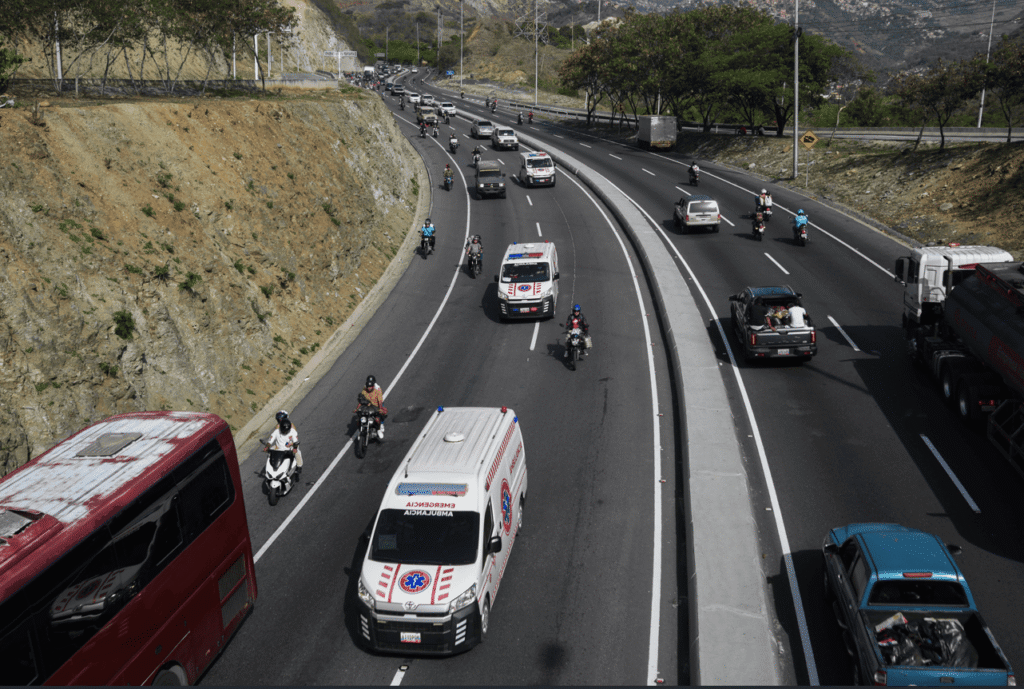
For food transporters, moving supplies from distribution centers to Caracas or La Guaira now means overcoming three major obstacles.
The first is the cost of fuel on the informal market. Structural power failures temporarily shut down service stations and even major refineries, forcing truck operators to purchase diesel on the black market. Keeping refrigerated trucks running now requires paying premiums of up to 150%.
The second obstacle arises from rescue-priority checkpoints. Restricted access allows humanitarian missions led by organizations such as OCHA, the World Food Program (WFP), and more than 2,600 international rescuers to move more efficiently. Still, it also creates delays that can last for hours. Every hour a refrigerated trailer is left off increases the risk of losing an entire shipment.
The final obstacle is the emergency freight surcharge. Trucking companies willing to navigate unstable roads—while facing constant aftershocks like the 5.5-magnitude tremor recorded over the weekend—have added a risk premium to freight rates.
The cash economy built on rubble
At the retail level, shortages quickly created fertile ground for an informal emergency economy. Although the government began distributing thousands of tons of humanitarian aid and food packages throughout La Guaira’s ground zero, the traditional retail network has fractured. Rolling blackouts have disabled card terminals and Pago Móvil.
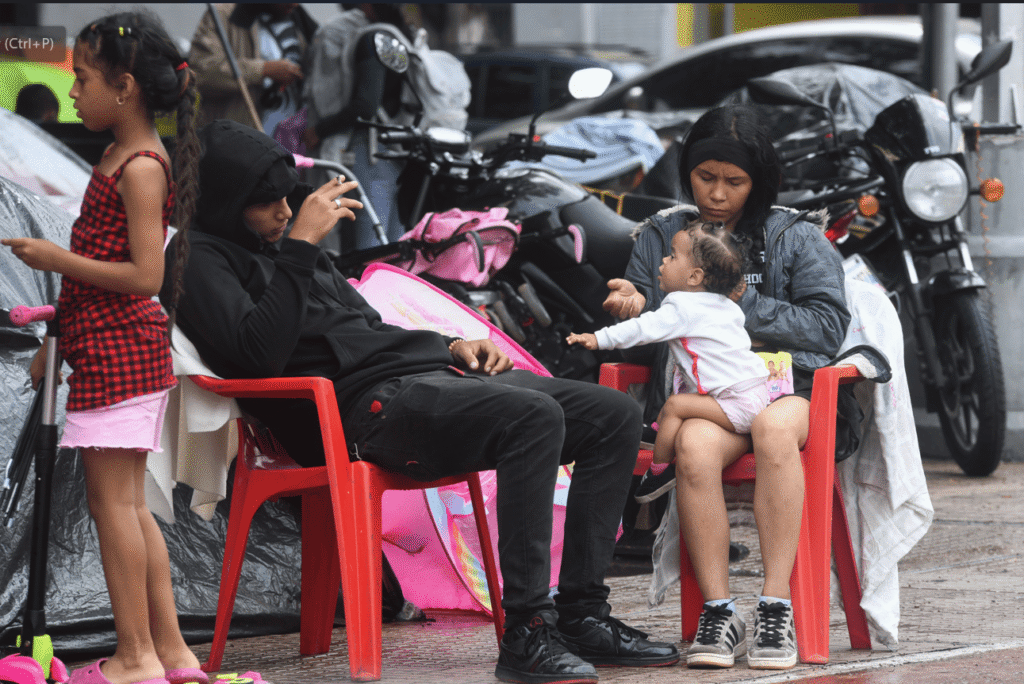
As a result, small neighborhood stores and informal vendors operating near shelters or on the ground floors of buildings deemed structurally habitable under the government’s traffic-light classification system have begun charging scarcity prices.
It is the law of the sidewalk: whenever a product disappears from formal store shelves, its price on the informal corner market jumps by roughly one-third almost immediately.
The distortion becomes even more severe when long-lasting protein sources are involved. Before the disaster, a can of economy-brand sardines sold for about $1.20. Today, informal street vendors charge as much as $2.50, especially when buyers cannot produce exact dollar bills. Because banks have ceased operating in person and small-denomination dollar bills have largely disappeared from circulation, informal sellers routinely force customers to round up, thereby artificially inflating the final cost of a basic emergency food basket.
Eating during an emergency is not only a logistical challenge—it has become financially prohibitive.