By Vanessa Davies
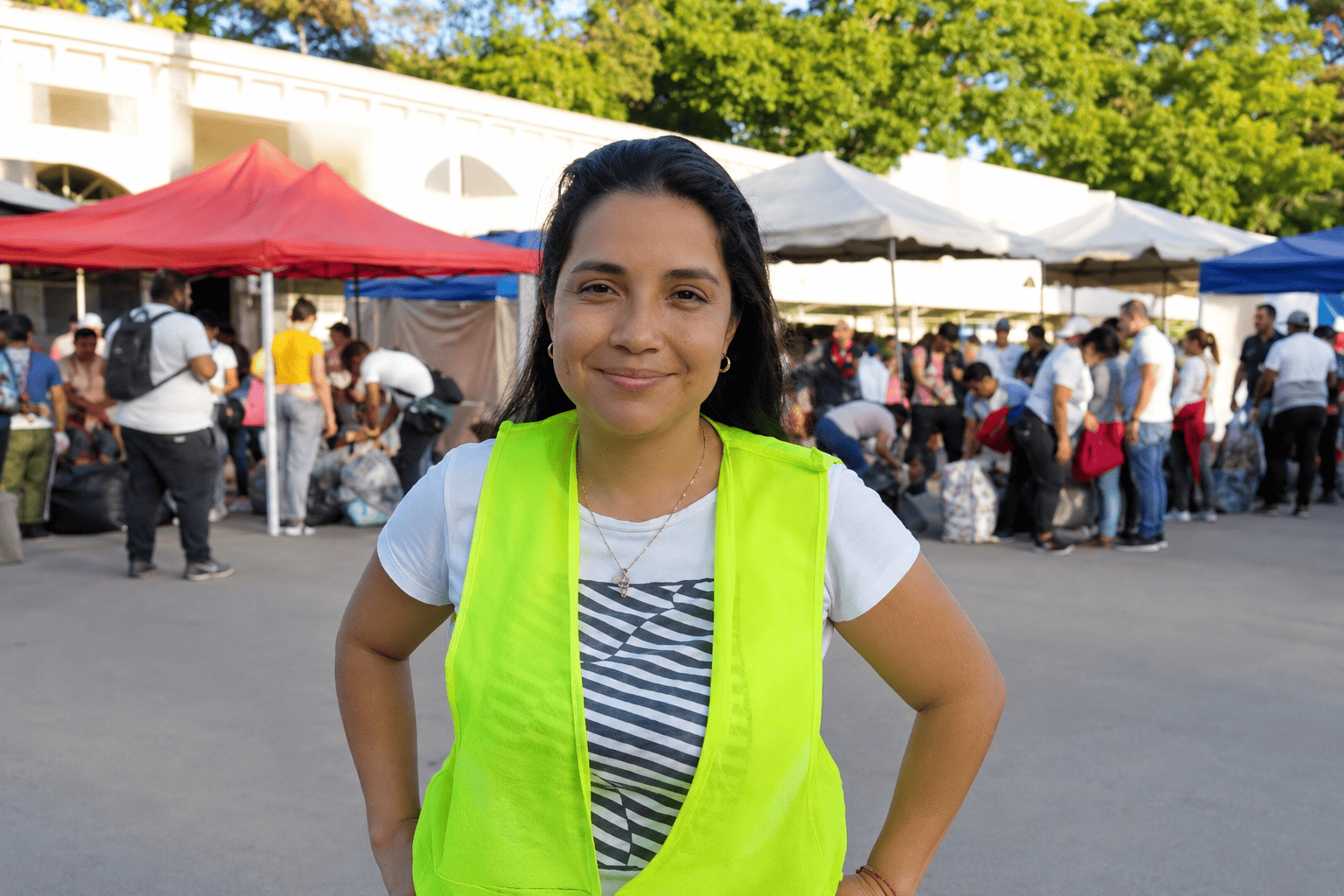
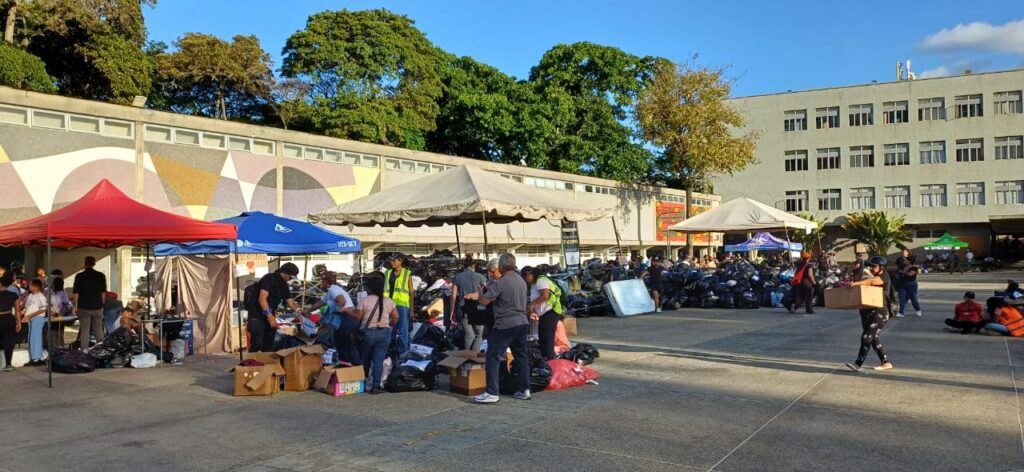
She was once a student leader, a member of the Democratic Action political party, and a candidate for governor of Falcón state, representing A New Era. Today, Lustay Franco spends her days at the donation center set up at the Central University of Venezuela—her alma mater—helping families displaced by the June 24 earthquakes and supporting the rescue teams on the ground.
“The real earthquake begins now,” says the economist. “When the immediate crisis passes, people enter a different stage. They begin to realize they no longer have a home, while commercial life starts moving again, widening the inequality gap because so many Venezuelans have been left behind. Their lives changed overnight.”
Wearing a yellow volunteer vest and a pendant that reads “VZLA” in the colors of Venezuela’s flag, Franco speaks about the volunteers who have poured themselves into the relief effort.
“There’s a group of people here who are completely exhausted, physically and emotionally.”
She pauses, unable to hold back her tears.
“We need to sit down and reflect deeply on the country we live in. We have to move beyond our differences. It may sound like a cliché, but it isn’t. We’ve seen it happen through our actions.”
She recalls asking volunteers to wear caps to shield themselves from the relentless sun beating down on the university campus.
“One cap had the Coca-Cola logo, another Pepsi, another Harina PAN, another Four F, another There Is a Way… Every cap was different, yet everyone stood side by side packing supplies and working together. That image captures what we’re living through. I honestly don’t think we’ve fully grasped the magnitude of what happened.”
“We haven’t even had time to cry”
Franco speaks about June 24 as though only a few days have passed, even though a full week has gone by.
“You lose all sense of time. We haven’t even had time to cry or to understand how many people have died.”
She has spent her days receiving and sorting clothing donations at the Rectorate Plaza of the Central University of Venezuela.
“We’ve managed to organize everything by size, weight, and gender. Yesterday, some young volunteers arrived carrying two small urns, and that completely shook me. I was looking at toys we were sending to the shelters, and then I saw the urns.”
The country, she says, must keep moving forward.
“But it carries a wound, and healing it will require extraordinary effort.”
Franco has little patience for comments that fail to help in a moment like this.
“If what you have to say doesn’t encourage people, doesn’t help restart life, doesn’t offer solutions, or doesn’t lift the spirits of those clearing the rubble—whether they’re wearing a uniform or not—then honestly, there’s no point in saying it.”
She has deliberately stayed away from social media.
“I’m folding clothes. That’s our way of clearing the rubble, hoping these clothes will reach someone who truly needs them.”
She urges journalists and communicators to put ethics first and reject sensationalism.
“People recognize that kind of content, and they reject it.”
Physical and emotional exhaustion, she acknowledges, has become one of the greatest challenges facing volunteers.
“In moments like these, we can’t forget simple words like please or could you?”
Venezuela, she insists, is a wounded nation.
“We’re doing everything within our power. You can be certain that countless people here have given themselves completely to this effort. This is a wound carried by the entire country. The year 2026 has left Venezuela with many wounds, and we must do everything we can to reconnect with the thread that holds our nation together.”