Neirlay Andrade
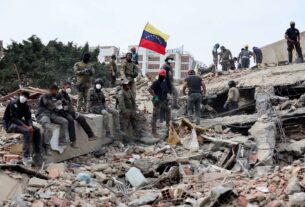
On July 3, while excavators continued clearing concrete and rescue teams searched the rubble for survivors, 180 days had passed since Venezuela’s Supreme Tribunal of Justice (TSJ) ordered Delcy Rodríguez to assume the Presidency of the Republic “in an acting capacity” following the “abduction” of Nicolás Maduro.
The maximum period the Venezuelan Constitution allows for an acting presidency expired at the very moment the country confronted the worst natural disaster in its recent history. Venezuela now stands at the intersection of two urgent priorities: rebuilding a nation devastated by the June 24 earthquakes or opening a new political chapter through presidential elections.
What began as a legal question has evolved into a political debate with far-reaching consequences. While the government insists that responding to the humanitarian emergency must remain the country’s overriding priority, legal scholars, academics, and political leaders argue that the expiration of the transitional period requires Venezuela to define its institutional future. Meanwhile, a Bloomberg survey shows that a significant share of the population still considers presidential elections an urgent priority, even after the disaster.
The origins of the acting presidency
The current acting presidency emerged under extraordinary circumstances. In January 2026, following Nicolás Maduro’s capture during a U.S. military operation, the Supreme Tribunal of Justice declared an “exceptional situation”. It authorized then-Vice President Delcy Rodríguez to assume the role of head of state through a provisional precautionary measure.
The court deliberately avoided deciding whether the presidential absence should qualify as temporary or permanent. Instead, it established an extraordinary legal framework to preserve continuity in the Executive Branch as the country navigated an unprecedented political and institutional crisis.
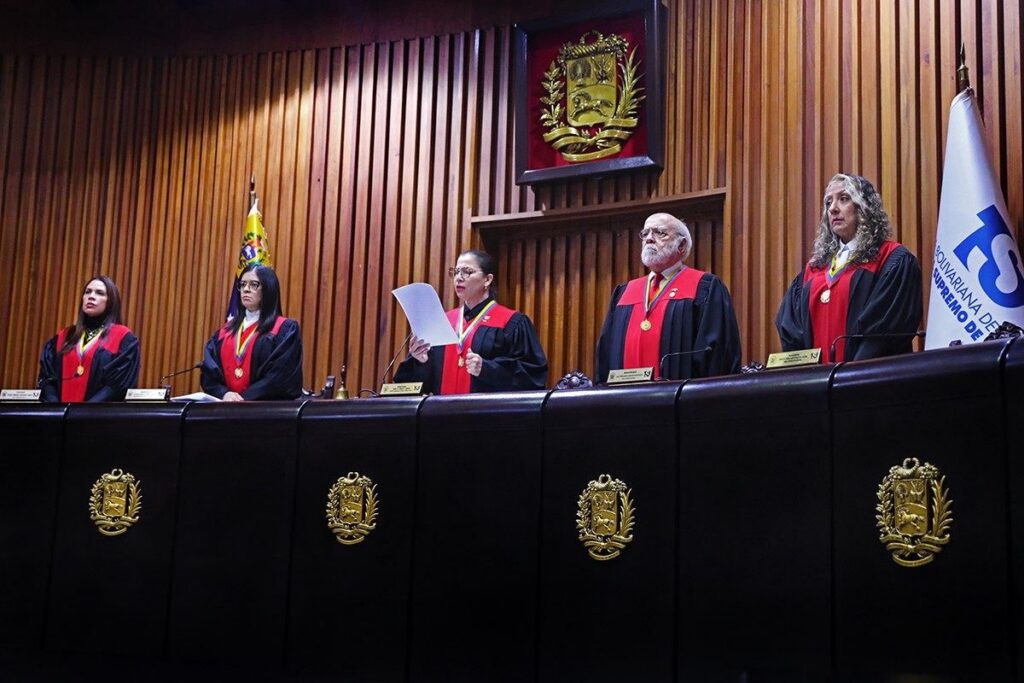
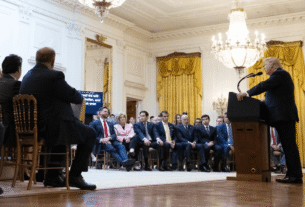
Photo caption: Justices of the Constitutional Chamber of the Supreme Tribunal of Justice issue Judgment No. 0001-2026, ordering Delcy Rodríguez to assume, in an acting capacity, all the powers, duties, and responsibilities inherent to the office of President of the Republic.
What the Constitution says
Article 233 of the Venezuelan Constitution establishes that, in the event of a temporary absence of the President of the Republic, the Executive Vice President may assume the office for up to 90 days, with the possibility of a single 90-day extension upon authorization from the National Assembly.
Once the 180-day limit expires, if the presidential absence has become permanent, the National Assembly must declare the absolute vacancy and call presidential elections within the following thirty days.
That deadline expired in early July, while the country was still reeling from the magnitude 7.2 and 7.5 earthquakes that struck north-central Venezuela, claiming more than 4,300 lives and leaving thousands homeless.
So far, however, the National Assembly has issued no formal ruling on the legal status of the acting presidency.
A constitutional vacuum?
For Blanca Rosa Mármol de León, former president of the Criminal Cassation Chamber of the Supreme Tribunal of Justice, the expiration of the constitutional deadline has created institutional uncertainty.
The former justice argues that, because the constitutional period expired without parliamentary action, Venezuela now faces a “power vacuum” that leaves the country without a president whose constitutional legitimacy stands on solid ground.
Sociologist Javier Biardeau offers a different interpretation. Although he acknowledges the legal weaknesses of the current arrangement, he argues that the Supreme Tribunal of Justice never formally classified the presidential absence as either temporary or permanent.
“The Supreme Tribunal never established a time limit. Instead, it issued a precautionary measure without ruling on the nature of the presidential absence. The real problem is that precautionary measures cannot remain in force indefinitely,” he explains.
According to Biardeau, the ruling created an exceptional legal framework that has now begun to reach its limits.
“The Supreme Tribunal built an interpretive framework to legitimize an acting government through an exceptional—or even extra-constitutional—mechanism,” he says.
In his view, the greatest political failure has not come from the country’s highest court, but from Parliament’s refusal to act.
“The National Assembly’s silence constitutes the most serious political omission,” he argues.
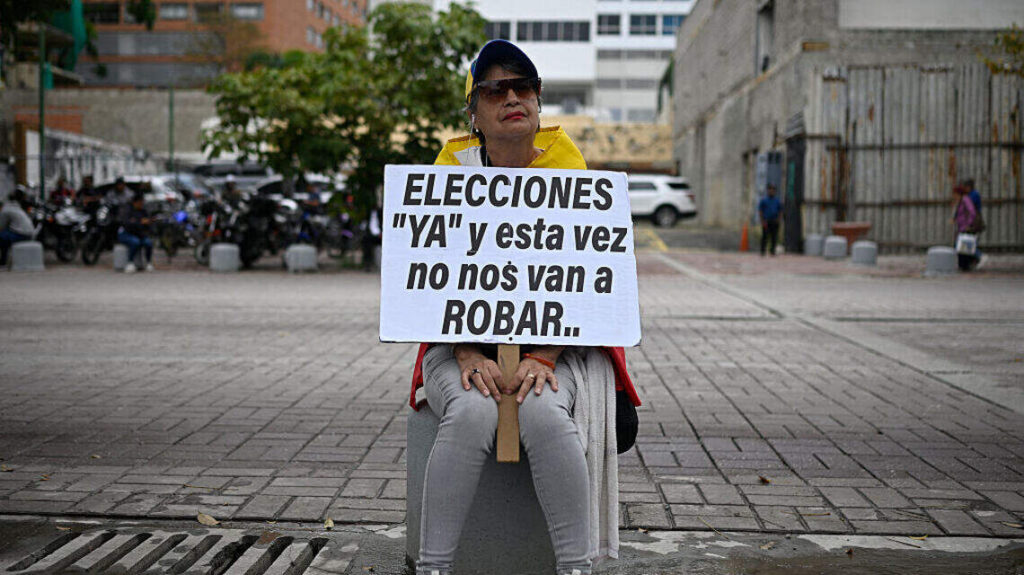
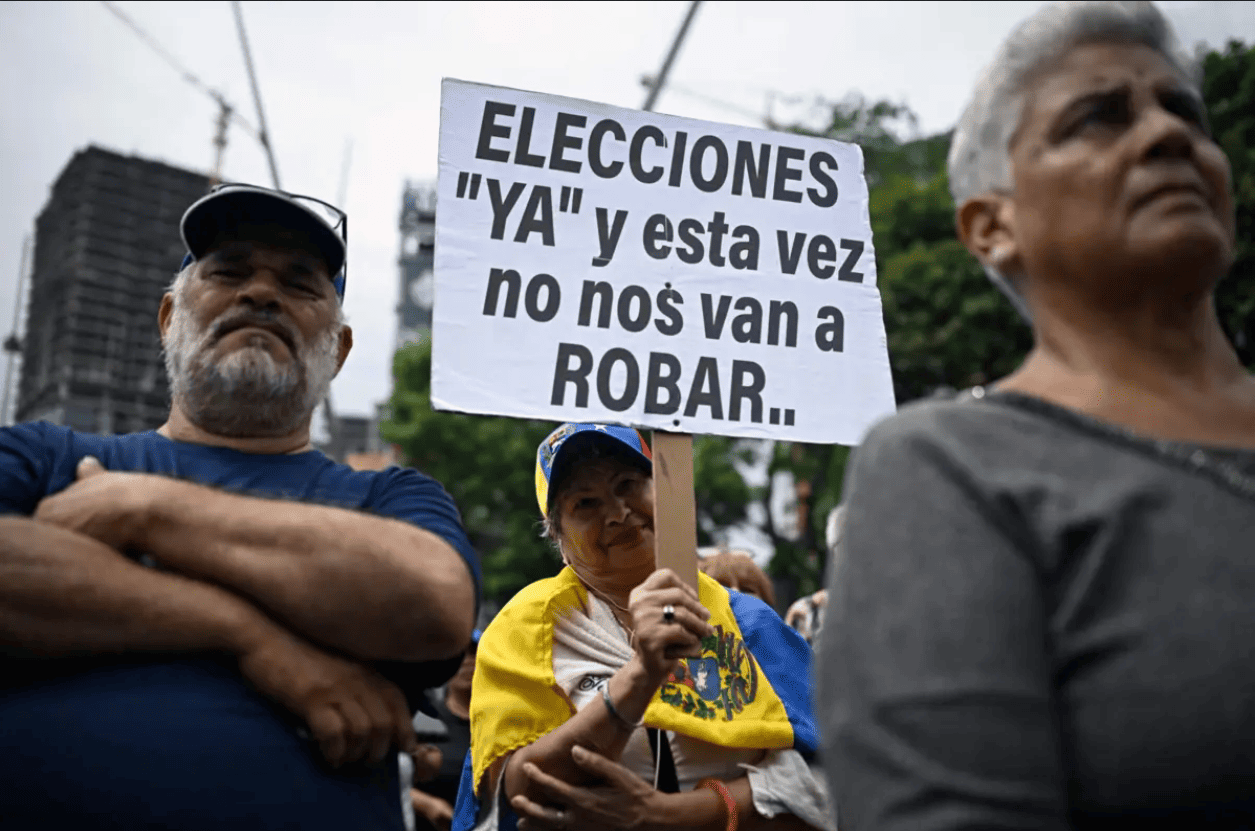
Photo caption: Protest in Alfredo Sadel Square, Caracas, on April 16, 2026, demanding a political transition in Venezuela. FEDERICO PARRA / AFP via Getty Images
For the academic, the disputed 2024 presidential election remains the root of the legitimacy crisis.
“Why are people demanding new elections? Because the dispute over the 2024 election results was never properly resolved.”
Biardeau argues that the country has accumulated a “polycrisis” encompassing “a crisis of political legitimacy, external military aggression, an externally imposed tutelage, a prolonged socio-economic crisis, and a natural catastrophe.”
“The January 3 ruling created a legal framework resembling a thin layer of ice that melts away on a lake as winter comes to an end,” he adds.
The emergency pushes the political debate aside
Facing constitutional challenges, the government has chosen to make national reconstruction after the seismic disaster its overriding priority.
When reporters asked National Assembly President Jorge Rodríguez about the six-month term of the acting presidency, he avoided the constitutional issue and insisted that the country now faces far more pressing concerns.
“We are not in a position to stop any of the processes already underway. What we don’t have right now is the capacity to worry about the Supreme Tribunal of Justice,” he said during a press conference with international media.
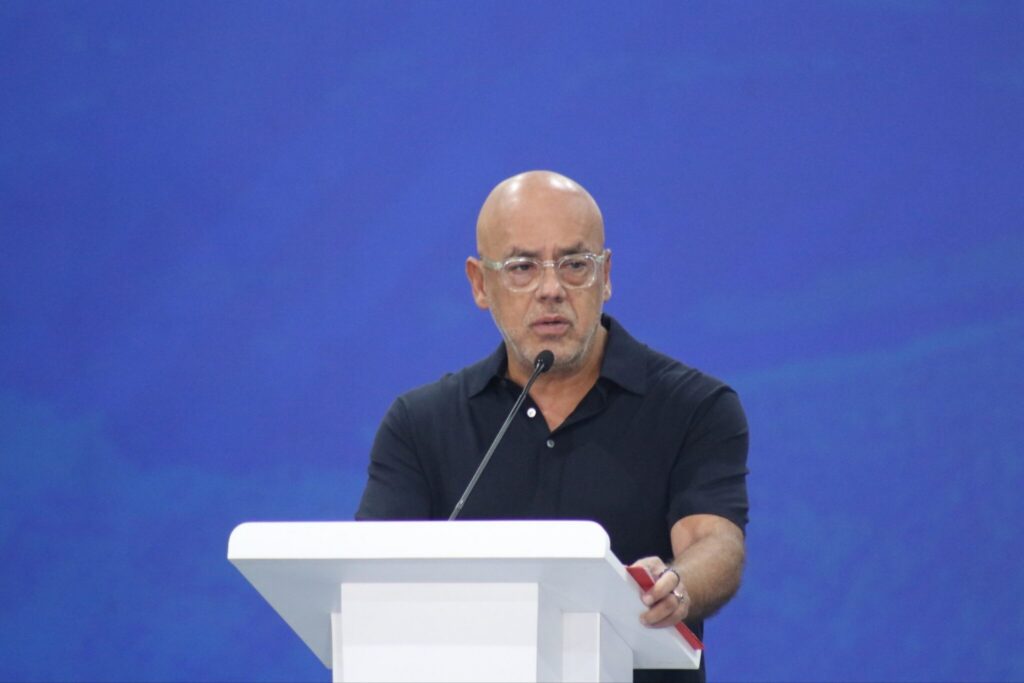
Photo caption: Jorge Rodríguez speaks during a press conference with international media on July 11.
Rodríguez also dismissed the idea of opening negotiations to renew the country’s institutions while rescue operations continue.
“Right now, our concern is for people who have endured the unimaginable. It would be disrespectful—it would be outrageous—for politicians to sit around deciding who should serve on the National Electoral Council or the Supreme Tribunal of Justice.”
The senior government official even ruled out taking part in discussions about a possible political transition.
“There will be time for that. And if you know how to count, don’t count on me for those kinds of meetings.”
Instead, he urged lawmakers to focus on legislation that will speed up the reconstruction of the regions devastated by the twin earthquakes.
Trump also delays elections
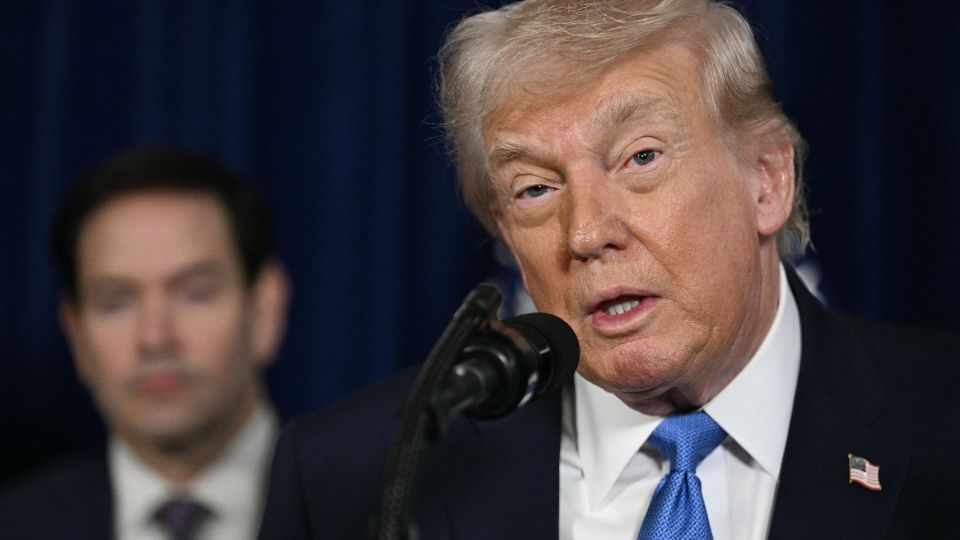
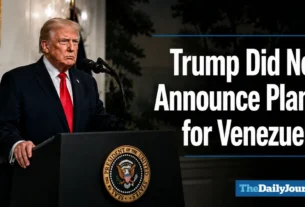
Photo caption: U.S. President Donald Trump speaks to reporters after U.S. military operations in Venezuela, Florida, January 3, 2026. (Via Getty Images)
U.S. President Donald Trump also believes that holding elections immediately is not a realistic option.
During an interview with Fox News, Trump argued that the destruction of Venezuela’s infrastructure makes it impossible to organize a credible electoral process in the near term.
“Yes, I think that will happen, and I believe we’re moving in that direction. But before we get there, it will take time—we have to rebuild the country,” he said.
Trump added that the devastation caused by the earthquakes makes an election impossible under current conditions.
“Right now they couldn’t even hold an election. The country has become a Third World country, and under the current conditions they wouldn’t even know how to organize an electoral process.”
Public opinion breaks the consensus
The public, however, appears to be moving away from both the Venezuelan government’s position and the White House’s.
The latest Latam Pulse survey, conducted by AtlasIntel in partnership with Bloomberg, shows that the earthquake did not erase public demand for an electoral solution.
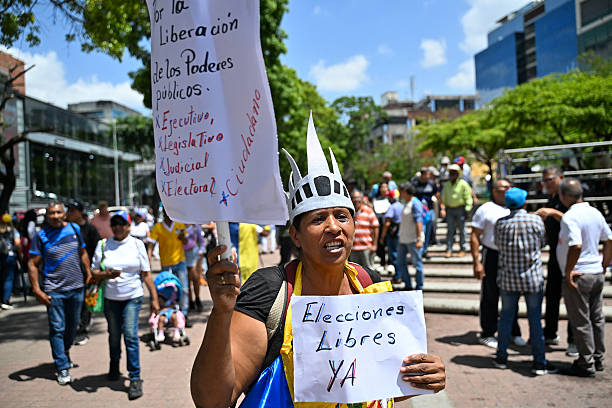
Photo caption: A woman dressed as the Statue of Liberty takes part in a demonstration calling on the Trump administration to support the presidential election. (Photo by Juan BARRETO / AFP via Getty Images)
According to the survey, 45.7% of respondents believe that presidential elections have become even more urgent than before the disaster.
Another 32.6% say national reconstruction should take priority and that the electoral process should be postponed temporarily.
Meanwhile, 21.6% believe the seismic emergency does not change the need to define the country’s political timetable.
The findings portray a nation divided between the urgency of responding to a humanitarian disaster and the search for an institutional solution.
Institutional paths forward
With the constitutional deadline now expired, different sectors have begun proposing legal mechanisms to resolve the current uncertainty.
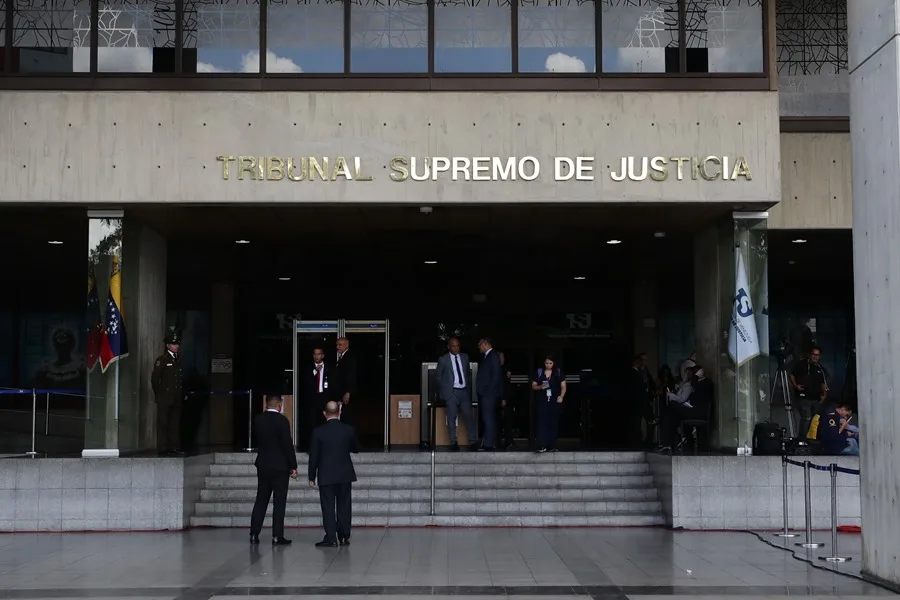
A coalition of left-wing organizations independent of the ruling party recently filed a Constitutional Interpretation Petition before the Constitutional Chamber of the Supreme Tribunal of Justice, asking the court to declare the end of the State of External Emergency and to order the process to reconstitute the National Electoral Council in preparation for a presidential election.
“The National Assembly has to begin saying, right away, when the next elections will take place,” said Andrés Giussepe, one of the petition’s promoters.
Along the same lines, constitutional scholar María Alejandra Díaz argues that any solution must remain firmly within the country’s institutional framework.
“Solutions that fall outside the law usually fragment the democratic struggle and strengthen those who hold power under precarious conditions,” she warns.
In her view, the constitutional path may take longer, but it remains the only one capable of delivering a stable political transition.
“Stability does not come from prolonging the crisis. It comes from respecting the rule of law.”
Beyond the law
Former Metropolitan Mayor of Caracas Juan Barreto argues that the current debate cannot be understood solely through a constitutional lens.
“This is both a legal and a political issue,” he says.
In his view, legal decisions depend on the actual balance of power both inside and outside the country.
“The political conditions created by external tutelage shape every legal decision, and U.S. interests also exert pressure in that direction,” the political analyst explains.
For that reason, he considers it unlikely that constitutional interpretation alone will settle the controversy.
“Everything points to a long political struggle that will ultimately have to lead to negotiations,” he says.
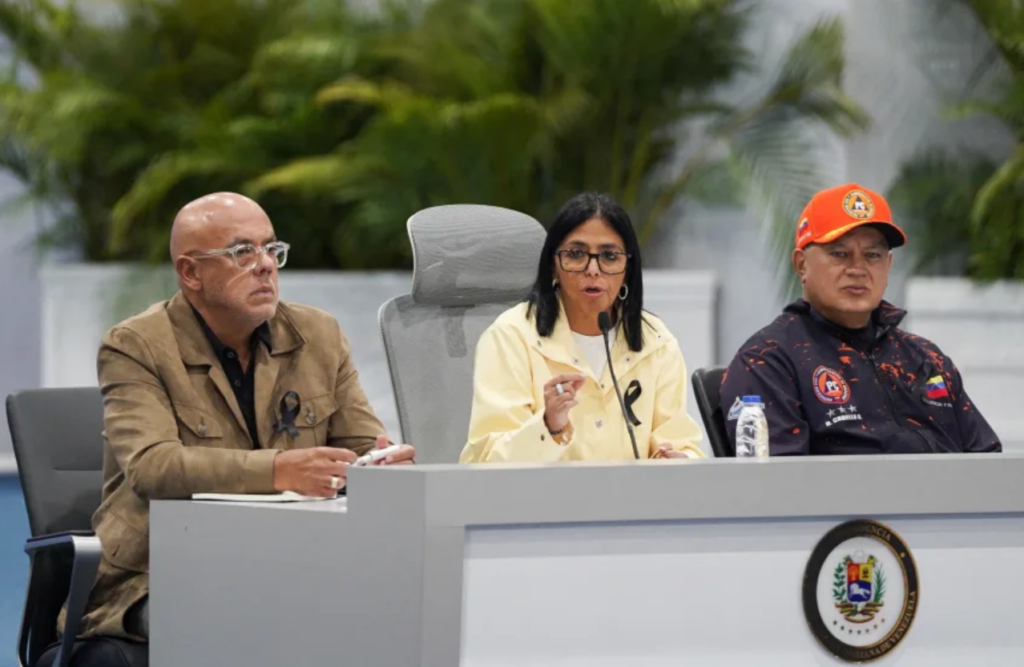
Photo caption: Delcy Rodríguez addresses the media alongside National Assembly President Jorge Rodríguez and Interior Minister Diosdado Cabello following the June 24 earthquakes. Marian Carrasquero/Reuters
Six months into the acting presidency, Venezuela faces an unprecedented paradox: while public pressure continues to demand institutional decisions, the country’s worst humanitarian emergency in decades has pushed that debate into the background.
Both domestic and international centers of power have not hesitated to use the tragedy as a shield against growing demands for democratization and for the restoration of the rule of law.
The constitutional clock has reached zero, but the clock that measures Venezuela’s reconstruction has only just begun.