By Dr. Juan Barreto
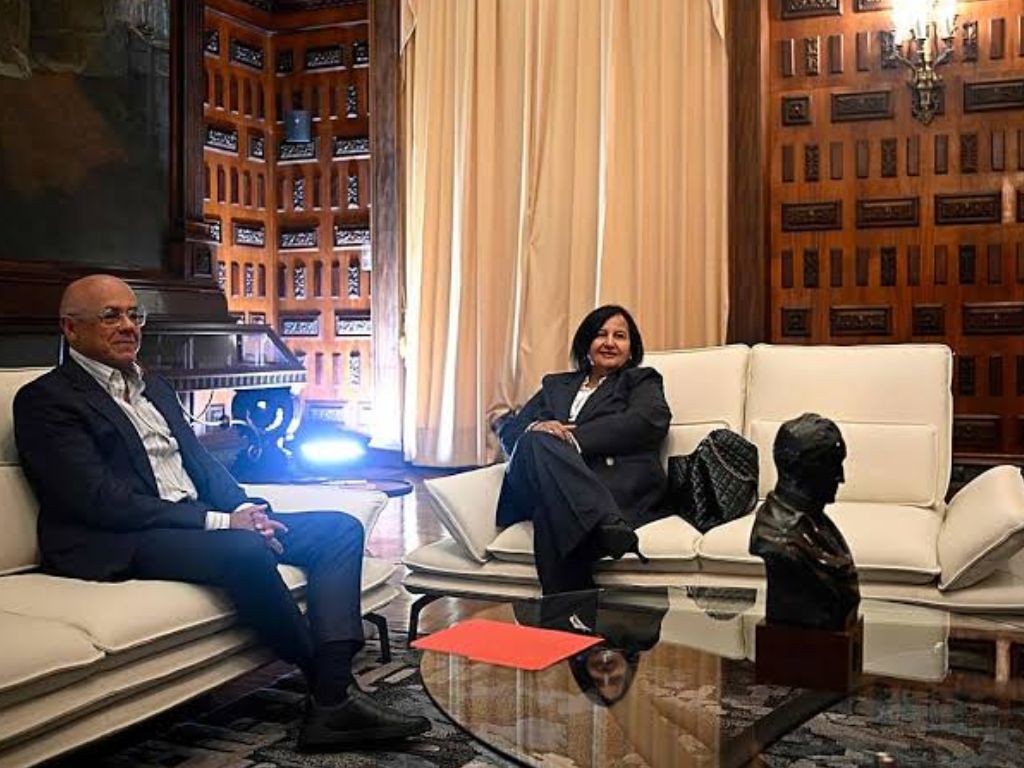
The long-awaited meeting between the 2015 National Assembly and the 2025 National Assembly ultimately fell far short of the expectations that had built up around it.
The much-anticipated first encounter produced one strategic agreement with significant impact: they will create a WhatsApp group—or, as journalist Vladimir Villegas put it, they held a Zoom meeting during which the opposition and government delegations—each controlling one of the two assemblies now recognized by the U.S. Department of State and the U.S. government—presented the list of members who will take part in the future meeting. That meeting still has no confirmed date, although organizers promise it will take place by the end of this week, or perhaps the following one, as the timeline keeps slipping.
There appears to be an initial, modest agreement, at least around a broad and somewhat vague agenda that includes what some might describe as “self-evident tasks”—for example, addressing the national tragedy caused by the earthquakes.
Naturally, that must happen. First and foremost, it is the State’s responsibility, but it also belongs to every citizen. The opposition could not remain on the sidelines, nor could anyone else. Beyond politics, this is an ethical and moral obligation for the entire country, and especially for the State and its public officials.
Second, both sides speak of a democratization process, yet they have not defined what that actually entails. They offered no roadmap and no concrete timetable for discussion. Third, they repeat, in one way or another, Marco Rubio’s familiar “mantra” about economic recovery and related issues.
For now, the working paper remains nothing more than a rough draft filled with broad ideas and good intentions. Even so, the phone call and the creation of a WhatsApp group mark progress that would have seemed unimaginable just a few months ago, when simply having a meme on your phone could put you at risk.
No one had to walk away from the negotiating table because no negotiating table was ever formally established. Still, the two sides did make discreet contact. Meanwhile, different sectors of public opinion, along with political, economic, and social actors, continue to grumble on the sidelines, complaining that they have been left out.
Others insist on receiving an invitation, while some simply want to slip into the process.
At the same time, the opposition’s historic leaders now find themselves left hanging—or put on ice—while those making the least noise demand transparency, faster negotiations, internal debate within the PSUV, a PSUV congress, public consultation, and even live broadcasts of the discussions.
From the stands, some bet on failure while others hope for success. Critics argue back and forth. Those who claim to know best insist that the process must remain confidential. Everything should stay behind closed doors until white smoke appears. They dismiss public debate as demagoguery, arguing that endless assemblies accomplish nothing and that some matters require discretion.
In the end, the PSUV continues wandering through its own hall of mirrors, debating itself while the background noise grows louder and increasingly resembles a scandal.
Those who yesterday remained silent while authorities detained minors now demand internal democracy. That does not make those demands any less legitimate—of course they are, and we support them—but it would also be worthwhile for those voices to reflect on their own actions in the recent past.
Some ask: “Are they losing privileges, or do they fear losing them? Are they creating room to maneuver so they can renegotiate their tactical—and perhaps even strategic—positions?”
On the other side, sectors of the opposition continue betting against these talks so they can later say, “See? I told you. I told you. Nothing is possible without me.” As Louis XVI supposedly said, “After me, the deluge.” Or, “A horse, I need a horse. My kingdom for a horse.”
What will happen in the days ahead? Today, the answer rests in the hands of two rival elites that now, by the grace—or pressure—of the United States, reluctantly accept working shoulder to shoulder, much like the old practice in the countryside of tying together two boys who kept fighting in the hope that they would eventually learn to get along.
We will continue watching. As my mentor Walter Martínez used to say, this is moving slowly—but it is very much underway.