The Daily Journal — Venezuela would need between $1.6 billion and $2.3 billion to restore its aluminum industry, according to estimates that industry experts presented during a conference organized by the IDEAS for Venezuela Group.
Roberto Arredondo, an international aluminum market specialist, said the latest estimate exceeds the figures from a 2024 McKinsey study, which projected Venalum’s recovery costs at between $1.2 billion and $1.5 billion. He explained that the revised estimate reflects several factors, including interest from the U.S. corporation Alcoa.
Arredondo said the projected investment would allocate $100 million to $200 million to restore the Pijiguaos bauxite mine, $500 million to $600 million to rehabilitate the Bauxilum alumina refinery, and $1 billion to $1.5 billion to rebuild Venalum’s electrolytic cells.
Those investments would allow Venalum to increase production to approximately 460,000 metric tons per year.
According to Arredondo, the company currently operates at only 15% to 20% of its installed capacity, while Alcasa continues to suffer severe damage to its electrolytic cells after years of power outages.
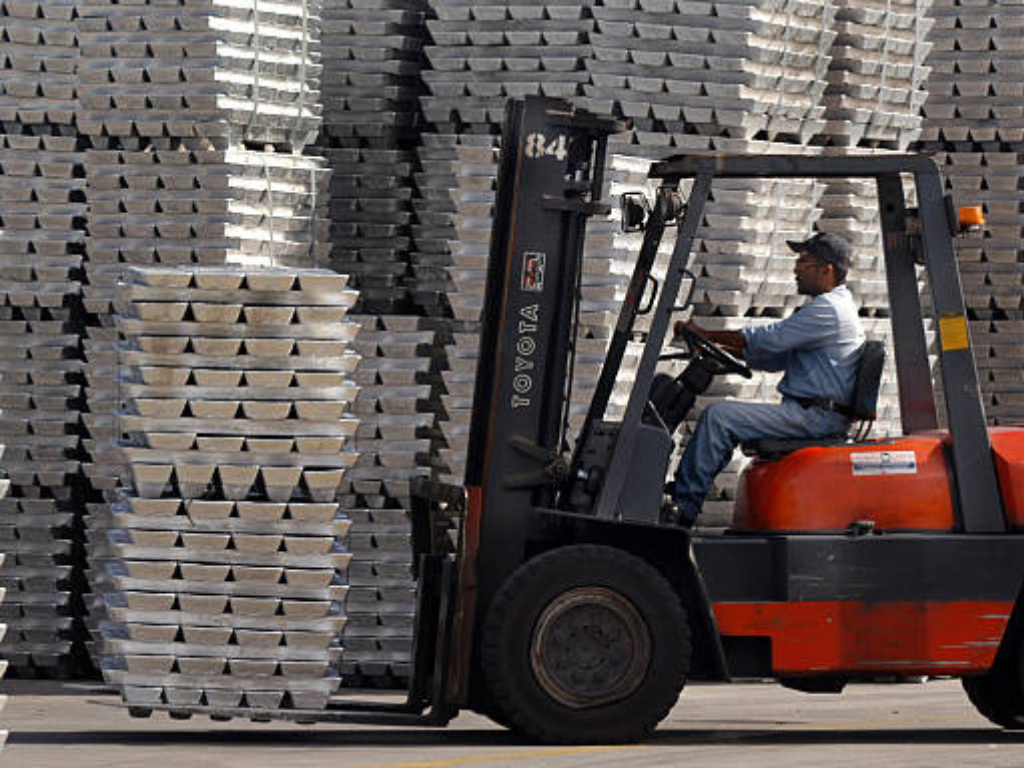
Venezuela produced about 640,000 metric tons of aluminum annually in 1988, placing the country among the world’s 12 largest producers.
Arredondo also noted that Venezuelan aluminum reached purity levels of 98% to 99%.
Elías Matta, engineer, former lawmaker, and coordinator of the IDEAS for Venezuela Group, said the industry’s recovery offers an opportunity to rebuild Guayana’s productive sector by taking advantage of the country’s bauxite reserves, existing industrial infrastructure, and skilled workforce.
“Aluminum is not just a metal. It drives economic, industrial, and social development, and Venezuela has the raw materials, the industrial capacity, and above all the human talent to move forward,” Matta said.
Matta argued that the recovery effort should rely on private investment, legal certainty, and the privatization of Guayana’s state-owned basic industries. He added that the challenge extends beyond restoring primary aluminum production and includes rebuilding the entire value chain, from bauxite extraction to the manufacture of finished products.
Focus on higher-value products
The specialists also argued that the industry should move beyond primary aluminum production and expand into higher-value manufactured products.
Fernando García, the Spain-based representative of a multinational aluminum company, said Venezuela still has extrusion facilities that could produce construction profiles, façade systems, windows, automotive components, aerospace parts, defense equipment, and specialized products such as dental prosthetics.
García also recommended adopting European quality and energy-efficiency standards to produce premium aluminum profiles and strengthen the competitiveness of Venezuelan manufacturers.
Both García and Arredondo agreed that strengthening small and medium-sized processing companies would create specialized jobs, diversify production, and expand exports.
Based on a press release.