The Daily Journal – When we stop and look at the state of the world, we scan the horizon from one side to the other and find ourselves overwhelmed, uneasy, even confused. Uncertainty fills us with anxiety because we cannot see the light at the end of the tunnel, and amid it all the same silent questions emerge: What is happening? What comes next?
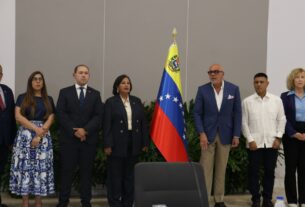
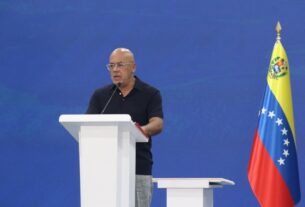
According to Dr. Juan Barreto, “winter is coming”—to borrow George R. R. Martin’s famous phrase. Speaking last Wednesday at CEDES (Center for the Study of Socialist Democracy) during a lecture titled What Is and What Is to Come, the political analyst argued that Western capitalism is evolving into a new mode of production.
Techno-feudalism and the transformation of capitalism
The concept of techno-feudalism has gained traction in recent decades, with Greek economist and former finance minister Yanis Varoufakis serving as one of its leading proponents. He argues that cloud technology has fundamentally altered capitalism and reshaped the market as we once knew it.
Under this model, millions of users leave behind digital footprints that continuously feed algorithms. Individuals no longer own their preferences; algorithms increasingly shape and condition them. As a result, the market no longer revolves around production but around influencing consumer behavior.
By surrendering personal data in exchange for access to cloud services and digital platforms, we do much the same as medieval serfs who paid feudal lords for the right to use their land.
The major technology leaders of Silicon Valley now resemble feudal lords who control digital territories where users generate data and content.
Rare earth refining
The United States, however, faces a significant obstacle.
Barreto identifies microchip production as one of the central battlegrounds in today’s geopolitical rivalry between China and the United States, with Taiwan at its core.
The development of these technologies—and many military applications—depends on refined rare earth minerals, an area where China holds a commanding lead. According to Barreto, China controls 92% of global rare earth processing and refining. The country has also developed proprietary methods to manufacture supermagnets from thorium and other minerals, components that play a critical role in modern defense industries.
Because the United States transferred technology abroad decades ago and failed to develop its own refining capabilities, it now struggles with what Barreto describes as a lack of technological sovereignty.
“The American military industry has a bottleneck. That is why Patriot missiles, for example, cost so much, while Chinese and Iranian missiles cost far less,” Barreto argues.
To reduce that dependence, the United States seeks to contain China across Asia by restricting its maritime access and targeting its key energy partners, including Iran and Russia, in an effort to weaken Beijing’s technological leverage.
The new Arctic route and the U.S. response on Greenland
China and Russia recently signed an agreement to establish an alternative trade corridor through the Bering Strait, offering an alternative to the traditional maritime routes controlled by Western powers.
Its greatest advantage lies in transportation time. Shipping goods from Asia to Europe through the Red Sea or the Strait of Hormuz typically takes about 40 days. The Arctic route has already reduced that journey to 18 days, and projections suggest it could eventually fall to 8 to 10 days.
So far, cargo ships have transported 270 million tons of goods along that corridor.
Russia contributes port infrastructure—including the Port of St. Petersburg—along with security and a fleet of 40 icebreakers. At the same time, China provides what Barreto describes as the world’s largest commercial shipping capacity.
In response to these developments, Donald Trump has publicly expressed interest in bringing Greenland under U.S. control.
From backyard to security belt
Amid these geopolitical shifts stands Venezuela.
The country no longer serves merely as America’s “backyard.” Barreto argues that Venezuela has become the last strategic frontier and part of the United States’ security belt.
Under what he calls the “Trump Corollary” to the Monroe Doctrine, Washington views Venezuela’s wealth and natural resources as part of its own strategic reserves.
According to Barreto, the United States believes that “Venezuela’s resources form part of its own strategic reserves.”
That perspective places Venezuela in an extremely vulnerable position, integrating the country into U.S. strategic supply lines amid growing tensions with rival powers.
The fracturing of national and popular sovereignty
Barreto uses an economic analogy to explain why national sovereignty and popular sovereignty cannot exist separately.
“National sovereignty and popular sovereignty are like the two sides of a banknote… you cannot have one without the other.”
His central argument holds that today’s legitimacy crisis has broken that unity.
“When Maduro confiscates and appropriates popular sovereignty, he damages the chain of sovereignty… and, to put it mildly, weakens national sovereignty.”
Once legitimate authority weakens, Barreto argues, the figure of the foreign “gendarme” or “sentinel” emerges, imposing external sovereignty—not by denying national sovereignty outright, but by replacing it with direct control.
Domestically, Barreto describes Maduro’s government as a bureaucratic and authoritarian system that has recently evolved into a more de-ideologized branch that he calls the “Rodrigato.” He argues that it rests on a “civilian-military-police fusion,” elevating the police into a central power structure.
According to Barreto, that evolution has produced “the policing of the State,” creating what he calls “a popular military regime in which the civilian sector is gradually cornered.”
While political actors confront one another, a parallel struggle unfolds among multinational corporations.
“There is a war over the division of the spoils… the traditional rivalry is between Chevron and ExxonMobil,” Barreto says.
He argues that ExxonMobil, which primarily supports Democratic political interests, is waiting for U.S. election results before deciding its next move. At the same time, Chevron continues to align more closely with Republican interests.
Faced with this landscape of corporate interests and political elites, Venezuelan society has developed what Barreto sees as a defense mechanism: anti-politics.
“People respond with skepticism toward everything that smells of politics. Their attitude is anti-political, not apolitical… a way of preserving their own personal space,” he explains.
Within the fragmentation of Venezuela’s opposition, Barreto presents María Corina Machado as an example of rapidly declining leadership.
After the July 28, 2024 election, Machado’s approval ratings reportedly reached 70% to 76%. Barreto argues that unfulfilled expectations and shifts in the positions of international allies gradually eroded that support.
He identifies Machado’s relationship with the foreign “sentinel,” Donald Trump, as the decisive factor in that decline. According to Barreto, Trump’s January 4 remarks—when he said he did not know her well and questioned her readiness to govern—cost her approximately 12 percentage points in public support.
Barreto believes the White House has followed a deliberate strategy.
“Trump reduces her to a point where he can control her.”
Rather than removing her from the political stage, he argues, Washington keeps her “in the freezer” as a political card that it can play if U.S. interests require it.
Barreto concludes that Machado now faces both political and personal deterioration. Sources describe her as a disruptive political figure increasingly unsettled by declining approval ratings, which they place at 28%—still competitive, yet far below her earlier popularity.
He also questions her approach to sovereignty. While Machado invokes popular sovereignty to legitimize her political cause, Barreto argues that she leaves national sovereignty vulnerable to foreign intervention.
In the end, he concludes, Machado appears trapped in the same cycle that affected previous opposition leaders: isolated and politically sidelined by the very centers of power that once promoted her as a presidential contender.