The Daily Journal.- The National Academy of Economic Sciences (ANCE) warned that full and formal dollarization of the Venezuelan economy could quickly curb inflation but would significantly limit the country’s economic policy tools. Instead, it proposed establishing a multi-currency or dual-currency regime.
In a document released amid debate over officially adopting the U.S. dollar as legal tender, the Academy said Venezuela needs to stabilize its economy after years of institutional deterioration, declining production, and macroeconomic instability.
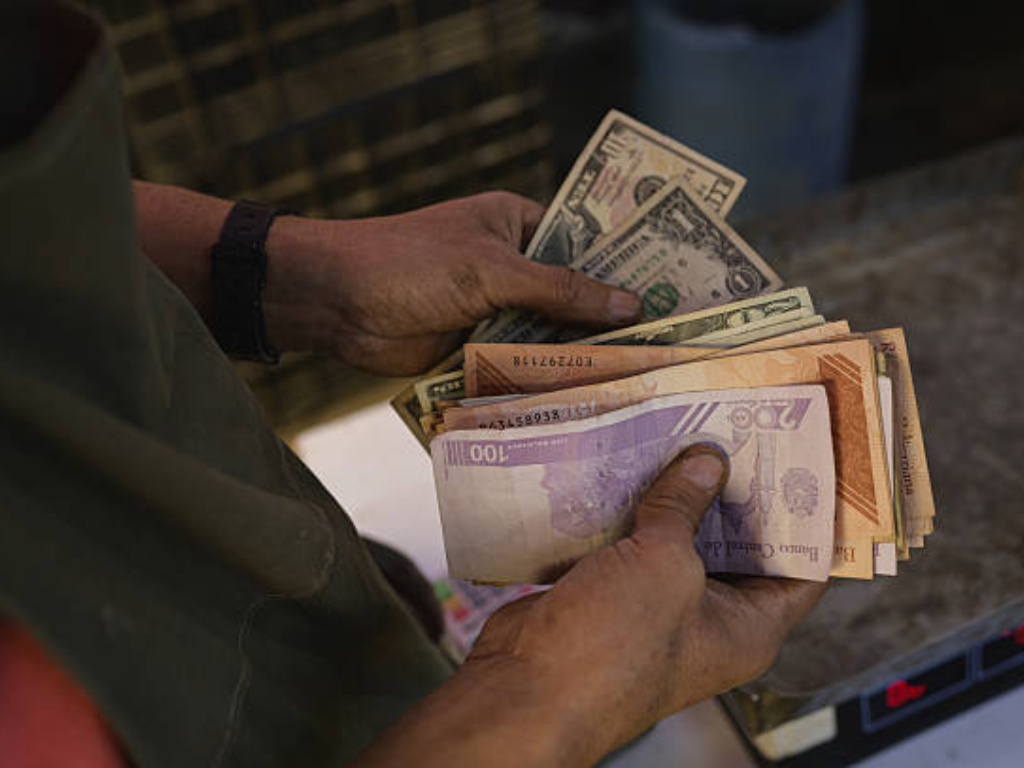
The institution noted that the country has already experienced de facto dollarization since 2018 in response to the bolivar’s depreciation and its loss of function as a store of value, unit of account, and means of payment.
ANCE acknowledged that formal dollarization could serve as a short-term stabilization mechanism. According to the document, eliminating the Central Bank of Venezuela’s (BCV) ability to issue money to finance the public deficit would create an “anti-inflationary anchor with immediate impact,” helping to dismantle hyperinflationary dynamics and restore price stability.
Among other benefits, the Academy identified the elimination of exchange-rate and devaluation risks, a potential reduction in interest rates and a recovery of foreign-currency banking intermediation. It argued that eliminating exchange-rate uncertainty would make it easier for businesses to set prices, sign contracts and carry out financial planning.
However, ANCE warned that these benefits would come at high costs. Dollarization would eliminate monetary and exchange-rate policy, leaving the country without key tools to respond to external shocks such as falling oil prices or a contraction in international trade.
This issue is particularly relevant for Venezuela because of its dependence on oil revenues. The Academy argued that the inability to use the exchange rate to absorb such shocks could make the economy more vulnerable to external fluctuations.
ANCE also identified dependence on U.S. Federal Reserve (Fed) decisions as another risk. Under full dollarization, the Academy explained, Venezuela would have to follow interest-rate decisions made in Washington, which reflect U.S. economic conditions.
The Academy also warned that the BCV would lose its role as lender of last resort. “The BCV would lose the authority to inject emergency liquidity into the banking system during periods of illiquidity,” the document stated. At the same time, Venezuela would no longer receive fiscal revenue from seigniorage, which would instead accrue to the Federal Reserve.
The institution further warned that dollarization alone would not solve the country’s fiscal problems. “Dollarization does not, by itself, prevent the emergence of chronic fiscal deficits or excessive domestic and external public debt,” the document stated. As a result, imbalances in public finances could persist even after Venezuela abandoned the bolivar.
Conditions before dollarization
According to ANCE, formal dollarization would require Venezuela to meet certain macroeconomic and institutional conditions beforehand. These include having sufficient liquid international reserves to exchange the bolivar monetary base.
The Academy warned that “a reserve shortfall would force the exchange to take place at a higher exchange rate, with consequences for the purchasing power of wages and pensions.”
The process would also require authorities to amend or repeal the constitutional and legal framework that establishes the bolivar as the country’s monetary unit, redefine the BCV’s functions, and implement an immediate fiscal adjustment.
ANCE also considers it necessary to strengthen the financial system through a capitalization plan and establish a prudential liquidity reserve fund to address potential shocks without relying on the central bank as lender of last resort.
ANCE proposes dual-currency alternative
Given these costs, the Academy proposes formalizing a multi-currency or dual-currency regime as part of a comprehensive institutional reform program.
The proposal calls for legally allowing the dollar, other strong foreign currencies, and the bolivar to coexist within the financial and commercial system, while gradually restoring the national currency’s functions as inflation declines.
The plan would include restoring fiscal discipline, implementing tax reform, strengthening the BCV’s autonomy and prohibiting monetary financing of the fiscal deficit. It also proposes an exchange-rate policy based on “a single, flexible exchange rate” to prevent real overvaluation and preserve the competitiveness of non-oil productive sectors.
ANCE argues that this model would allow Venezuela to take advantage of the widespread use of foreign currencies without completely giving up its economic policy tools.
“This alternative preserves the necessary room for maneuver to respond to oil-market fluctuations and diversify the country’s export supply,” the Academy stated.