By José Leonardo Salazar
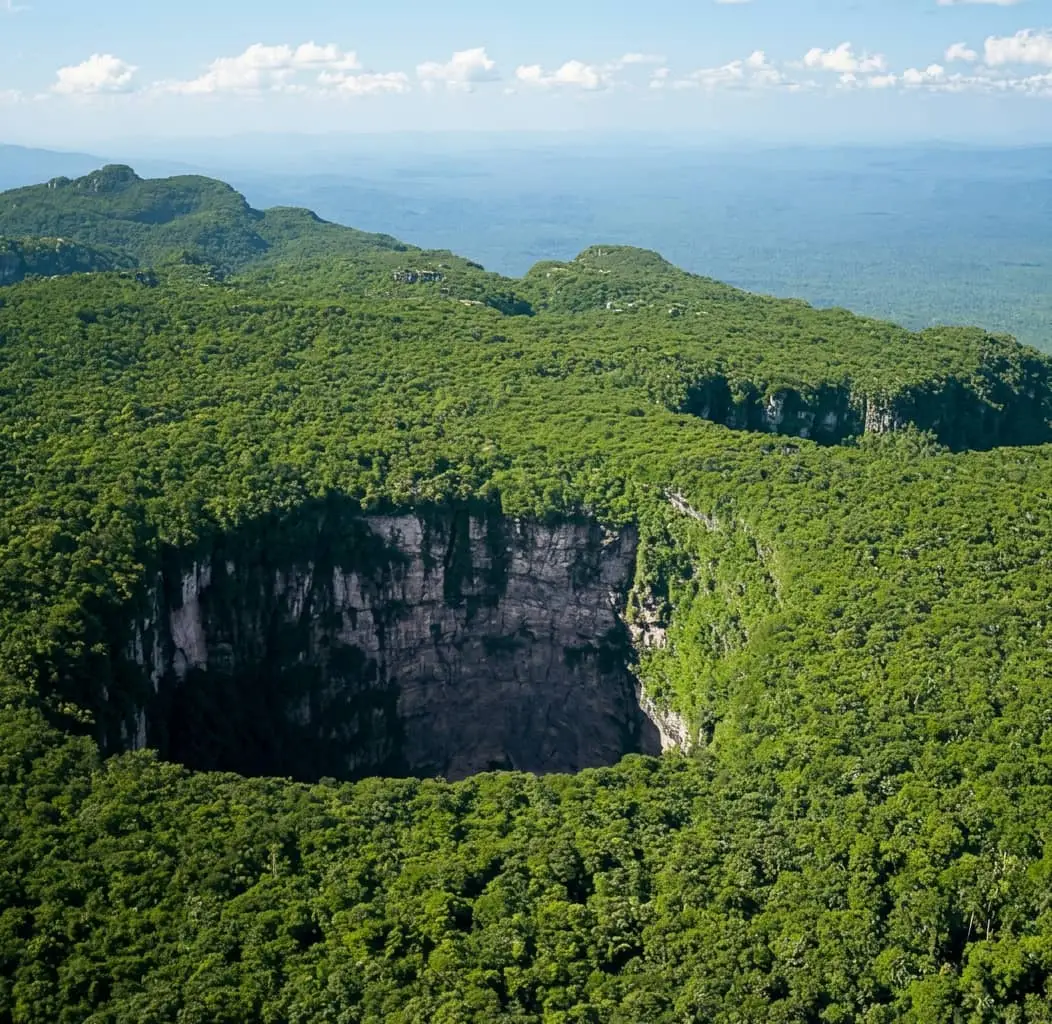
The recent circulation of images showing a helicopter flight over the remote Sarisariñama Tepui in Bolívar state for advertising purposes has once again raised alarm among Venezuela’s scientific community and environmentalists. The incident, involving commercial activities and tourism promotion, has reignited a profound debate about the true purpose of national parks and the fragility of the legal framework that should protect them.
Images of the flight over Sarisariñama have revived concerns about unregulated tourism’s impact on Venezuela’s most protected and vulnerable ecosystems.
Under Venezuelan law, national parks are not merely destinations for mass recreation. They serve vital strategic functions, including biodiversity conservation, preserving genetic heritage, and protecting essential environmental processes such as water resources and climate regulation.
Established in 1978, Jaua-Sarisariñama National Park is one of the areas that require the highest levels of protection because of its monumental karst depressions, unique in the world, such as Sima Humboldt. The park harbors endemic ecosystems that have evolved in isolation for millions of years. Any careless or irresponsible human intervention could cause the irreparable loss of plant and animal species that exist nowhere else on Earth.
Strict regulations limit low-altitude tourist flights and landings by private civilian helicopters because of the destructive acoustic impact they generate. The deafening noise of helicopter rotors causes extreme stress among native wildlife, disrupting their life cycles and nesting patterns. Venezuelan law allows exceptions for these aircraft only for rescue missions, environmental monitoring, or scientific research, with prior authorization from the National Parks Institute (Inparques) and the National Institute of Civil Aviation (INAC).
Experts from environmental organizations warn that constantly exposing these inaccessible landscapes on social media under the label of “adventure tourism” risks sending the wrong message: national parks are not amusement parks like Disney World. Relaxed controls and a lack of transparency around Inparques permits have, at times, turned these protected areas into territories where boundaries remain unclear.
Article 127 of the Venezuelan Constitution clearly establishes every citizen’s duty to safeguard the environment for future generations. Therefore, the scientific community is not calling for the country’s complete isolation, but rather for strict compliance with the law, transparent ecological audits, and a definitive end to the commercialization of the continent’s oldest ecosystems.