The president of the Network for the Defense of Work, Property, and the Constitution argues that the State never paid for more than 90% of the expropriated assets. He proposes compensation payments to enable businesses to resume operations once their original owners regain control.
Vanessa Davies
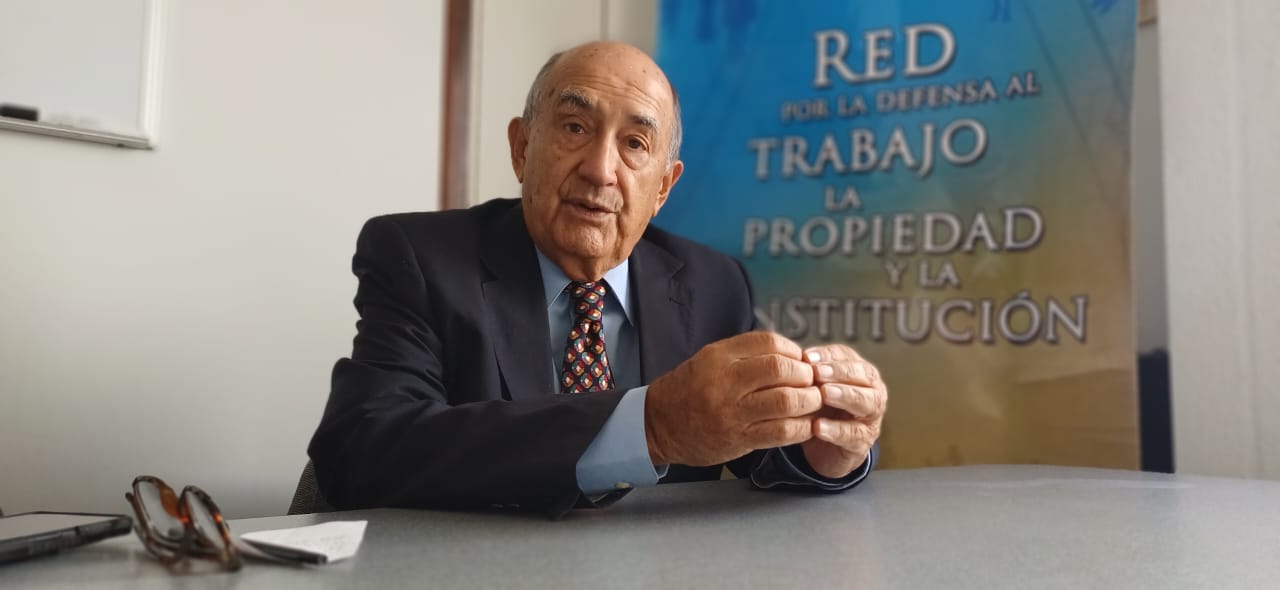
The word compensation frequently appears in the discourse of businessman Vicente Brito, president of the Network for the Defense of Work, Property, and the Constitution. Today, he invokes it when discussing the companies that the Venezuelan government expropriated without compensating their owners.
To recover “the companies and properties that deteriorated under public administration,” Venezuela needs investment, and “the State must bear that cost because it caused the deterioration,” explains Brito, a former president of Fedecámaras.
More than 90% of expropriated properties never received payment, he asserts.
“We estimate that private property losses affected approximately 15,000 units, including companies, buildings, farms, ranches, and agricultural estates that authorities invaded or occupied.”
The Network estimates that the resulting asset damage totals $100 billion.
“Agroisleña alone represents a claim of roughly $1 billion. When we consider estates, farms, and businesses as a whole, we reach that figure of $100 billion. It is an extremely concerning amount. Compensation will not equal that figure because nobody is purchasing the companies. However, compensation funds would allow business owners to restart their production centers.”
Authorities expropriated Agroisleña in October 2010 under a decision by President Hugo Chávez. The company later became Agropatria and evolved into a symbol of the Venezuelan private sector’s struggle for property rights. In 2022, the International Center for Settlement of Investment Disputes (ICSID) ruled that Venezuela must pay more than $1.6 billion to Agroisleña’s owner, the Spanish group Agroinsumos Ibero-Americanos.
Debt issuance or multilateral financing
This debate has regained relevance following Acting President Delcy Rodríguez’s decision to establish a special commission to evaluate and classify public assets.
—Should Venezuela return all expropriated companies?
—Authorities must return every company that never received compensation. Otherwise, the State effectively steals from private owners. The Constitution establishes expropriation only through fair compensation and a formal valuation process. Authorities committed serious abuses under the Land Law. Even more troubling, public officials took advantage of confiscated properties for personal benefit. We face not only the challenge of returning assets but also the need to establish accountability so that those who profited from violations of property rights face civil and political consequences.
—Has production declined in all expropriated companies?
—Production has fallen to minimal levels. When private owners managed the steel industry, companies produced five million tons of steel, in addition to aluminum output. When private investors controlled Electricidad de Caracas, the Tacoa plant supplied Greater Caracas with roughly 4,500 megawatts, allowing the Guri Dam to serve the rest of the country. We can observe the same pattern across all occupied companies. In some cases, the government paid compensation, as happened with CANTV. But in more than 90% of cases—particularly those involving small business owners—the State seized assets without any payment. That is why I insist: owners must receive compensation, authorities must return their properties, and responsible officials must answer for their actions.
—You speak about returning properties that never received payment. What about those that did?
—The State has the right to decide which assets it wants to sell and which it wants to keep because those assets legitimately belong to the State when authorities comply with the constitutional requirements for expropriation and compensation.
—But according to your estimates, most owners never received payment.
—One only needs to look at the graveyards these policies have left behind. What concerns me most is the deeply inappropriate—using a polite term—conduct of public officials who took advantage of assets that never belonged to them. Everyone knows who they are, where they are, and how they benefited.
—Where would the money come from to compensate those owners?
—The government could issue debt. It could also seek financing from multilateral institutions to cover the deterioration. If Venezuela wants to develop, it cannot depend solely on oil production. Oil generates income that can improve public services and infrastructure, but the country must produce goods and create jobs. Otherwise, we will not move forward.
A vote of confidence for Pisella
—When you talk about land and companies, do you also include real estate?
—Yes. The total number of properties reaches nearly 15,000, including apartments and houses. Many people left the country, and government-connected individuals occupied their homes. What has happened in Venezuela defies understanding. Those responsible for upholding the rule of law instead committed these abuses for their own benefit.
—How quickly should this process take place?
—As soon as possible. That is how we can recover national production. Commerce continues to grow, but almost everything comes from imports.
—Does the Network want to participate in the special commission created by the government?
—No. We believe that responsibility belongs to the State. Interestingly, a businessman now chairs the commission: Luigi Pisella, former president of Conindustria. We believe he deserves at least a vote of confidence as he carries out his work.
—Are there companies that you would leave under State ownership?
—What do we see today? Fiscal deficits and inflation that every Venezuelan pays for. A large portion of that burden stems from the Central Bank’s issuance of non-backed money through PDVSA to cover losses incurred by state-owned enterprises. Why continue to operate companies under State ownership when the State has repeatedly demonstrated inefficiency and those responsible have squandered public resources?