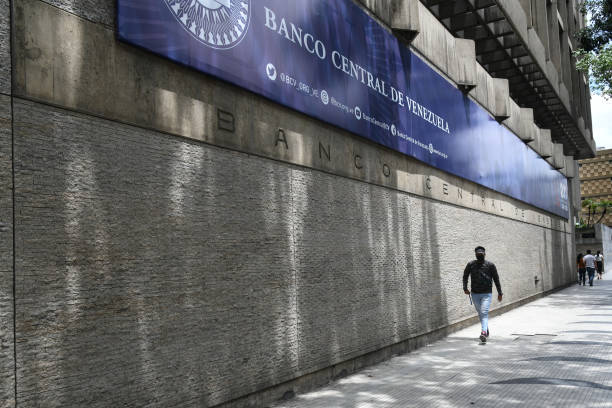
Alejandro J. Sucre — Venezuela faces one of the most complex sovereign debt restructuring processes in its history. The scale of the challenge is undeniable: years without international audits, debt instruments scattered across multiple jurisdictions, opaque bilateral debt with China and Russia, and arbitration awards issued by the International Center for Settlement of Investment Disputes (ICSID) that creditors continue to enforce against Venezuelan assets abroad. No one should minimize these obstacles. Yet there is another reality, equally well-documented, that often goes unmentioned: paralysis also carries a price, and Venezuelans—not analysts—pay it.
The arguments concerning the debt inventory and institutional transparency are valid and deserve attention. Venezuela has not completed an Article IV consultation with the International Monetary Fund (IMF) since 2004. The experiences of Argentina, Peru, and Zambia demonstrate the cost of poorly managed negotiations: prolonged exclusion from international financial markets and opportunistic funds multiplying their investments fourfold, fivefold, or even tenfold. Acknowledging those risks, however, does not mean concluding that the restructuring process must stop until ideal conditions exist—conditions that have never existed in the history of sovereign debt restructurings. Ecuador in 2020 and Uruguay in 2003 did not arrive at the negotiating table with perfect information. They arrived with the best information available and advisers who built the debt inventory as the process unfolded.
Venezuela has retained specialized advisers precisely to carry out that work. Ignoring that fact is not technical rigor; it is an omission that distorts the diagnosis.
Some analyses describe in detail the risks of negotiating but remain silent about the costs of refusing to negotiate. Every year, Venezuela’s financial isolation deepens. Venezuelan assets abroad remain exposed to enforcement actions regardless of whether the country sits at the negotiating table. Arbitration awards do not pause while the country deliberates. Funds holding Venezuelan debt strengthen their positions with every year of uncertainty rather than weaken them. Paralysis is not a neutral position; it is a decision with tangible consequences that benefits precisely those whom critics claim they want to avoid. Perfectionism also has a cost.
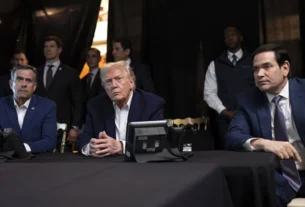
Alongside this debate, concrete developments deserve consideration. Dozens of oil fields have been assigned to international operators. PDVSA has signed agreements with energy companies from multiple countries. Documented investor interest from the United States and Australia has emerged in Venezuela’s mining and energy sectors. The Trump administration’s National Energy Dominance Council has maintained direct contacts with participants in the sector.
None of these developments appears in analyses that conclude Venezuela is not ready to move forward. A country with growing oil production and committed international operators negotiates its debt from a different—and stronger—position than a country in total collapse. Leaving that out presents a cropped image as though it were the complete picture.
A recurring pattern in some analyses deserves attention: the use of legitimate conditions as instruments of paralysis. They identify valid requirements—full transparency, completion of the IMF Article IV consultation, and a comprehensive debt inventory—and present them as absolute prerequisites without which any action is doomed to fail. The result is not greater technical rigor but indefinite inaction. Greece did not have those conditions. Neither did Argentina. Iraq spent more than a year rebuilding its debt inventory while negotiating—not afterward. The one question those analyses avoid is the one that truly matters: Is an imperfect restructuring carried out with a clear strategy preferable to an indefinite default that benefits only the opportunistic creditors who are counting on exactly that paralysis?
The transparency debate should focus not on whether to negotiate but on how to negotiate more effectively. That means demanding a comprehensive debt audit with publicly available results, a strategy that includes all creditors simultaneously, an externally validated debt sustainability analysis, and an asset protection framework capable of halting ongoing enforcement actions. Those are requirements that should guide the restructuring process—not arguments for delaying it. Genuine transparency does not exist before negotiations begin; it is built through the negotiation itself.
Today, Venezuela has advisers at work, genuine investment momentum, tangible international interest, and a diplomatic opening with Washington that did not exist eight months ago. Those assets will not last forever—Windows of opportunity in economic policy open and close. Exaggerating risks to justify paralysis, at a moment when the country has more negotiating leverage than some analyses acknowledge, carries its own cost. And that cost, as always, will fall on the Venezuelan people, who never had a seat at the negotiating table.