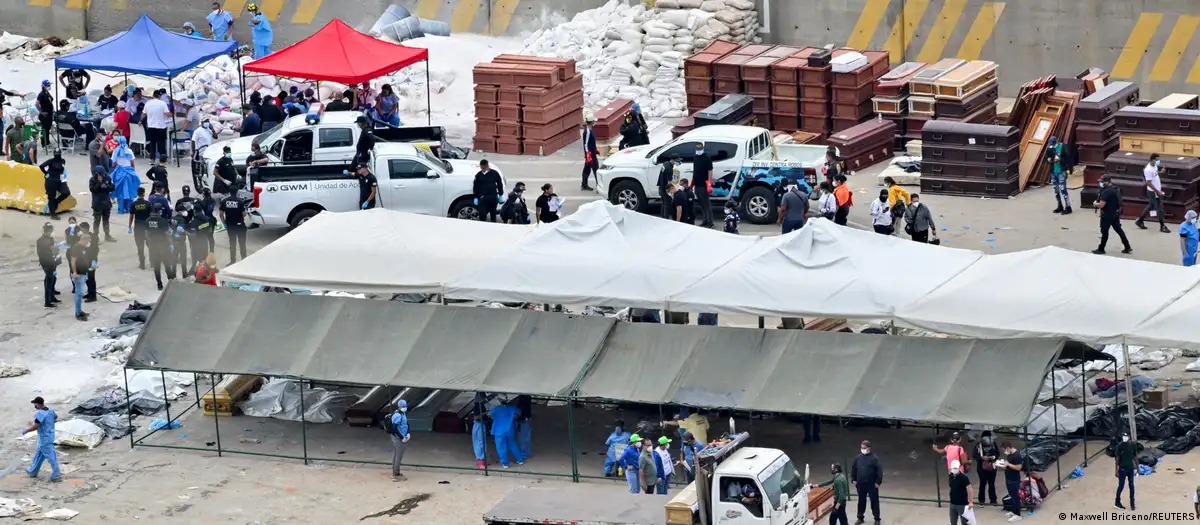
AFP — Forensic doctors wearing blue gowns and caps walk among dozens of bodies lying in bags on the ground inside an improvised morgue at the port of the area hardest hit by the powerful double earthquake that struck Venezuela.
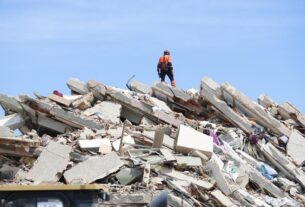
Some bodies already rest inside wooden coffins, which also sit on the floor. Near the white tent that serves as the center of operations, about a hundred empty coffins stand on one side while piles of rubble cover the other, AFP journalists observed.
The 7.2- and 7.5-magnitude earthquakes that struck the country on Wednesday, within seconds of each other, devastated La Guaira, the coastal state bordering Caracas whose port ranks among Venezuela’s most important because of its proximity to the capital.
The latest official toll stands at more than 1,700 deaths, but the number continues to rise, overwhelming forensic teams. In the first days after the disaster, authorities transported the injured and the deceased to local hospitals, but hospital morgues quickly reached capacity.
“My family is in there. They tell me my sister and her children are there, and my brother’s children too—the brother who survived,” says Wilker Molalla, 25, as he waits for officials to call him to identify the bodies.
His family lived in a neighborhood nearby. Eleven relatives shared the same home. Only Molalla and his brother survived because both were at work when the earthquakes struck.
The wait at the port stretches on for hours. Families stand in line until they receive permission to enter, identify their loved ones, or collect their remains. Many carry bouquets of red, yellow, white, and fuchsia flowers.
Relatives criticize the shortage of personnel handling the emergency, adding another complaint to the growing criticism over the disaster response.
In most cases, families search through the rubble on their own rather than with help from authorities.
“I recognized her by the ring”
Doctors and forensic technicians work outdoors beneath tarps supported by four poles as they examine the bodies.
Some bodies remain covered with lime, a practice that some experts consider unnecessary.
At the Port of La Guaira, officials issue death certificates and cremation permits. A truck marked “Special Hospital Waste Unit” also arrives to collect biological waste from autopsies.
“I came yesterday. I walked everywhere, over and over, and I couldn’t find my daughter,” says Antony Marcano, a 41-year-old cook.
“Today I came back calmer, and thank God I found her. I identified her,” he says. “I recognized her by the ring I gave her.”
Marcano helped recover the body, which he says no longer had recognizable features. Her clothing and the ring made the identification possible.
“She has been identified”
Authorities continue to avoid discussing the number of missing people, but the United Nations estimates that about 50,000 people remain unaccounted for. On Monday, the organization announced it would supply 10,000 body bags.
Representatives from private funeral homes are providing free transportation and cremation services. Hearses line up outside the port.
Darwin Silva, 37, prepares to transport the body of his mother, who died in the Hugo Chávez I public housing complex, one of the flagship developments built under the government’s housing program.
“She has been identified. They already gave me the death certificate,” he says through tears after personally bringing her body to the port to complete the necessary paperwork.
Neighbors found her beneath a steel beam late at night after they used a generator to illuminate the area.
As morgues reached their limits, many families chose to take their deceased relatives directly to the country’s main forensic facility in Caracas. Meanwhile, many injured survivors remain hospitalized and have not yet had the opportunity to identify relatives who died.
Marcano encourages other families to remain patient and keep their faith as they navigate the paperwork amid overwhelming grief and chaos.
“Pray to God that you’ll be able to give them a proper funeral,” he says.