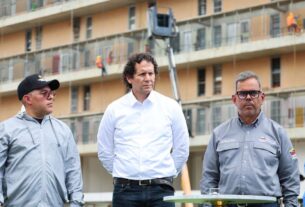
As of Tuesday, July 7, authorities had officially reported 856 damaged buildings and 190 collapsed structures. Inspections continue to determine whether homes remain safe to inhabit.
By Vanessa Davies
Although his building was not among those hardest hit by the earthquakes of June 24, Ramón fears it may not withstand another violent tremor. In the neighborhood chat group, he has repeatedly asked about the condition of the foundations of the 10-story building in Libertador municipality, whether the cracks in the stairwell pose a danger, and whether residents should move to a shelter.
One day after the earthquakes, Jesús Alberto, the condominium manager, reassured residents that the basement columns had “not even a scratch” and that the rooftop water tank showed “no visible cracks.” A visit from architect María Isabel García, who has volunteered to inspect buildings wherever residents request her assistance, brought additional peace of mind. “Our foundations did not develop a single crack. Other buildings, unfortunately, were not as fortunate,” Jesús Alberto confirmed in the WhatsApp group.
NASA-analyzed satellite imagery indicates that nearly 59,000 buildings were damaged by the seismic events. As of Tuesday, July 7, official figures released by the Venezuelan government reported 856 damaged buildings and 190 that had collapsed. With each passing day, the scale of the tragedy continues to grow.
Neighbors become engineers and architects
Residents of municipalities such as Libertador (Capital District) and Chacao (Miranda state) have organized to request official inspections from local fire departments. They have also sought assistance from volunteer architects and engineers to determine whether their buildings remain safe for occupancy.
Juan Carlos, vice president of the condominium board of a residential building in Chacao, gathered the community on the evening of Saturday, July 4. Since then, the building has undergone at least three inspections by private experts, who donated their professional services, as well as two inspections by the municipal government.
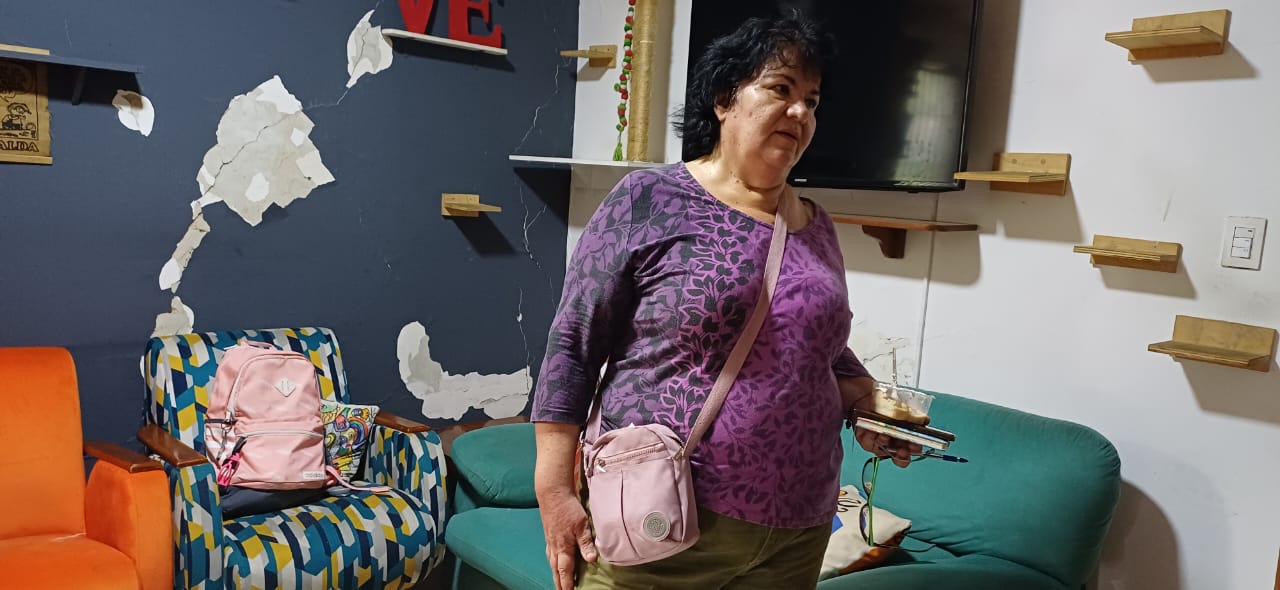
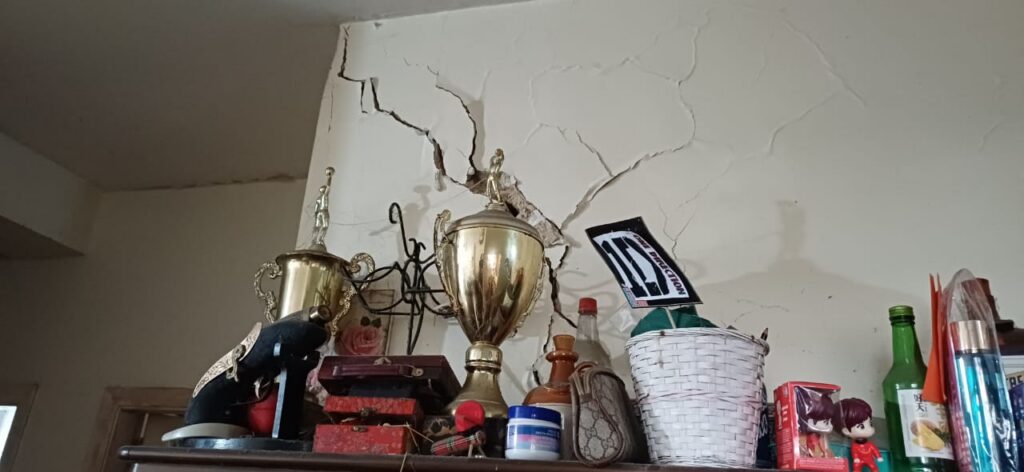
According to one resident, authorities placed a green inspection sticker on the building on Wednesday, July 1, based on the initial written assessment. However, after the tremor of Monday, June 29, “part of the plaster detached from one of the columns on the third floor, exposing a reinforcing steel bar.”
As the earthquakes have forced communities to become amateur engineers and architects, the sight of that bent steel reinforcement raised alarm and prompted residents to seek additional expert opinions. Chacao authorities later updated their assessment and replaced the green sticker with a yellow one, indicating that the building requires immediate repairs.
Green, yellow, and red
“We are working with a traffic-light system,” explained one of Venezuela’s risk management specialists.
Speaking unofficially, the expert noted that a green designation means a building is safe for occupancy, yellow indicates that urgent repairs are required, and red calls for the immediate evacuation of all residents.
In Libertador municipality, the process begins when residents request an inspection through the government’s Ven App or directly at the municipal coordination center.
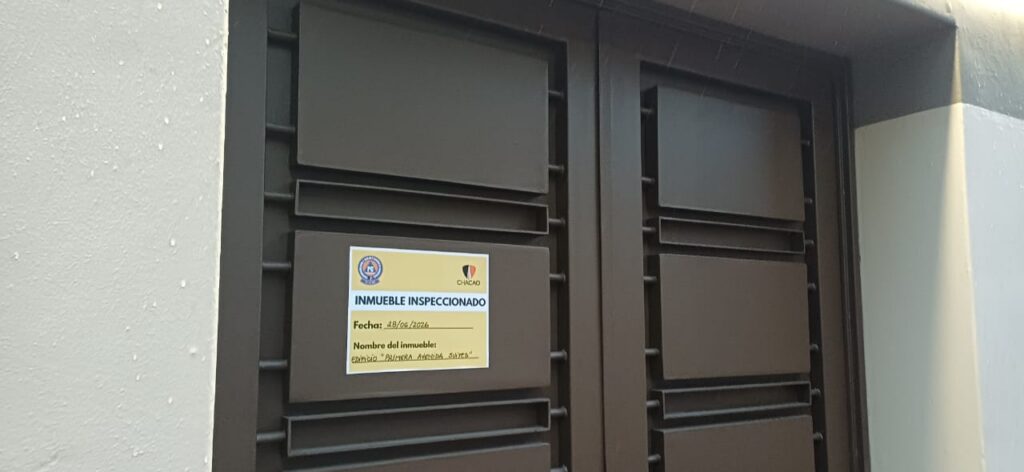
Inspection teams include a civil engineer or architect, a Civil Protection or Fire Department official, a data specialist, a representative from the community sector, and a member of the Municipal Services Corporation. Inspectors focus on beams and columns while also examining apartments, common areas, basements, and rooftops.
Meanwhile, Chacao has launched a registry allowing residents to report damage, identify affected families, and request building inspections.
A volunteer at heart
Determined to put her expertise at the service of people seeking reassurance during these anxious days, architect María Isabel García has devoted herself to visiting residential buildings, speaking with neighbors, and assessing cracks and structural damage caused by the earthquakes. Without a vehicle of her own, García has found ways to reach the communities that need her professional experience. She performs all of this work voluntarily.
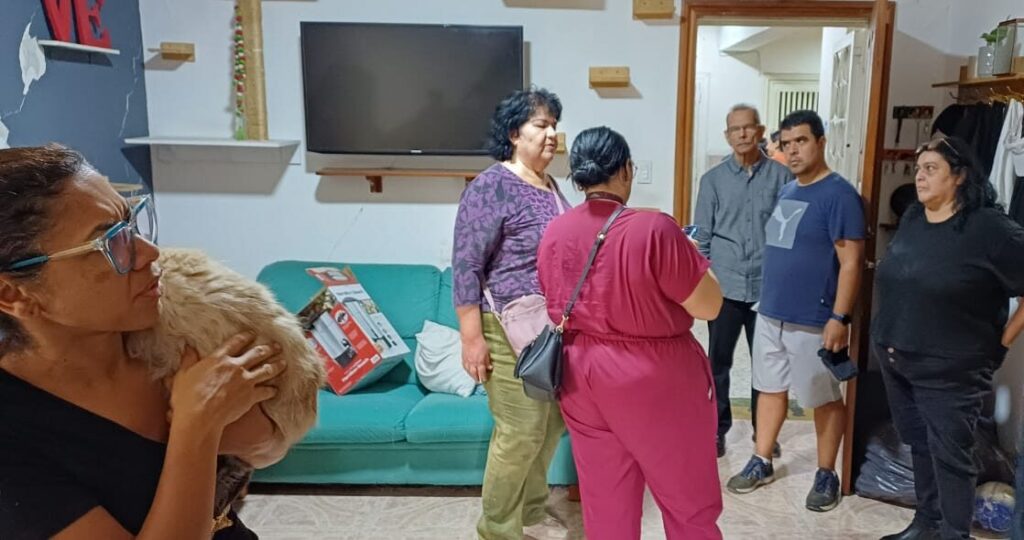
By June 28, according to her own estimates, she had inspected approximately 25 residential buildings. One of those visits took place in Propatria.
“We brought peace of mind to about 300 families. These were entire families, because each floor has four apartments and the building has 15 stories.”
Her professional assessment dispelled fears of an evacuation.
“I was able to reassure them that there was no need to evacuate.”
She has confronted the fear and anxiety of residents who still feel as though the ground beneath them is moving.
“You can stay calm,” she told one woman in San Bernardino who had been biting her nails with anxiety.
Those words brought a smile to the resident’s face.
Although García acknowledges that even buildings have a finite lifespan—“nothing lasts forever”—she believes that the structures that remained standing on June 24 have already passed their baptism by fire.