Audio: https://clyp.it/01aldmmu
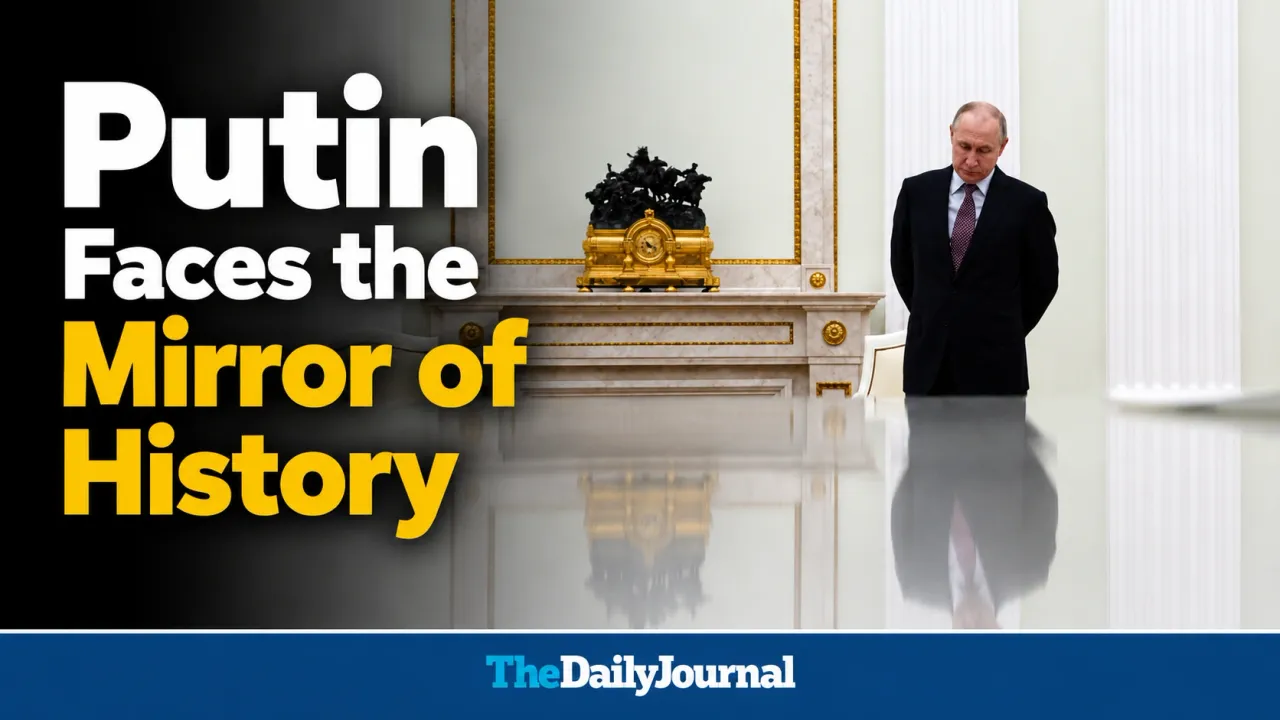
Julio A. López, Editor-in-Chief. – The Russian outlet Dos’e and dissident Mikhail Khodorkovsky revealed a document drafted in February by the circle of Sergey Kiriyenko, deputy head of the Presidential Administration, outlining how to “sell” any peace agreement with Ukraine to the Russian population as a victory.
Audiences to be managed one by one
The plan identifies “problematic” audiences and outlines specific strategies for each. For veterans and ultranationalists, it proposes creating an “emotional bond”—recognizing their losses and “mourning” the fallen—while channeling them toward commemorative events, political parties, or a new contract with the African Corps for overseas missions.
For the general population, exhausted by the war, it proposes offering “good news”: the reopening of airports, the normalization of telecommunications, and a traditional amnesty—in place in Russia since the end of the Crimean War—for those who spoke out in favor of peace. Employees of the military-industrial complex would be promised “new opportunities”: the resumption of exports and industrial conversion.
The “victory” narrative
The document provides complete propaganda scripts: Russia would have “defended its independence” and prevented a “humanitarian catastrophe” in Donbas; the Russian army would be “the most capable operational force in the world” after confronting “50 countries”; and Putin himself invokes his 2022 speech about building “the symphony of human civilization.”
Among the gains highlighted are control over more than 110,000 square kilometers —equivalent to Bulgaria or Greece—the entire coast of the Sea of Azov transformed into a “Russian inland sea,” 10 billion tons per year in coal production capacity in the Donetsk People’s Republic, and Europe’s largest nuclear power plant in Zaporizhzhia.
The risks the Kremlin itself acknowledges
Despite its triumphant tone, the document bluntly recognizes the risks of prolonging the war: economic catastrophe, higher taxes, a high probability of general mobilization, deep strikes against Russian territory, demographic decline, and a weakening of Russia’s international position vis-à-vis the United States.
It even acknowledges that “we are not going to feed 30 million Ukrainians” if the conflict continues indefinitely.
Twelve projects to establish the narrative
The plan outlines twelve specific lines of action: from “formative sociology” and media debates on the normalization of daily life, to an integrated project called “Russia’s Victories,” which emphasizes that “surrender is not an inevitable outcome.”
It also proposes moderating the rhetoric of the most belligerent radicals, launching campaigns portraying BRICS as a “new international policy,” promoting stories of successfully reintegrated veterans —while avoiding cases of alcoholism or suicide— and concluding with an amnesty in honor of victory that publicly rehabilitates the word “peace,” along with the construction of monuments and archives to preserve the narrative of Russian sacrifice.
A major obstacle: Putin himself
While communication strategists insist on “knowing when to stop” before internal fractures trigger a collapse, the military leadership is pushing in the opposite direction, convinced it can seize all of Donbas by autumn.
Adding to the uncertainty is the skepticism of Xi Jinping, who—according to the document itself—believes Putin may one day “regret” having started this war.