Héctor Sánchez, Sociologist. — It seems that most Venezuelans are waiting for the arrival of a Messiah or some providential savior who will come and, with the stroke of a pen, resolve the profound crisis afflicting us.
This attitude carries serious sociological and political implications. First, because Venezuela’s history is riddled with messianic strongmen whose rule has invariably produced disastrous consequences for the nation’s democratic and institutional development. Second, and perhaps most troubling in our current circumstances, the array of supposed saviors available on the political stage is profoundly disheartening.
If we evaluate them critically—both based on their individual shortcomings and by comparing them with historical leaders—we must ask ourselves: what exactly are they offering us?
Today, this assortment of messianic figures proposes little more than subtly different formulas for serving foreign geopolitical interests, dismantling the national fabric under the false promise of rebuilding it, and placing their own ambitions and petty interests above the sacred national interest.
In the political dystopia we are experiencing today, the only substantial difference between the supposed leaders who hold power and those who aspire to seize it lies in method, not substance. On one side stands a faction willing to consolidate its control while avoiding major internal confrontations—steering clear of a scenario of chaos and destruction similar to Iraq, which U.S. foreign policy has already invoked. On the other stand those contenders who seek to govern over the ashes of the nation, persecuting and eliminating those who think differently.
Choosing between silent submission and open persecution is the ultimate symptom of the institutional black hole into which we have fallen, of the gravity of this historical moment, and of how distant any rational way out now appears. While the elites fight over the spoils, the real country is slipping through our fingers.
Politics, once understood as the art of the possible and the quintessential forum for debating major national projects, has deteriorated into a shameful contest of submission. The acting government has elevated its alignment with and absolute subordination to Washington’s directives into its only genuine state policy. The opposition, rather than denouncing this scandalous surrender of sovereignty, merely reproaches the interim government because its submission is not swift, profound or explicitly servile enough. The real difference between the two elites is purely aesthetic: the government obeys behind a certain degree of rhetorical camouflage, while the opposition does so with utter shamelessness.
If there is one thing our leaders across the entire political spectrum share, it is their absolute lack of a national project. They have no plans for sovereign development, only projects for personal power designed to accommodate themselves within a framework of neocolonial submission. There is no genuine leadership, only a low-grade struggle over the crumbs that fall from the imperial table.
By following this path of degradation, they have driven national politics to a “zero degree,” an absolute void in which foreign offices shape the decisions that determine the fate of millions of Venezuelans, while submissive local actors later sign and applaud them. Public debate has turned into a theatrical farce, while international envoys and subservient politicians strike the real agreements over the nation’s destiny behind closed doors.
The concept of sovereignty has lost all substance, reduced to an empty slogan that masks capitulation. At the same time, we watch in anguish as the nation’s oil wealth passes into the hands of foreign corporations, primarily U.S. companies.
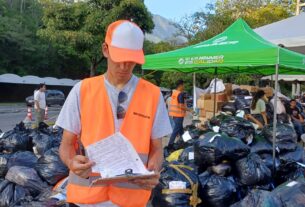
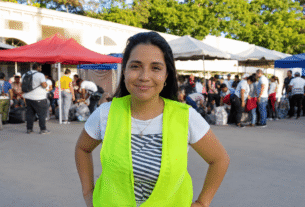
And yet, one element remains beyond the reach of the political elites and their foreign patrons: the historical memory and capacity for resistance of the Venezuelan people. The history of the real country has not merely consisted of a succession of strongmen and saviors; it is also a grassroots history of community organization and autonomous social responses to historical tragedies. In moments of greatest collapse, when institutional paralysis threatens to consume everything, the people have shown their ability to act on their own initiative, weaving networks of solidarity and mutual assistance without waiting for instructions from any political elite or foreign patron.
Breaking once and for all with the yoke of messianism therefore requires an urgent paradigm shift. It means abandoning the comforting yet paralyzing illusion that a savior will descend from above to resolve our hardships. It requires us to stop viewing politicians as paternal, untouchable figures and start holding them accountable for what they truly are: public servants who owe explanations to the citizenry and who can—and must—lose their positions when they fail to fulfill their constitutional duties.
To achieve this, we must undertake a collective, inclusive and multisectoral national project. No one can decree this project from presidential palaces or negotiate it inside foreign embassies; we must build it from the grassroots: in neighborhoods, factories, labor unions, social movements, universities and the streets. Rebuilding the nation requires us to bring political dialogue back into national hands, wresting the debate over our national destiny away from polarized elites and returning sovereignty to ordinary citizens.
The question we Venezuelans must ask ourselves today is not which Messiah we should wait for, but how we can collectively build a Republic that needs none. Politics must recover its dignity and once again become the common ground where we debate and decide our collective future.
The historical way out of our crisis does not lie among the gallery of anointed figures that the electoral marketplace offers us, all of them trapped in dynamics of pettiness, polarization and foreign submission. The way out lies within us, in the ethical reserve of millions of citizens who, despite political and economic blows and even the forces of nature, remain standing and working day after day.
We do not need anyone to come and save us. We must save ourselves, collectively, horizontally and sovereignly, without asking any empire for permission to exercise our legitimate freedom.
Politics is not a theatrical spectacle to watch from the sidelines; it is the conscious action we undertake when we decide that the destiny of our homeland will no longer remain in the hands of those who have auctioned it off. If anything will ultimately rescue Venezuela, it will be collective construction, the organization of civil society, teamwork and a sense of the common good, as many of our fellow citizens are already demonstrating in different parts of the country. It is time to leave behind the illusion of the savior and accept, with historical maturity, that rebuilding our country is our responsibility.