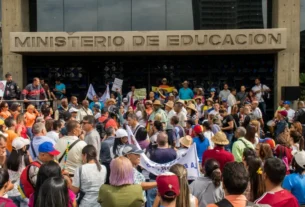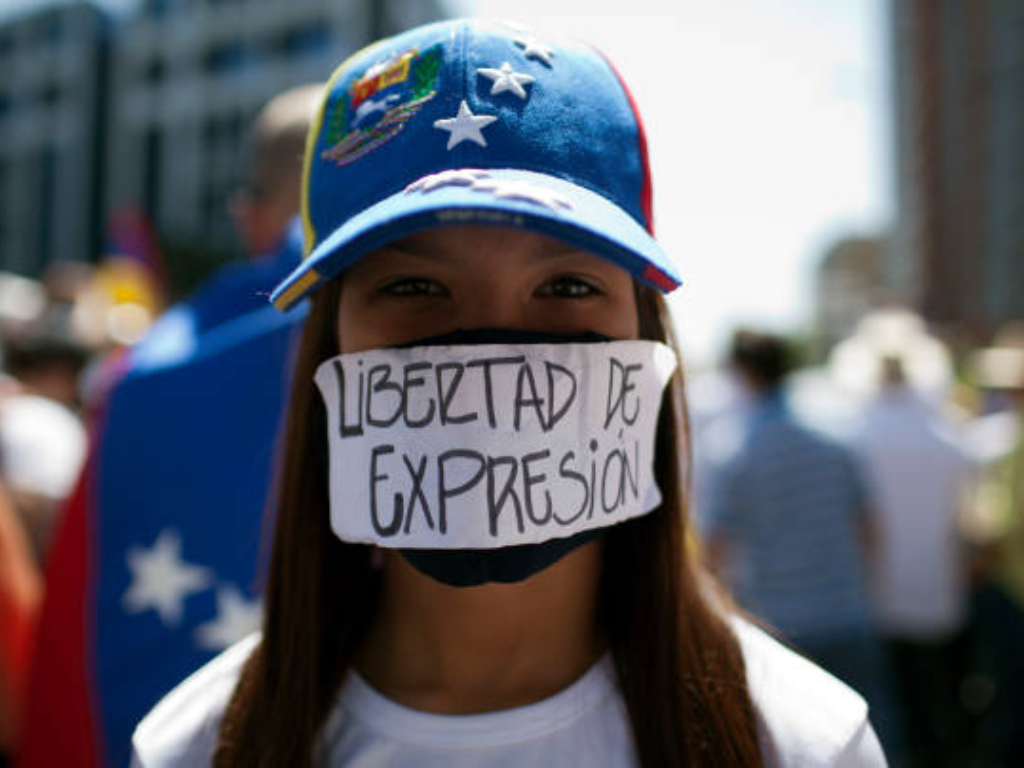
The Daily Journal.— Dozens of media outlets, human rights organizations, professional associations, journalists and citizens signed a manifesto demanding the immediate and full restoration of freedom of expression in Venezuela, an end to the persecution of media workers and the dismantling of the legal and institutional structures that, according to the signatories, have facilitated censorship.
The document, titled “Venezuela Has the Right to Express Itself,” drew support from dozens of national and international organizations and media outlets, as well as journalists, activists and other public figures.
“We Venezuelans refuse to normalize censorship, persecution and imposed silence,” the signatories stated, arguing that freedom of expression constitutes “a fundamental right and an indispensable condition for a free society.”
The manifesto outlines five areas of demands aimed at restoring guarantees for people to report, voice opinions and express themselves freely in the country.
Among their main demands, the signatories called for an end to the persecution of journalists, creators, activists and citizens, as well as the release of people detained “for expressing their opinions.”
They also called on authorities to review revoked media licenses, return expropriated assets and establish transparent procedures for granting new broadcasting frequencies.
The statement also demands that authorities close legal proceedings against media workers and return passports that authorities canceled for journalists.
“We demand an end to the persecution that has led to serious human rights violations against journalists, creators, activists and citizens,” they stated.
The manifesto also calls for restoring the country’s information system by lifting blocks on websites and digital platforms.
The signatories demanded “the immediate lifting of digital blocks” and the removal of restrictions that prevent access to media outlets and online information services.
The demand also calls for guarantees that citizens can “seek, receive and share information without fear or restrictions.”
Another central point of the document calls for repealing several laws that the signatories consider tools for criminalizing dissent and restricting public space.
They cited the Law Against Hate, the Law on Social Responsibility in Radio, Television and Electronic Media (Resorte), the Law on Oversight of NGOs, the Simón Bolívar Law and the Anti-Blockade Law.
“All laws that criminalize dissent and have closed our public space must be repealed,” the document states.
The signatories called for authorities to replace those laws with a legal framework that protects the exercise of freedom of expression.
The manifesto also proposes a structural transformation of the National Telecommunications Commission (Conatel).
The signatories argue that the agency “must not serve as an instrument of control and censorship,” but rather as a technical and autonomous institution that serves the public interest.
In this regard, they called for technical criteria to guide the management of the radiofrequency spectrum and for authorities to implement “transparent and auditable” mechanisms.
The document also demands changes in the operation of state-run media outlets.
“State media must serve all Venezuelans, not the political faction currently in power,” the signatories stated.
The manifesto calls for an end to the use of public media for “partisan propaganda or to persecute, stigmatize or discriminate against those who think differently” and calls on these outlets to guarantee pluralistic information and representation of diverse voices.