The Daily Journal. — The United Nations Independent International Fact-Finding Mission on Venezuela said Wednesday that, despite a decline in some forms of repression and the release of hundreds of people detained for political reasons, state structures linked to serious human rights violations and crimes against humanity remain essentially intact.
In its latest report and a complementary research paper, the Mission examined developments over the past year and presented an analysis of human rights violations that, according to its findings, continue to occur in the country. The UN Human Rights Council created the Mission to investigate, among other acts, extrajudicial executions, enforced disappearances, arbitrary detentions and torture in Venezuela.
According to the report, following the U.S. military attack on January 3, 2026, and the capture of then-President Nicolás Maduro, prolonged detentions and related enforced disappearances declined “significantly.” Authorities also released hundreds of people detained for political reasons and allowed greater space for protests, public gatherings and civil society activities.
The Mission warned, however, that authorities did not accompany those changes with institutional reforms that could ensure sustained improvements in human rights.
“The reduction in some of the harshest forms of repression is notable, but it does not yet represent in any way a transformation of the system that made them possible,” said Sofía Macher, chair of the Mission.
“Unless the repressive structures are dismantled, judicial independence is guaranteed, and those responsible for human rights violations are properly investigated and held accountable, any opening will remain fragile and reversible,” she added.
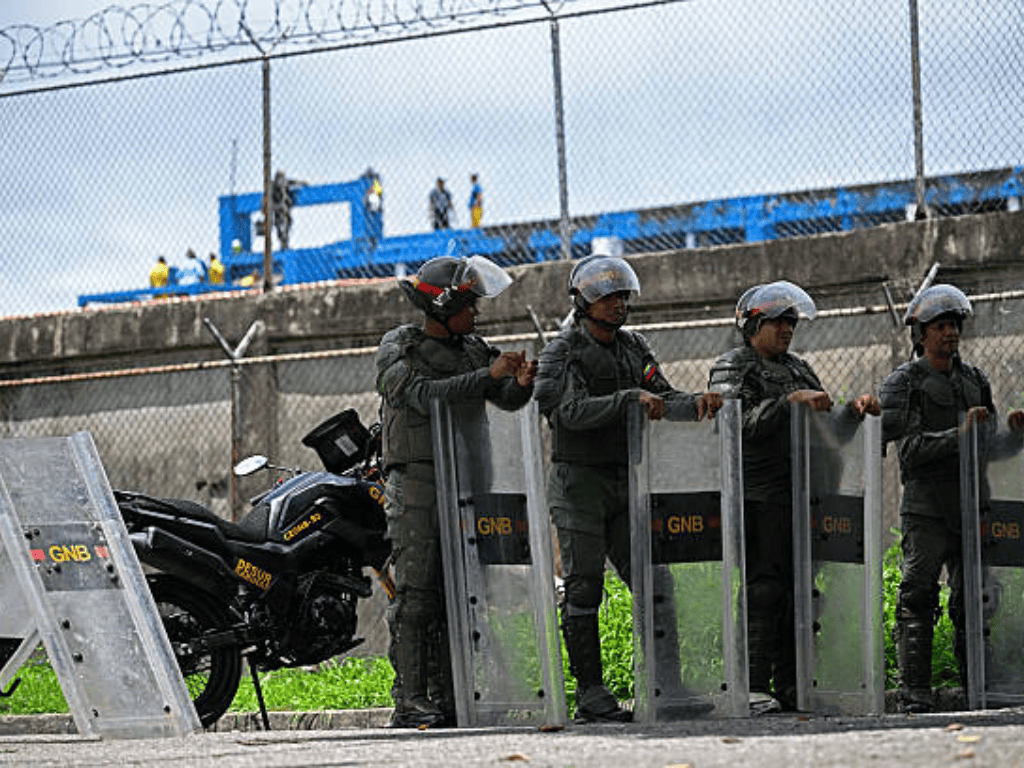
The Mission noted that numerous laws authorities have used to criminalize dissent remain in force and that intelligence agencies and security forces continue to maintain substantially the same structures, policies and practices.
It also said that at least 19 officials whom the Mission previously identified for their alleged involvement in serious violations remain in key positions or have returned to such posts.
Cases of torture persist
The report documents new cases of torture and ill-treatment against people detained for political reasons, including incidents that occurred after January 3.
At the El Rodeo I maximum-security prison, the Mission documented practices including forced intubation and prolonged confinement inside a sealed underground water tank known as the “time machine.”
At Fuerte Guaicaipuro, a military facility, the Mission investigated cases involving confinement in underground pit-like cells, exposure to cold, food deprivation, and other degrading practices.
The Mission identified 64 new cases of torture that occurred exclusively after January 3, which, according to its findings, demonstrate the continuation of these practices.
The UN body also raised concerns about the detention conditions of hundreds of people, including severe restrictions on access to drinking water, food, medicine and medical care.
The investigation also linked several deaths in custody involving people detained for political reasons to inadequate or delayed medical care and ill-treatment.
Among the cases the Mission examined was that of Víctor Quero Navas, a street vendor who died in custody while authorities concealed his whereabouts. According to the Mission, his mother, Carmen Teresa Navas, learned what had happened to him more than a year after his detention and 10 months after his death. She died 10 days later.
Arbitrary detentions persist
Between September 1, 2025, and July 29, 2026, civil society organizations documented at least 214 arbitrary detentions for political reasons. Ninety-four percent of those cases occurred before the end of 2025.
After January 3, the Mission identified a pattern of short-term arbitrary arrests aimed at intimidating opposition activists, journalists and other members of civil society.
The releases considerably reduced the number of political prisoners, but nongovernmental organizations estimate that between 379 and 500 people remain in detention.
The Mission said the lack of official, transparent and verifiable information makes it impossible to determine precisely how many people authorities have released, where those who remain in custody are being held and what their legal status is.
“We call on state authorities to take decisive steps toward accountability and a victim-centered transitional justice framework,” said Mission member María Eloisa Quintero.
Quintero also urged Venezuela to reverse its withdrawal from the Rome Statute of the International Criminal Court and cooperate with the ICC and other international human rights mechanisms.
“Years of entrenched impunity must give way to accountability,” she said.
UN points to links between colectivos and the state
One of the documents the Mission presented focuses specifically on the so-called colectivos, armed civilian groups aligned with the Venezuelan government.
According to the Mission’s findings, these groups constitute a central component of the state’s repressive apparatus and a broader system of social control and local governance.
The Mission documented links that, according to its investigation, include political backing, direct and indirect financing, logistical and material support, operational coordination and institutional protection.
The Mission said it found reasonable grounds to believe that the government periodically supplied colectivos with firearms, ammunition, motorcycles, mobile phones and radio equipment.
According to the report, these groups have participated in surveillance and intelligence activities, identified and located people sought by security agencies, repressed demonstrations and harassed actual or perceived government opponents.
The Mission also said that their presence in communal councils, public services and social programs has allegedly allowed them to reward political loyalty and punish criticism or dissent.
The Mission maintained that when colectivos exercise public authority functions granted under Venezuelan law or participate in operations under the instructions, direction or control of state agencies, their actions may be attributable to the state.
Regardless of whether such attribution applies in individual cases, the Mission concluded that the Venezuelan state failed to fulfill its obligation to prevent, investigate, and punish abuses by these groups and provide redress to victims.
Call to the international community
The Mission called on the international community to support measures to combat impunity, end repression, and restore the rule of law.
“The United States and other influential actors must step up efforts to press for and promote real human rights change in Venezuela, while ensuring that their own policies and actions do not contribute to human rights violations or facilitate the commission of international crimes,” said Alex Neve, another Mission expert.
Neve added that the circumstances described in the reports justify continued international protection for Venezuelans abroad.
The Mission will present the reports to the United Nations Human Rights Council on September 18, 2026.