The Daily Journal. Caracas is losing its shade. Across the valley, the deafening roar of chainsaws has replaced the song of urban birds, exposing a severe crisis of environmental governance, institutional opacity and commercial interests. What local authorities and waste collection companies describe with euphemisms such as “sanitation,” “maintenance,” or “Cut and Prune,” activists and residents openly denounce on social media as the systematic mutilation of the city’s tree heritage.
An investigation based on citizen reports, data from the NGOs Plantados Caracas and Ciudad Laboratorio, and records of online complaints reveals the modus operandi behind the most aggressive destruction of Caracas’ urban tree cover in decades.
Chacao: the visual business of “commercial clearing”
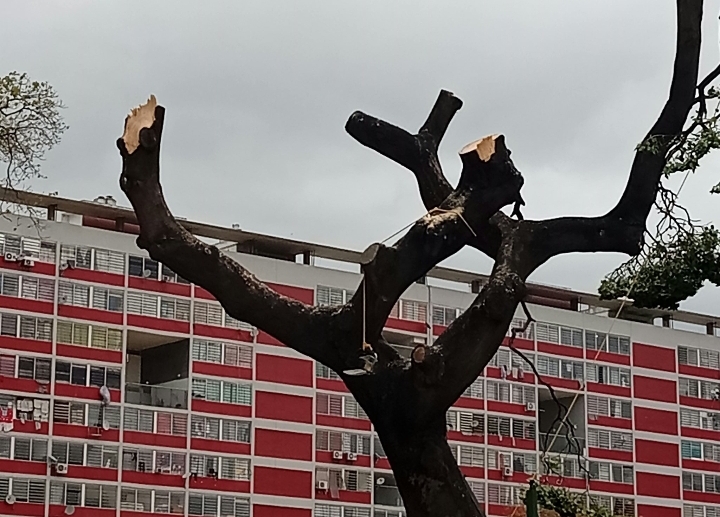
In Chacao municipality, Francisco de Miranda and Andrés Bello avenues, along with the streets of Los Palos Grandes, have witnessed such radical pruning that crews have left entire tree trunks completely bare.
The pattern: Complaints on social media show a direct correlation between the arrival of new upscale grocery stores, luxury car dealerships, or massive LED billboards and the sudden disappearance or mutilation of century-old trees.
The institutional pretext: Crews carry out severe cuts while citing an alleged “risk of falling branches” or interference with high-voltage power lines. However, forestry experts argue that these cuts follow aesthetic and commercial interests rather than botanical criteria: clearing the view of storefronts or advertisements. The case of a century-old mijao tree that authorities authorized for removal to make way for a real estate development became a milestone in the wave of public outrage.
Baruta: private crews operating in the green shadows
Baruta municipality illustrates the breakdown of environmental oversight. Videos that residents have recorded in areas such as La Trinidad, Las Mercedes, and Colinas de Bello Monte repeatedly show the same scene: ordinary citizens stopping workers who, chainsaws in hand, hack away at the branches of saman and mahogany trees.
When communities confront them, workers frequently admit that they lack permits from the municipality’s environmental control office and that no forestry engineers accompany them. Private contractors or personnel funded by local businesses take advantage of weak enforcement at night or on weekends to remove trees that interfere with private interests.
Although prosecutors have previously opened investigations into waste management companies such as Fospuca over irregular tree cutting, the replanting programs that municipal authorities have promised remain insufficient to mitigate the damage.
Lecuna Avenue: “cut and prune” as a death sentence
In Libertador municipality, downtown Caracas faces a scorched-earth approach. Lecuna Avenue stands at the epicenter of this phenomenon. State media channels initially promote the “Cut and Prune” plan as a measure to protect the stability of the electrical system. Still, the program has become a death sentence for central Caracas’s foliage.
Unlike eastern Caracas, where commercial interests often drive tree removal, the cutting along Lecuna Avenue stems from technical neglect and operational convenience. Instead of carrying out formative pruning or light maintenance, state crews cut trees back to their main trunks.
This aggressive practice weakens the trees’ structure and leaves them vulnerable to fungi and pests. Months later, the specimens die, forcing crews to remove them entirely and leaving behind stumps surrounded by concrete and an increasingly barren urban landscape.
The invisible impact: heat and impunity
The cost of this excessive tree cutting extends far beyond the landscape; it has become a public health and environmental issue.
Altered microclimate. Climate analyses cited by tree advocates indicate that Caracas loses up to 3°C of natural cooling for every large tree removed. Asphalt and concrete absorb solar radiation, intensifying heat islands along the city’s main avenues.
Official data blackout. No government agency—neither the Ministry of Ecosocialism (Minec) nor municipal authorities—provides a public, transparent, and updated record of how many trees crews legally cut down or how many authorities replace according to genuine ecological criteria.
As long as authorities maintain their administrative silence and private contractors continue operating for the highest bidder, Caracas residents will continue watching chainsaws devour the last green strongholds of the city’s battered urban identity.