Neirlay Andrade.— The historic oil agreement signed by Acting President Delcy Rodríguez’s administration and the White House has left a trail of doubts and questions in its wake. It could hardly be otherwise: the document committing the fate of one-fifth of Venezuela’s proven crude oil reserves remains secret. This detail has cooled the optimism that accompanied the official announcement, and public opinion is demanding the document’s release. But as the days have passed, the scope of those demands has widened. The country is beginning to ask what will happen to the resources generated by the agreement and, above all, how authorities will manage them.
One political figure who has offered conditional support for the agreement is opposition lawmaker Stalin González.
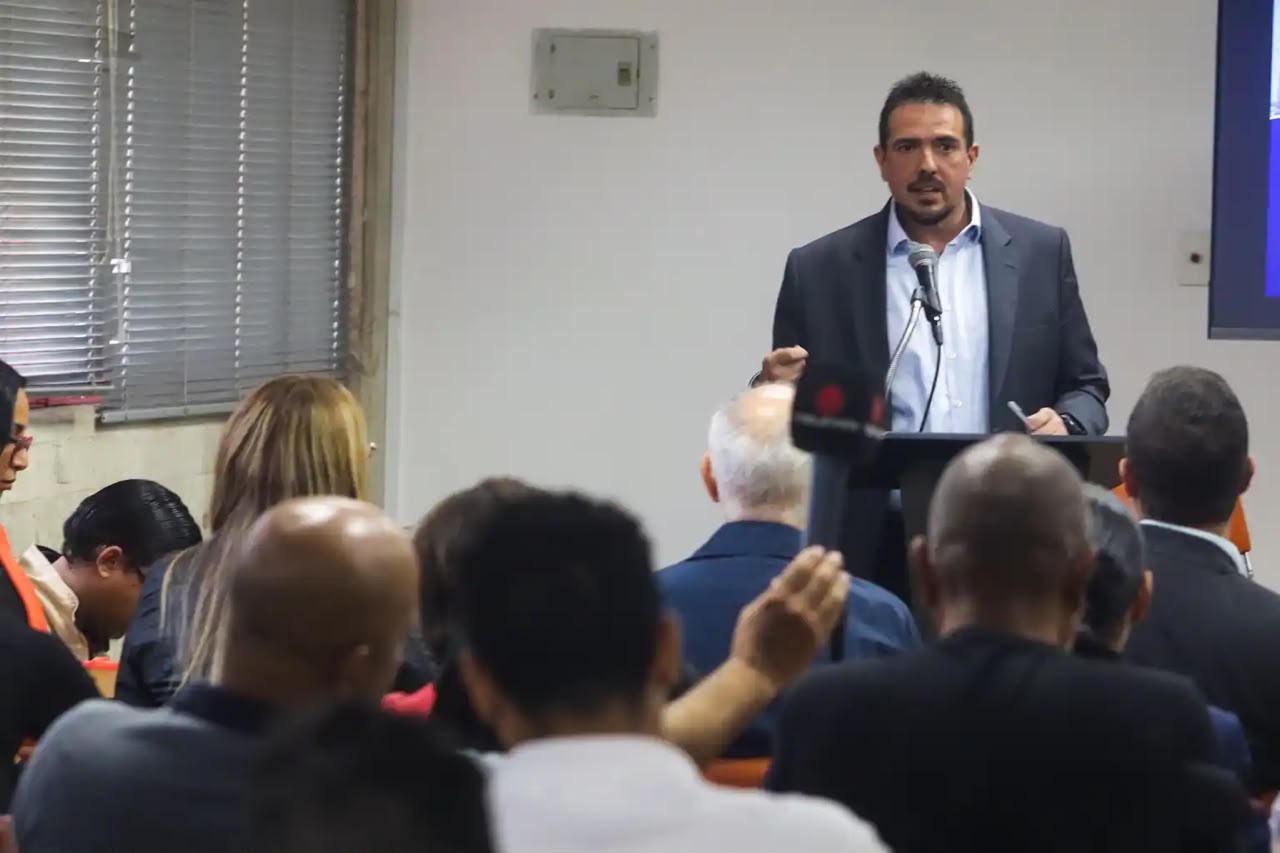
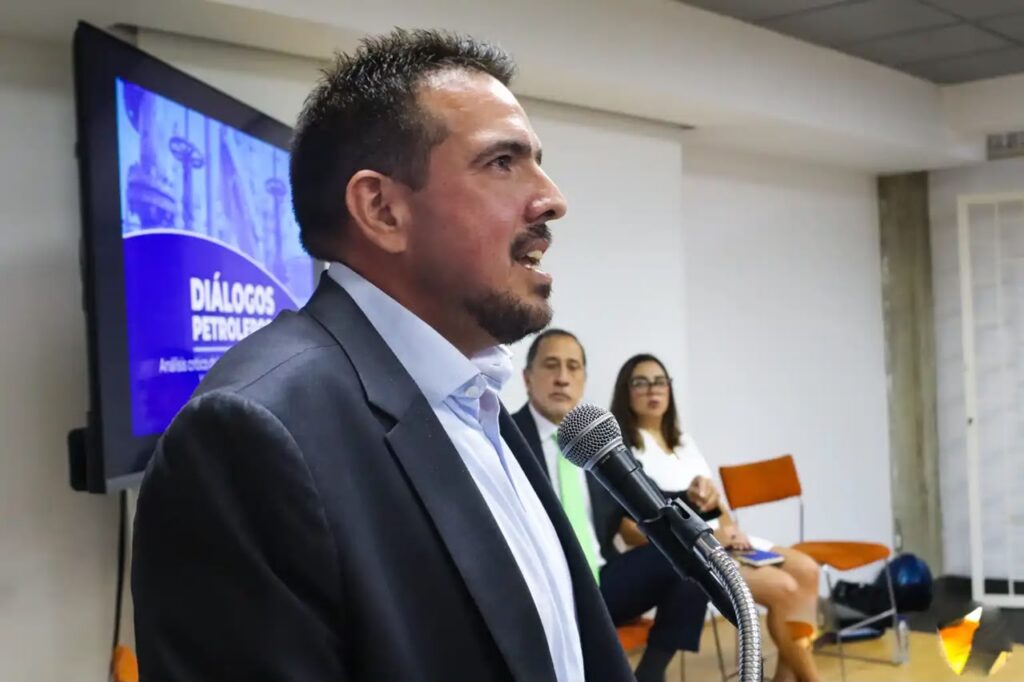
“I agree with the agreement,” González said while discussing the deal during a forum organized by the Parliamentary Group for Freedom caucus at the Central University of Venezuela (UCV).
The lawmaker conditioned his assessment on disclosure of the specific terms under which the parties signed it. “They have to show us what deal they made, where it is,” he said.
For González, the main issue now goes beyond determining whether the agreement benefits Venezuela; the country also needs to know its precise terms. In his view, a gap exists between public announcements by Venezuelan and U.S. officials and the agreement’s legal content.
“We have to separate the headlines from what is actually happening with the contract,” he said. According to González, officials have so far released statements about investment, production, royalties and reserves, but “the contract does not exist” in the public domain.
The lawmaker proposed launching a campaign to demand its publication and argued that, given the scale of the resources involved, authorities should treat the agreement as a matter of national interest.
“If committing 20% of this country’s proven reserves does not constitute a contract of national interest, then what does?” he asked.
Transparency and accountability
González extended his demand beyond publishing the contract and called on authorities to establish from the outset how they will record and use revenue from oil operations.
“We have to start asking, once that money starts coming in, how they are going to account for all of it and how they are investing all of it,” he said.
The lawmaker argued that recovering oil revenues should translate not only into infrastructure investment but also into higher incomes for workers.
“Because it’s not just about hospitals, hospital networks and electricity, but also wages and salaries,” he said.
He also argued that any increase in oil activity should help build national capabilities through technology transfers and professional training.
“Universities should have better budgets so they can train petroleum and chemical engineers and specialists in all these fields,” he explained.
In his view, oil development could also lead to regulatory changes in sectors related to energy, taxation, and labor relations. González mentioned potential legislation that would allow oil companies to generate their own power without relying on the national grid, as well as future changes to tax and labor regulations.
Criticism of Venezuela’s oil policy
González attributed part of the Venezuelan oil industry’s current fragility to decisions made during the Chávez era, particularly a strategy focused on controlling international prices by restricting production.
“There was a policy beginning in 2000 (…) under which Venezuelan policy did not focus on increasing production, but rather on controlling prices,” he said.
According to his interpretation, while international prices remained high, the substantial revenue flow partially obscured the consequences of that strategy.
He also pointed to PDVSA’s loss of capabilities, underinvestment, the departure of professionals, and the mass dismissal of company employees.
“PDVSA stopped functioning as a corporate enterprise that provided accountability and maintained balance sheets, and instead became a parallel petty cash fund with a budget running alongside the state budget,” he said.
González argued that continuing that strategy after 2017 constituted a mistake.
“They sacrificed production, the company’s development, the main company in this country, to control prices as part of a geopolitical decision,” he said.
In his view, the accumulated deterioration explains why Venezuela has entered this new oil landscape with an industry that needs capital, technology and new agreements to restore its production capacity.
A closer market
From a commercial perspective, González argued that the United States represents a particularly relevant market for Venezuela’s heavy crude.
He explained that much of Venezuela’s oil is heavy crude and that U.S. refineries along the Gulf of Mexico had reduced their processing of this type of oil in recent years.
“From a market standpoint, because ultimately everyone has their own interests here, the United States has an interest, which is securing its energy supply,” he said.
In his view, geographic proximity could allow Venezuela to increase the volume of crude it sends to the United States and obtain better commercial terms. However, he stressed that this would not require abandoning markets such as India or China.
“The United States is closer to us, and it is much more feasible to sell larger volumes, increase production, sell to the United States and obtain a better price,” he said.
González noted that the United States, India and China rank among the major consumers of heavy crude and emphasized that the global energy landscape is undergoing a transformation that extends far beyond Venezuela.
Venezuela amid a global energy struggle
The lawmaker argued that any debate over the oil agreement must account for international competition over energy supplies and control.
“There is an entire debate, a competition and a war over energy taking place around the world, and all of this is happening in the middle of it,” he said.
In that context, González argued that Venezuela holds a strategic position because of its reserves and the characteristics of its crude, but warned that analysts should consider U.S. interests alongside Venezuela’s.
“Venezuela’s interest is to obtain greater revenues and restore our quality of life, but restoring that quality of life must also restore our democracy,” he said.
González also questioned the interpretation that U.S. actions following January 3 can be explained exclusively as an effort to promote democracy in Venezuela.
“January 3 changed all of our lives, but I don’t think believing that January 3 was about exporting democracy is the only perspective we should have,” he said.
U.S. national security doctrine
The lawmaker linked his analysis to the updated U.S. national security doctrine published in November 2025.
“It’s all written down,” he said. “In November 2025, the State Department published an update to the United States’ National Security doctrine. And I invite you to read it.”
According to González, the document provides a framework for analyzing U.S. policy toward Latin America through the lens of the use of force, treating the region as a sphere of influence, and the strategic importance of energy.
“It talks about using force as a method of persuasion, viewing Latin America as its sphere of influence and treating energy as a priority issue. It’s all there,” he said.
For González, these factors form part of the broader context for interpreting the oil agreement and U.S. decisions regarding Venezuela.
“Venezuela is in the middle of that debate,” he said.