The London Consensus advocates a strong state, influential labor unions, and well-being as a central priority. As Venezuela transitions, this framework offers a roadmap to overcome the inherited collapse and avoid repeating past mistakes.
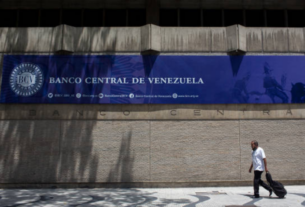
The Daily Journal.- Following the events of January 3, 2026, when U.S. forces removed President Nicolás Maduro, and the recent oil agreement between Washington and Caracas, a new era in relations between Venezuela and the United States is emerging. Although the White House’s approach to Miraflores reflects a protectorate or trusteeship arrangement, Venezuela must move toward self-determination.
In this regard, the London Consensus emerges as an alternative that breaks with the orthodoxy of the Washington Consensus, which took shape in 1989. As the world witnesses the exhaustion of the neoliberal ideology that dominated the past four decades, this new framework of economic thought places the public sector, labor unions, and well-being at the center of economic policymaking.
Economists Andrés Velasco and Tim Besley, both affiliated with the London School of Economics, coordinated the proposal. Nobel laureates Philippe Aghion and Christopher Pissarides also contributed their ideas. The initiative seeks to counter the earlier Washington Consensus, which prescribed privatization, liberalization, and a minimal role for the state.
Principles for genuine sovereignty
Velasco summarized the concept as follows: “Growth requires much more than getting the government out of the way.”
Five principles define the London Consensus: well-being matters as much as growth; the territory where development takes place matters; the state acts as an insurer against crises; politics enables economic activity; and a capable state provides the essential foundation for everything else.
Likewise, thinkers argue that these principles are inseparable from the sovereignty of a society seeking to steer its development and reach its full potential. Without well-being and opportunities for progress, a vision of independence becomes unsustainable, particularly when major powers divide geopolitical spheres of influence.
The London Consensus and its application to Venezuela
Venezuela faces a critical juncture while also showing considerable economic potential. Furthermore, the oil agreement with the United States, a 25-year production contract covering 17 oil fields with 65 billion barrels of crude, promises $209.335 billion in revenue.
However, poverty affects 68.5% of households, while extreme poverty reaches 31.7%, according to the latest National Survey of Living Conditions (ENCOVI), which released its findings in May 2026.

The first principle of the London Consensus emphasizes that “it is not just about money; well-being is key.”
This principle clashes with a reality in which the minimum wage has remained frozen at 130 bolivars since 2022, equivalent to less than 30 U.S. cents, while government bonuses do not count toward employee benefits. The London framework advocates correcting certain economic or constitutional shortcomings during the redistribution phase that follows production.
The second principle, which focuses on territorial growth, directly challenges Venezuela, where more than 900 state-owned enterprises operate with recurring losses and inefficient management, according to a report by the NGO Transparencia Venezuela.
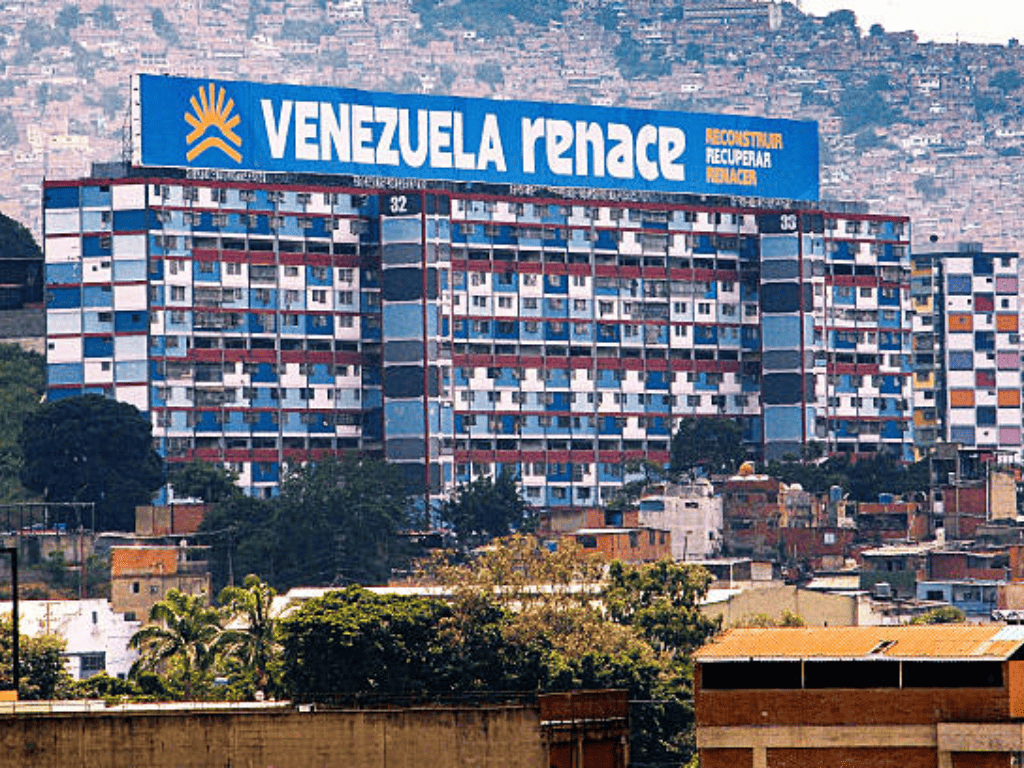
The productive decentralization and industrial integration that the government promises align with the London Consensus’s commitment to inclusive, territorially balanced development.
The third principle, which positions the state as an insurer, is particularly important in a country where only 10% of households report never experiencing power outages, and just 19% have daily access to drinking water.
Institutional reconstruction, including the establishment of a new National Electoral Council (CNE) and Supreme Court of Justice (TSJ), both expected by the end of 2026, represents an indispensable condition for any economic model to succeed.
Avoiding the mistakes of the past
The London Consensus does not dismantle everything the 1989 framework established: it preserves fiscal prudence and inflation control.
However, its commitment to a strong state, social cohesion, and labor unions that give workers a prominent role offers Venezuela a path to avoid both the collapsed state-centered model it inherited and the temptation of a neoliberal approach that has already demonstrated its limitations.
The fourth and fifth principles—politics as an enabler and state capacity—remind us that without credible institutions, no oil agreement, regardless of its multibillion-dollar value, can guarantee sustainable well-being.
A broad debate now opens, inviting all sectors to participate: workers, educators, business leaders, academics, universities, and intellectuals who seek to build a harmonious society where opportunities and the development of a strong nation lead to genuine emancipation.