The acting president told the UN General Assembly that the territorial dispute should be resolved through bilateral negotiations under the Geneva Agreement.
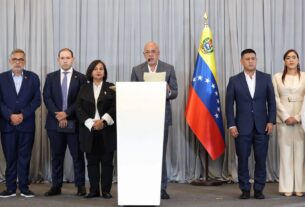
The Daily Journal.- Venezuela’s acting president, Delcy Rodríguez, reaffirmed Caracas’ claims to the Essequibo region before the 81st United Nations General Assembly on Wednesday and called on the government of Guyana to resume negotiations to resolve the territorial dispute.
“I cannot fail to mention, here in this forum dedicated to international legality, our reaffirmation of Venezuela’s historic rights over Guayana Esequiba,” Rodríguez stated during her address in New York.
The acting president called on the government of Guyana to return to the negotiating table and identified the Geneva Agreement as the framework for addressing the dispute.
“And I call on the Cooperative Republic of Guyana to resolve the dispute and return to negotiations, as the Geneva Agreement requires,” she said.
Rodríguez also defended direct negotiations between the two countries as a way to reach lasting agreements and questioned the involvement of external bodies in the process.
“The agreements that endure the longest are those that emerge from bilateral negotiations rather than external bodies,” she maintained.
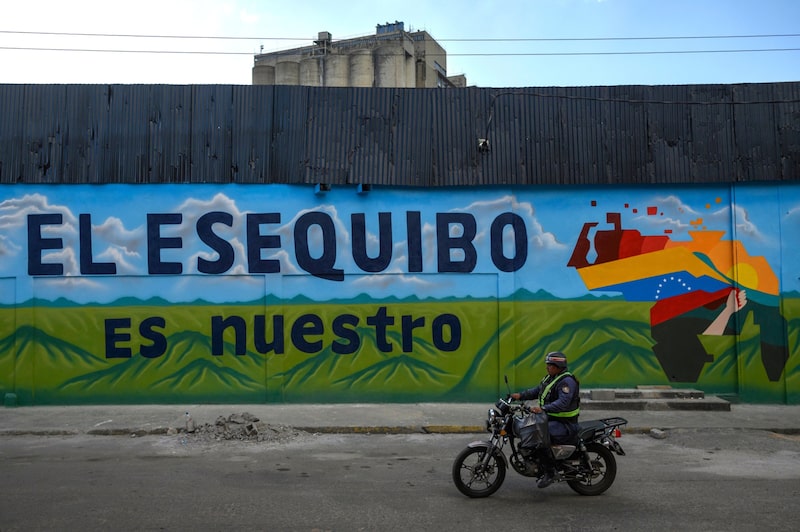
Venezuela and Guyana have disputed the Essequibo territory for decades. The 1966 Geneva Agreement establishes mechanisms for resolving the controversy, and Caracas cites it as the governing instrument for resolving the dispute.
The dispute has intensified in recent years. In December 2023, Venezuela held a referendum on the annexation of the territory and subsequently took administrative measures in the disputed region.
International interest has also grown because of Essequibo’s natural resources, particularly oil. Companies such as ExxonMobil and Chevron have expressed interest in participating in Guyana’s energy development, as the country has significantly increased its oil production in recent years.
Guyana has estimated oil reserves of about 11 billion barrels and increased production from 120,000 to more than 900,000 barrels per day between 2020 and 2025, establishing itself as an emerging energy player in the region.