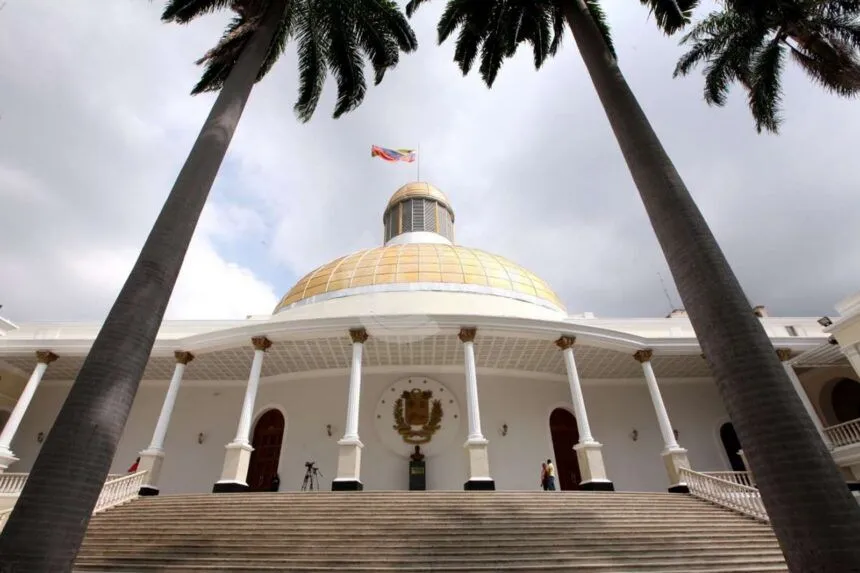
The Daily Journal. — Interim President Delcy Rodríguez sent an official communication to the National Assembly on Monday, September 28, requesting a “partial reform of the Constitutional Law Against Hate, for Peaceful Coexistence and Tolerance.”
The National Constituent Assembly approved the legislation in November 2017.
In a letter to National Assembly President Jorge Rodríguez, the interim president outlined the institutional grounds for the legislative request.
“The requested reform seeks to move forward with the decriminalization of conduct covered by the aforementioned legal instrument, as part of the actions adopted by the National Government to transform our country’s criminal justice system and promote reconciliation and democratic coexistence among Venezuelans,” the formal document states.
Rodríguez also urged lawmakers to prioritize debate on the initiative in their legislative agenda.
“Given the positive impact that this reform will have on rebuilding trust in institutions and revitalizing the nation’s democratic life, I would appreciate your good offices so that this initiative may receive urgent consideration,” Rodríguez concluded in the request.
Political leaders and activists seek to overturn the law
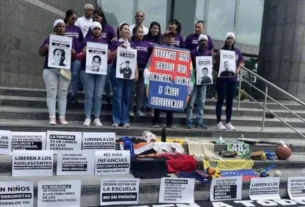
The Executive Branch’s initiative comes as a group of female political leaders and activists has filed a constitutional challenge before the Constitutional Chamber of the Supreme Court of Justice, seeking the precautionary suspension and repeal of the law’s criminal provisions. They argue that those provisions conflict with constitutional guarantees of legality, due process and freedom of expression.
The Mujeres Políticas movement promoted the legal action. Iris de Franca, the organization’s national coordinator; Audimar Martínez, a member of the movement; Elaisa Ferris of the Unión y Cambio party; Rosiris Toro of the Pensando en Venezuela movement; and Neirlay Andrade of the Communist Party of Venezuela (PCV) filed the petition. Attorney Gloria Pinho provided legal assistance.
The petitioners seek to have the law struck down in its entirety, arguing that it contains defects in both its origin and its substance. Among their main arguments, they question whether the National Constituent Assembly (ANC) had the authority to enact ordinary criminal and administrative legislation of indefinite duration. They argue that such powers belong to the National Assembly as the country’s ordinary legislative body.
As an interim precautionary measure, the petitioners requested the immediate suspension of Articles 14 and 20 through 25, as well as the second transitional provision, arguing that these sections contain the law’s most severe punitive and regulatory measures.
Their primary request is to strike down the entire law on procedural defects and substantive unconstitutionality. Alternatively, they request the annulment of Articles 13, 14, and 20 through 25, along with the disputed transitional provision.
If the Constitutional Chamber rejects those requests, the political leaders are asking the court to establish a binding standard that excludes political criticism, journalistic activity and academic research from the law’s punitive scope and guarantees prior judicial review of any potential blocking measures or sanctions.