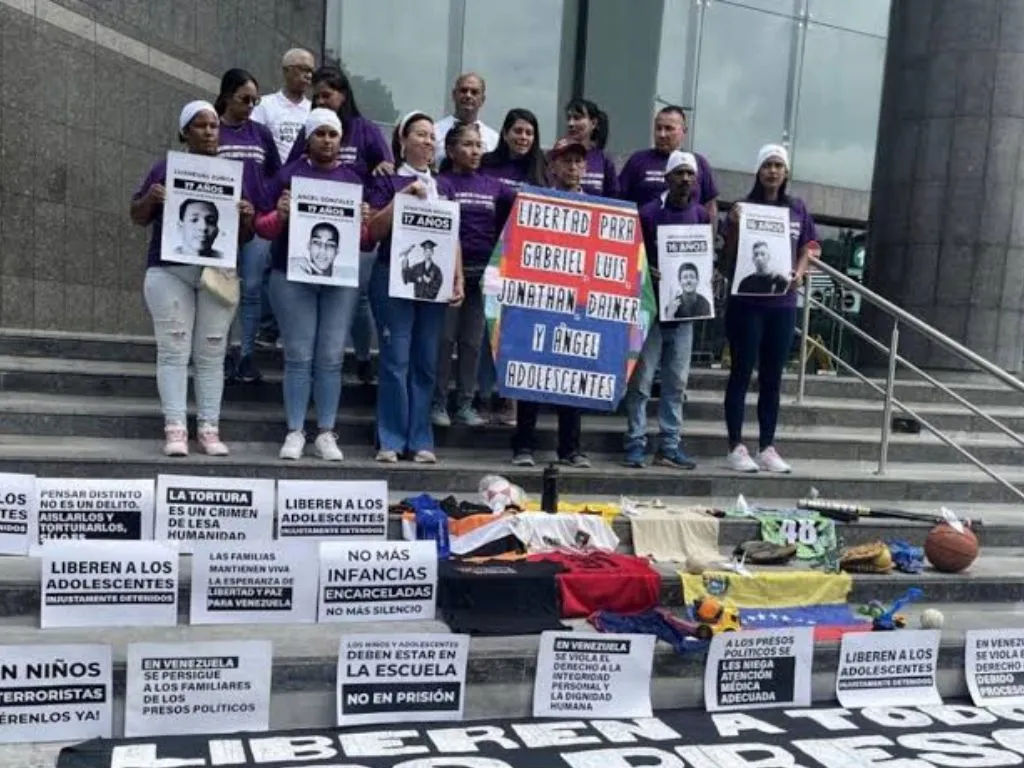
The Daily Journal – A total of 118 minors were charged in Venezuela between 2024 and 2025 with offenses established under the Anti-Hate Law, according to Cecodap, an NGO dedicated to protecting children in the country, during a period marked by the post-election crisis following Nicolás Maduro’s proclaimed reelection as president.
Carlos Trapani, Cecodap’s general coordinator, said on his X account that these figures represent adolescents who faced fear, anguish and uncertainty, as well as violence from a justice system that, he said, failed to provide the minimum safeguards established under the LOPNNA (Organic Law for the Protection of Children and Adolescents).
Trapani’s statement came after Venezuela’s acting president, Delcy Rodríguez, called last week for a reform of the Anti-Hate Law. However, several NGOs and political parties have demanded its repeal, arguing it violates freedom of expression and serves as an instrument to persecute government opponents. Trapani added that if lawmakers reform the law, the rights of minors must also be part of the discussion.
According to figures released last Wednesday by Foro Penal, an NGO dedicated to defending political prisoners, authorities in Venezuela have charged at least 927 people with “incitement to hatred” since the law’s approval in 2017.
The pro-government National Constituent Assembly approved the LOPNNA in November 2017, after it was installed that year alongside the opposition-controlled National Assembly following months of political crisis and massive anti-government protests. Its approval came in response to an explicit request from then-President Maduro to put an end to alleged messages of “hatred” that, according to the government, fueled the protests between April and August of that year.
The legislation establishes prison sentences of up to 20 years for so-called “hate crimes.” Since then, human rights defenders and NGOs such as Espacio Público have criticized the law. In 2023, Espacio Público denounced its use as a tool to persecute people for expressing views considered uncomfortable or critical of certain sectors in power.
With information from EFE