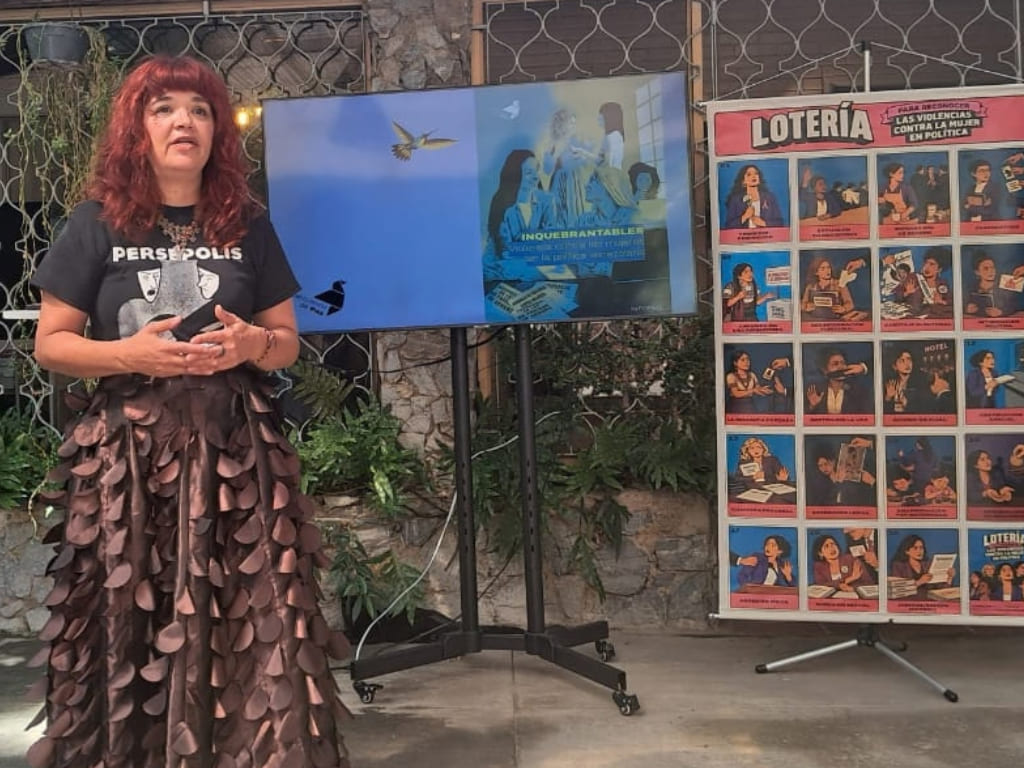
The Daily Journal.- Women’s political participation in Venezuela takes place under conditions of risk that extend beyond public activity and affect their families. The nongovernmental organization Laboratorio de Paz documented this situation in its study Unbreakable: Violence Against Women in Venezuelan Politics.
The report, recently presented by the NGO’s co-director, Lexys Rendón, and researcher Beatriz Vento, draws on interviews with 23 female leaders involved in political parties, organizations, and other spaces for political participation.
The participants — ranging in age from 18 to 70 — represent different political views, and researchers collected their testimonies anonymously to protect their safety.
The study — conducted between 2024 and 2026 — includes cases of women who remain in Venezuela as well as others who left the country because of political persecution or forced migration. It also includes testimonies from women who endured imprisonment or torture, or who chose to reduce their public exposure.
Conditions of risk
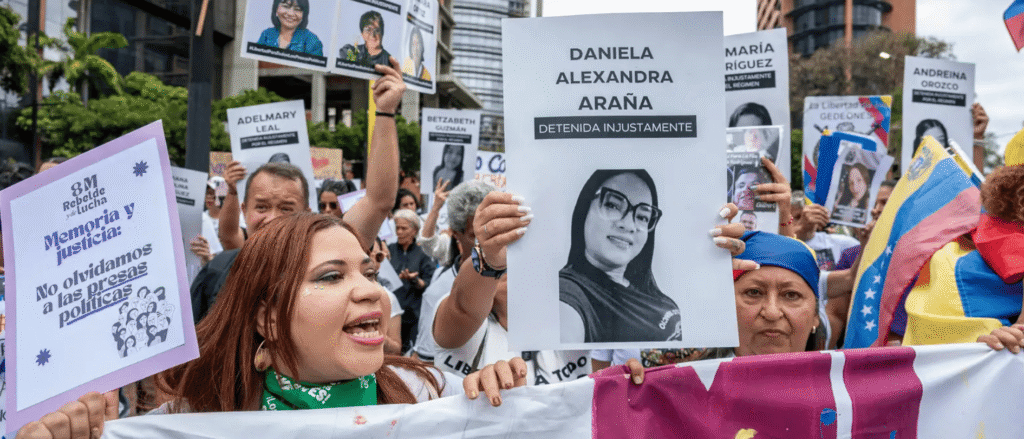
According to the co-director of Laboratorio de Paz, the study’s first finding shows that women engage in political activity under conditions of risk that affect both their public work and their families.
“Persecution extends to the family environment, affecting leadership, public exposure, activism and even the decision to remain in the country,” Rendón said.
The data illustrate the extent of this impact: 100% of the women interviewed said they had changed decisions to protect their families. In contrast, three out of four said their political activity had affected their relatives.
Fear also influences decisions about whether to remain in the country. More than half of the women interviewed said they had considered going into exile because of their political activity, while all of them expressed fear of facing legal prosecution.
The research indicates that women who support detained or persecuted relatives take on greater caregiving responsibilities, deepening pre-existing inequalities.
According to Rendón, political violence therefore seeks to increase the personal, family and emotional costs of participation to push women away from political activity.
“Violence is a mechanism of control,” the activist said, stressing that its impact extends beyond highly visible leaders to women engaged in political and community work at the local level.
Political authority constantly questioned
The second finding identifies obstacles related to the legitimacy and recognition of women’s authority, both within political parties and in other spaces of public participation, as well as in some family environments.
“Women’s political authority is constantly questioned,” Rendón said.
The research found persistent doubts about women’s abilities, lower recognition of their work, exclusion from decision-making spaces and a tendency to attribute their achievements to others.
According to Rendón, the main barrier no longer involves only gaining access to political spaces, but also having their authority recognized once they enter them.
“A political culture that associates leadership and authority with men forces women to prove their ability, merit and experience constantly,” she said.
The study also warns that despite women’s growing presence in political organizations, men continue to dominate positions of real power disproportionately.
Body and private life used to undermine legitimacy
Another conclusion focuses on the use of women’s bodies, appearance, and private lives as tools to undermine their legitimacy in politics.
“Women continue to be sexualized. Women continue to be judged by their bodies, by how they dress, by how they speak — by everything except their leadership abilities,” Rendón said.
The data support this finding: more than 69% of the women interviewed said others judged them for their appearance or personal lives before considering their political leadership.
Rendón said one of the most striking findings involved how society has normalized these practices.
She explained that neither those who experience this violence nor those who witness it always recognize it as violence, which allows these practices to continue.
“Sometimes we don’t realize how we fail to make these forms of violence visible. And when we don’t recognize them, we silence them, and when we silence them, they cease to exist,” she said.
Structural barriers to accessing power
The research also identifies gaps in women’s access to the spaces where political actors make the most important decisions. Rendón stressed that women’s presence in political parties, communities, universities and other settings does not automatically redistribute power.
“Bringing women into party structures represents progress, but it does not in itself guarantee a redistribution of political influence,” she said.
Among the obstacles, she cited the concentration of strategic decisions in male leadership, women’s exclusion from informal spaces where political actors build agreements and consensus, and internal mechanisms that restrict women’s access to leadership positions.
Rendón also referred to so-called “glass walls,” which tend to concentrate women in certain roles, and the “sticky floor,” associated with the family and caregiving responsibilities that fall disproportionately on women.
The quantitative findings reinforce this conclusion: men dominate the most important decision-making processes, reaching 87%, despite women’s growing presence in political parties, communities and other spaces for political participation.
Gender-based political violence has become normalized
The Unbreakable report also identifies the normalization of aggression and the lack of effective mechanisms within political organizations to prevent and address it.
The data show that six out of 10 women interviewed experienced harassment and intimidation, while four out of 10 received threats. Two out of three also reported aggression by state security forces.
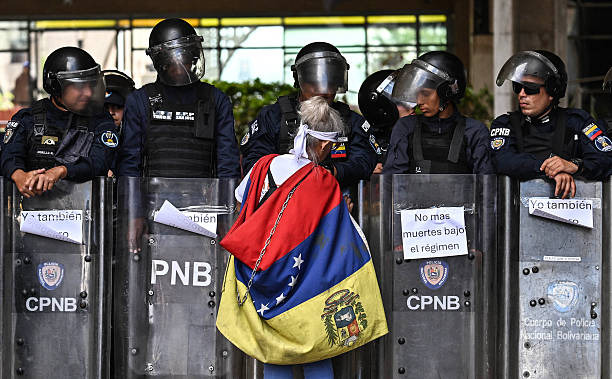
Rendón noted that many of the incidents identified during the interviews occurred in spaces where women should have greater trust and protection.
The research documents situations in which people dismiss violence as jokes or customary behavior and points to the absence of protocols within various organizations to prevent and address gender-based violence.
“The absence of complaints does not mean there is no violence. The lack of reporting makes violence invisible and leaves victims without protection,” she added.
Rendón linked this situation to institutional restrictions and a lack of trust in state protection mechanisms. She explained that authoritarianism, weak rule of law, and weak institutions have led many women to develop their own protection and support mechanisms.
Despite the barriers…
The sixth finding highlights the role women continue to play in political organization despite the barriers and forms of violence identified in the study.
“Political participation cannot be understood solely through women’s presence, leadership and representation,” Rendón said.
The researcher particularly highlighted the less visible work women carry out through networks of trust, support for victims, community organizing and the development of new leaders.
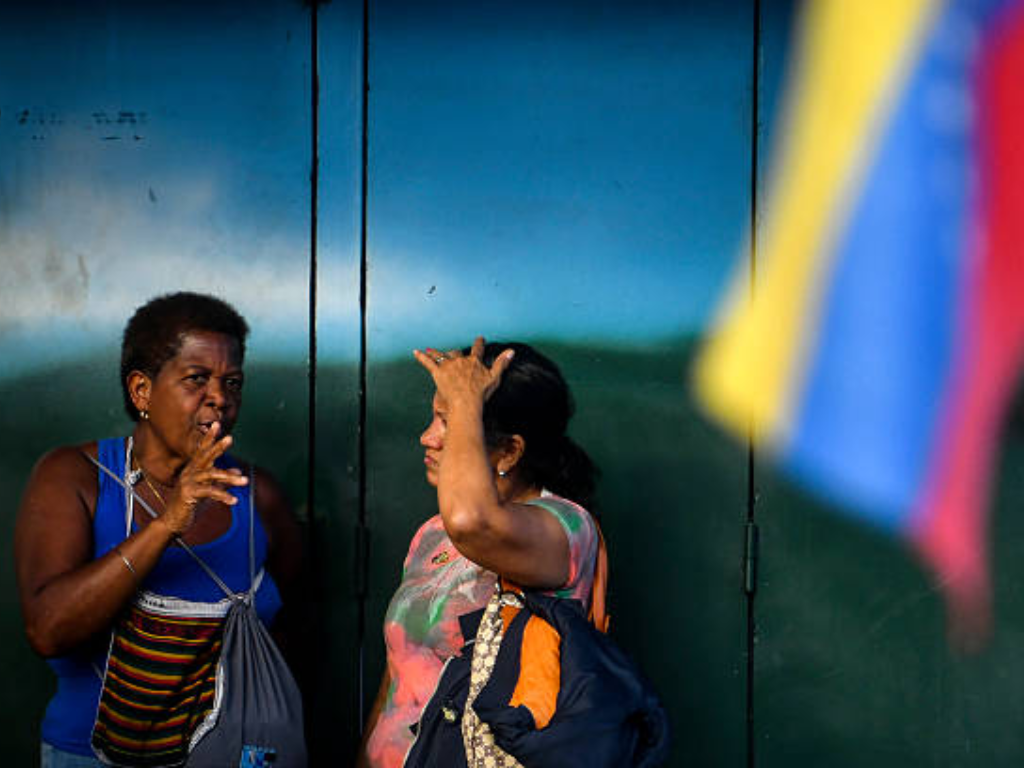
The research indicates that these efforts coexist with a context in which political activity also affects women’s family and personal lives. All of the women interviewed said they had changed decisions to protect their families, while more than half had considered exile as a consequence of their political activity.
“An important part of their participation takes place in less visible spaces that are nonetheless essential to the functioning of society in any territory,” she explained.
According to Rendón, this work also creates an opportunity to transform political participation in Venezuela.
“Women’s participation is important right now, and I believe this is an opportunity for us to make the profound societal changes the country needs in terms of democracy,” she said.