Vanessa Davies
Caracas
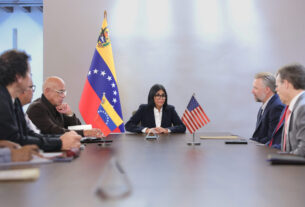
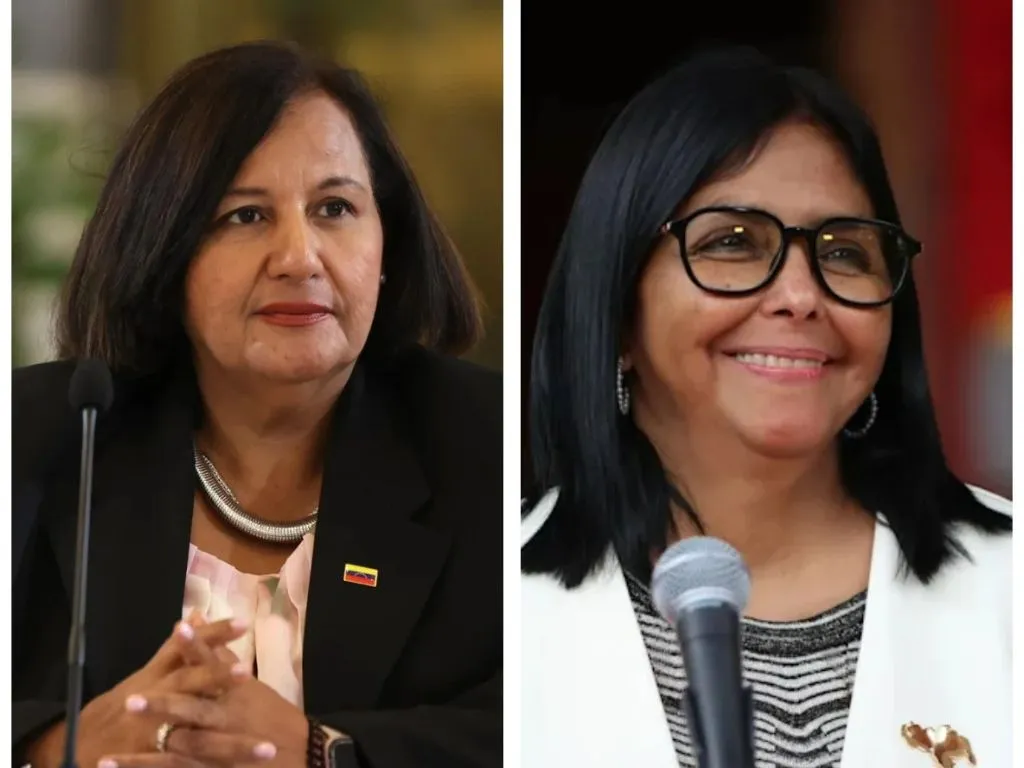
The Daily Journal — Two women are building the bridge between Venezuela’s various pasts and its future: Acting President Delcy Rodríguez and Dinorah Figuera, president of the 2015 National Assembly. A third woman can be added to the list: María Corina Machado, the driving force behind what — according to unofficial data — was the opposition’s electoral victory on July 28, 2024, and winner of the Nobel Peace Prize.
Rodríguez, who served as vice president under former President Nicolás Maduro — forcibly removed from the country by U.S. forces on January 3 of this year — has become a key figure for the United States because of her ability to guarantee internal stability. Figuera, meanwhile, lived in exile for several years, and the Trump administration has also viewed her as open to dialogue.
On Tuesday, September 29, the human rights organization Laboratorio de Paz presented its report “Unbreakable” (Inquebrantables) in Caracas, documenting the different forms of violence Venezuelan women face in political activity. Against this backdrop, Laboratorio coordinator Lexys Rendón urged women themselves to shape both the agenda and the process. In other words, they must not be mere bystanders.
“We are under tutelage”
All three are leaders in their respective areas, and their conduct should not be viewed in the same way, said Nancy Hernández, a women’s rights leader and member of Fenasopadres.
“Delcy Rodríguez represents an authoritarian model. Dinorah Figuera is a lawmaker who, like Juan Guaidó, had to become the ‘pinch hitter’ at a particular moment; she is the ‘pinch hitter’ because that role fell to her.”
Hernández also included Delsa Solórzano in her reflections because both she and Machado “had to create their own political organizations and put their own stamp on the model of political activity to consolidate their leadership.”
In her portrayal of Venezuela, Hernández stresses that the country lacks autonomy.
“We are under a form of tutelage that yesterday came from Eurasian countries, and from Cuba itself, with authoritarian regimes; and today it comes from the world’s leading democracy under authoritarian leadership.”
“That they can make decisions”
There is “an acting president in charge of the country, a president of the 2015 National Assembly leading a negotiating table, and a massive and popular female leadership,” Rendón said. What one would hope, she added, “is that they are not used as instruments for decisions that have already been made — and made by men.”
They have a historic commitment, not only to the country but also to guaranteeing women’s rights.
“We want them to be able to make decisions, to put forward proposals, to incorporate female leadership, to reach all areas of the country on a massive scale with a gender perspective and without discrimination, because the transition is something that calls on all of us, women and men alike.”
Rendón is convinced that, if they choose to, Rodríguez and Figuera can make autonomous decisions “because they both have the leadership to do so, they both represent sectors that carry considerable weight, and that is where the challenge and the commitment lie.”
Venezuela, under tutelage, must overturn that dynamic, Hernández said, “and become a democratic country that respects human rights.”