By Natalia Jaua
The Daily Journal – In Brazil’s presidential elections, the first round takes place under a strict regulatory framework overseen by the Superior Electoral Court (TSE). Electoral regulations explicitly prohibit political campaigning inside polling stations, preventing voters from displaying flags or banners or using loudspeakers on Election Day. Brazilian voters must express their preferences “silently.”
However, clothing makes these expressions of political and religious identity highly visible: voters arrive wearing T-shirts in their parties’ colors, symbols representing their respective churches, ritual garments associated with Afro-Brazilian religions, or images of the country’s patron saint, Our Lady of Aparecida. This display reflects how religious syncretism and faith shape the country’s political culture at the ballot box.
Since the 1980s, Brazil has undergone a profound transformation of its religious landscape. In a nation of more than 213 million inhabitants and 158 million registered voters, evangelical Christians—primarily Pentecostals and Neo-Pentecostals—account for approximately 30% of the population. This segment has consolidated its institutional influence in the National Congress through the so-called “Evangelical Caucus” (or “Bible Caucus”), a cross-party legislative bloc comprising approximately 211 federal deputies (out of 513) and 26 senators (out of 81).
These churches derive their electoral mobilization capacity from their dynamic daily activities: worshippers attend services up to four times a week, creating networks of community interaction in working-class neighborhoods and urban outskirts. This massive support proved decisive in the 2018 elections, when Jair Bolsonaro secured approximately 52% of the evangelical vote. Likewise, the country’s leading televangelists and pastors collectively command more than 40 million followers across digital platforms, transforming their pulpits and social media profiles into channels for political mobilization.
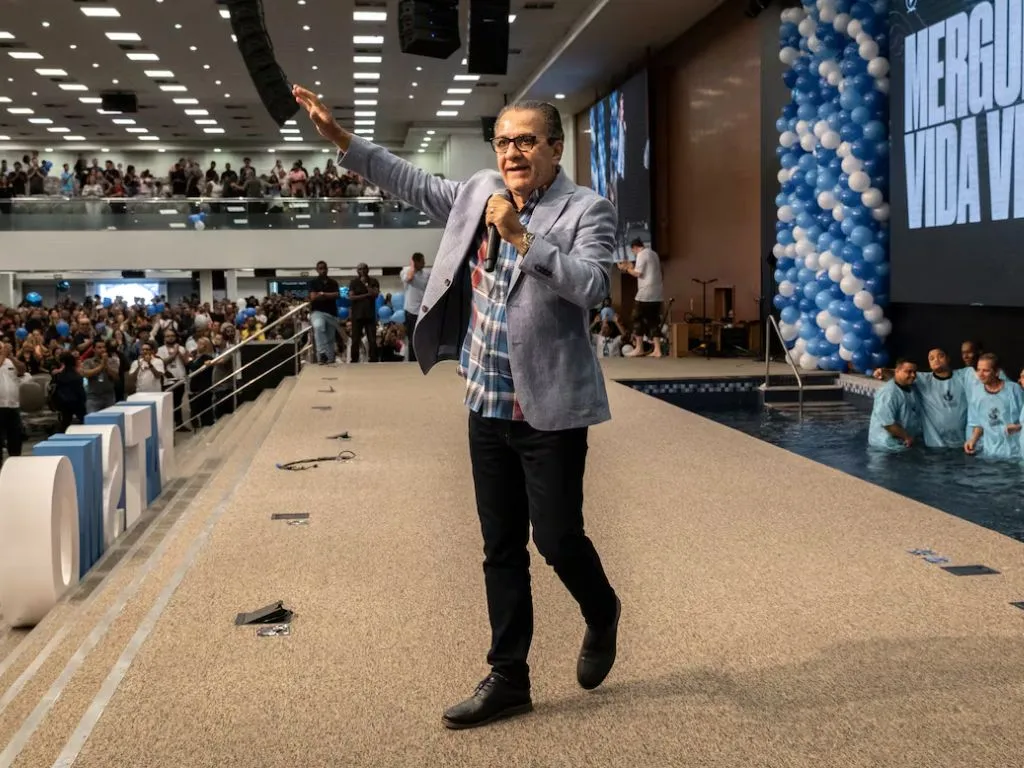
Silas Malafaia
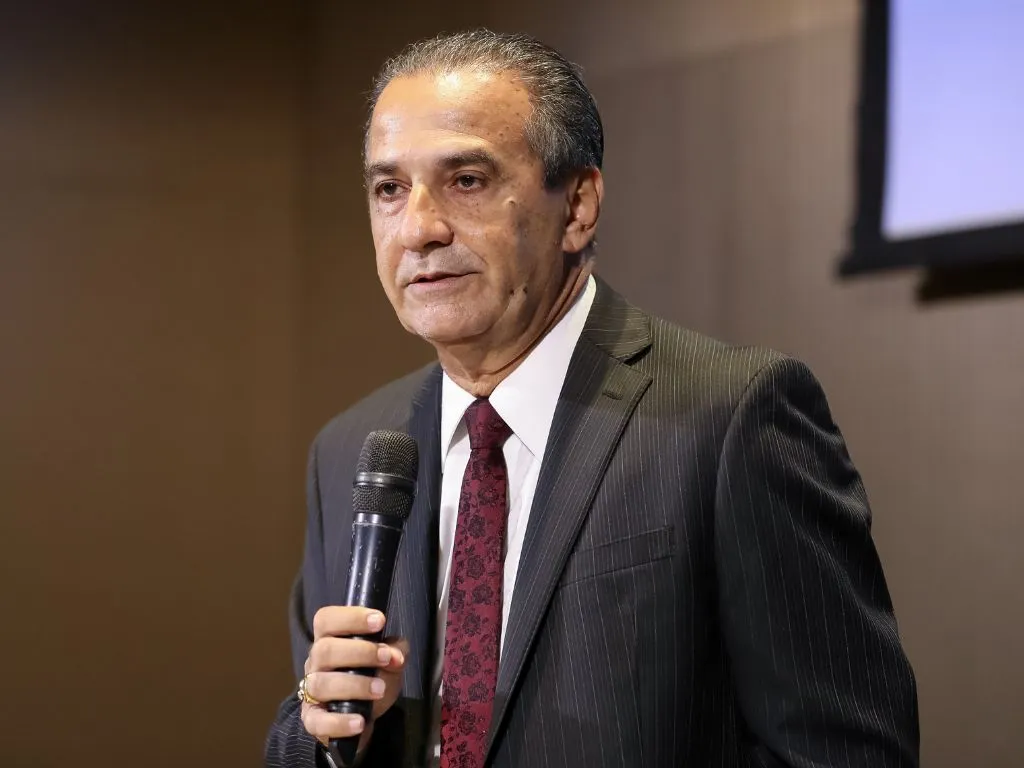
Silas Malafaia, April 2019.
President of the Assembly of God Victory in Christ Church (ADVEC) since 2010, Silas Malafaia leads a religious empire that has grown from 20,000 to 200,000 members, with 150 churches across Brazil and a headquarters in the Penha neighborhood of Rio de Janeiro that can accommodate 6,500 worshippers. In addition to heading the Central Gospel publishing house and the Victory in Christ ministry, he serves as vice president of the Interdenominational Council of Evangelical Ministers of Brazil (CIMEB).
Malafaia maintains a close political and personal relationship with Jair Bolsonaro: he officiated Bolsonaro’s wedding to Michelle Bolsonaro and says he communicates with the former president almost daily to offer advice. His level of influence prompted researcher Brunno Pacini—producer of Petra Costa’s award-winning documentary Apocalypse in the Tropics—to describe him as the main political “puppet master” behind Bolsonaro. Malafaia openly maintains that “we evangelicals decide elections” and predicts that evangelical Christians will represent more than 50% of Brazil’s population by 2032.
In the political and media spheres, he has used his social media platforms to launch fierce attacks against Luiz Inácio Lula da Silva, describe Supreme Federal Court Justice Alexandre de Moraes as a “dictator in robes,” and cast doubt on the transparency of electronic voting machines by claiming that hackers can compromise their computer systems.
On the judicial front, the Office of the Prosecutor General (PGR) filed a complaint against him before the Supreme Federal Court (STF) for slander and insult against Army Commander General Tomás Paiva. The complaint followed a public event in São Paulo where Malafaia called military leaders “weak, cowardly, and negligent” (frouxos, covardes e omissos). Malafaia requested dismissal of the complaint, arguing that his criticism was general and that he later retracted his remarks.
Regarding his wealth, he strongly rejected a 2013 Forbes report that ranked him as Brazil’s third-richest pastor, with assets worth $150 million. He maintained that his wealth amounted to approximately 6 million reais. Later, he released a 26-minute video responding to the investigative report O império invisível de Silas Malafaia (The Invisible Empire of Silas Malafaia), denying that he had enriched himself through the church. He defended his middle-class background, emphasizing that his father served as a Navy officer and seminary rector, his mother worked as an educator, and he attended the prestigious private Miguel Couto Bahiense school.
Valdemiro Santiago
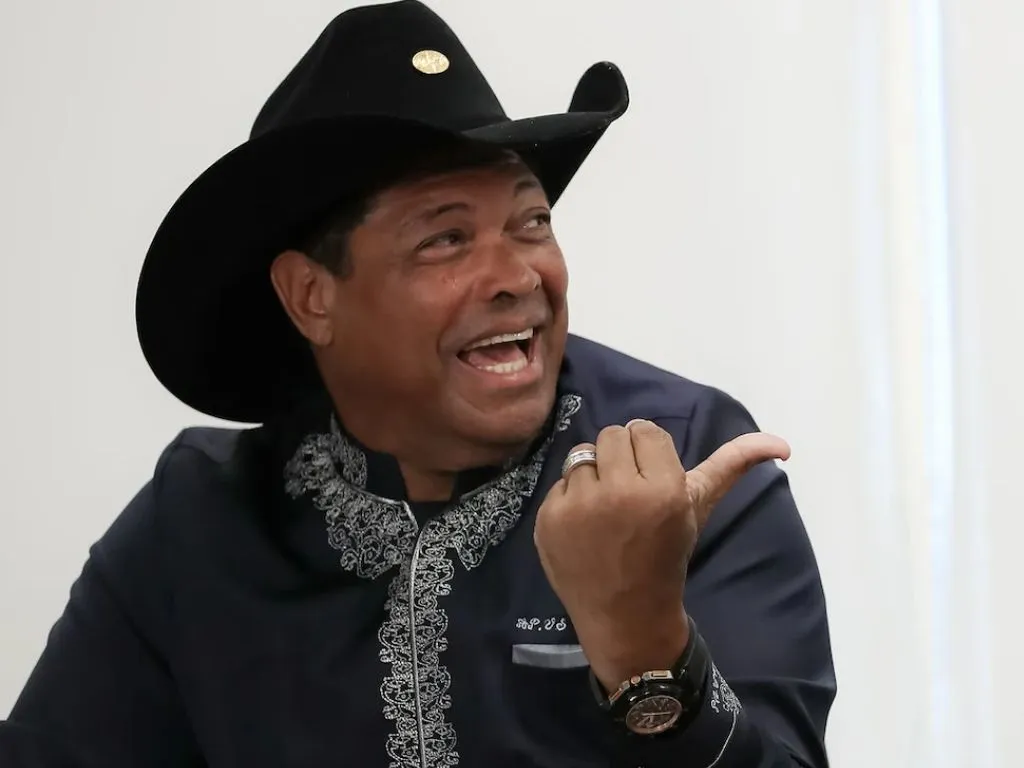
Valdemiro Santiago, 2019.
Founder and leader of the World Church of God’s Power since 1998—after breaking away from the Universal Church of the Kingdom of God—Valdemiro Santiago is a prominent Neo-Pentecostal televangelist. His church has hosted events expressing political and institutional support, including public tributes attended by Senator Flávio Bolsonaro, Governor Tarcísio de Freitas, and Supreme Federal Court (STF) Justice André Mendonça, who sent a recorded message thanking the church for its prayers during his Senate confirmation process.
During the 2020 pandemic, Santiago sold bean seeds for as much as 1,000 reais each, claiming that their germination could cure coronavirus infections. The Federal Public Prosecutor’s Office (MPF) filed a public civil lawsuit seeking at least 300,000 reais in compensation for moral and collective damages, accusing him of fraud and abusive exploitation of religious freedom. The church’s legal defense argued that the seeds represented a biblical “figure of speech” intended to encourage voluntary donations. The MPF also sued the Ministry of Health after the ministry removed, without explanation, an official warning from its website identifying Santiago’s claims about the beans as fake news.
Santiago accumulated 15 first-instance court rulings against him in fewer than 30 days before the São Paulo Court of Justice (TJ-SP), involving debts exceeding 2.5 million reais in unpaid rent for properties housing churches and parking facilities. One case involved a business owner in Mogi Guaçu who claimed 381,000 reais. In 2021, a court even ordered the seizure of Santiago’s personal assets to cover outstanding debts in Sertãozinho. The church attributed its financial difficulties to a drastic decline in revenue following the pandemic.
The São Paulo Civil Police launched an investigation into a commercial dispute involving approximately 60 million reais between the church and businessman Sebastião Miranda (“Tiãozinho”) over the television retransmission of the religious network through SM Comunicações. The case escalated into allegations of falsified information concerning operating licenses before the National Telecommunications Agency (Anatel).
Samuel Ferreira
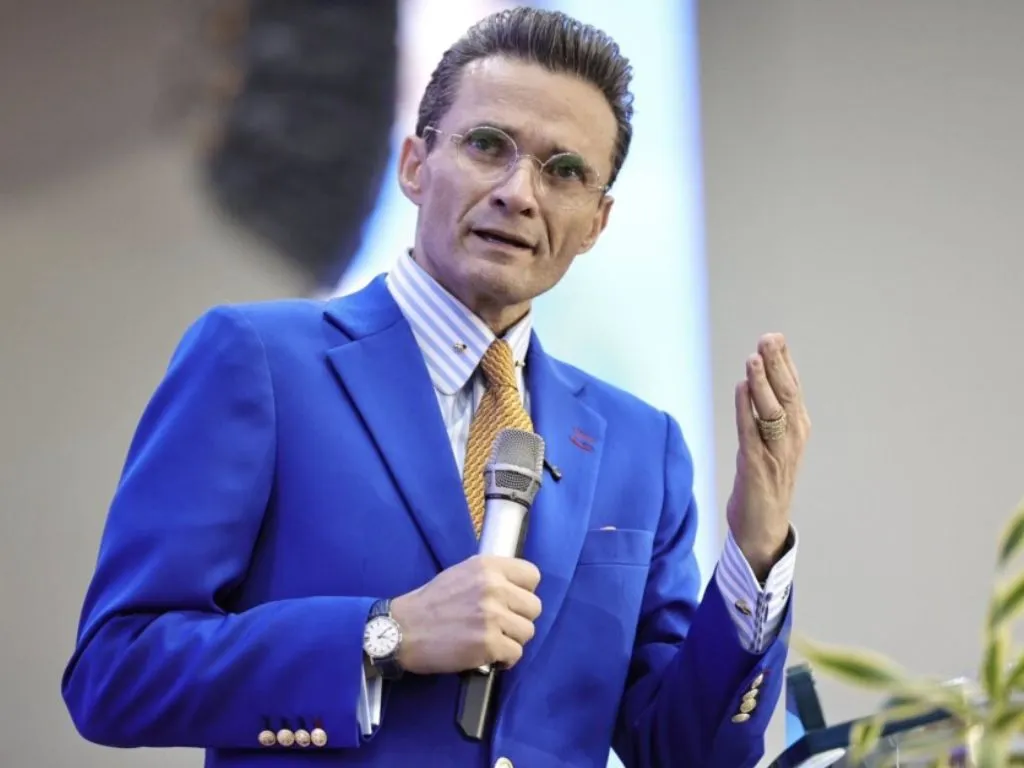
A bishop who leads the Assembly of God Ministry of Madureira (AD Brás) in São Paulo and serves as executive president of the National Convention of the Assemblies of God in Brazil (CONAMAD), Samuel Ferreira is an influential religious leader, author of several books, and member of the Brazilian Evangelical Academy of Letters. Together with his father, Presiding Bishop Manoel Ferreira, he formalized CONAMAD’s institutional endorsement of Jair Bolsonaro’s presidential candidacy.
In the judicial sphere, preliminary investigations into financial transactions involved his name. However, the competent courts—including a 2025 ruling by the Regional Electoral Court of Rio de Janeiro (TRE-RJ)—ordered the definitive closure and dismissal of the investigations after determining that they lacked sufficient legal grounds. As a result, Ferreira received full exoneration, without facing any formal charges or convictions.
In October 2025, Lula welcomed Ferreira to his office, describing their meeting as a “special encounter of emotion and faith.”
José Wellington Bezerra da Costa
General superintendent of the Assemblies of God and leader of the Ministry of Belém congregation in São Paulo—which has more than 400,000 members—José Wellington is one of the most traditional figures in Latin America’s historic Pentecostal movement. For more than three decades, from 1980 to 2017, he presided over the General Convention of the Assemblies of God in Brazil (CGADB), an organization currently headed by his son, José Wellington Costa Júnior.
Under his leadership, he promoted organizational alignment between the Assemblies of God, social conservatism, and Jair Bolsonaro’s political agenda. Nevertheless, his figure sparked internal controversy: on the occasion of his 90th birthday, the inauguration of a memorial space featuring a commemorative bust bearing his likeness divided worshippers. Some members criticized the statue on social media, arguing that it bordered on practices of veneration and idolatry incompatible with evangelical tradition.
André Valadão
President of the Lagoinha Baptist Church (Lagoinha Global) since 2022, André Valadão is a prominent pastor, composer, and contemporary Christian music singer. His earlier career with the group Diante do Trono earned him two Latin Grammy nominations.
Valadão embodies a branch of Neo-Pentecostalism that focuses on young audiences, mass media, and social networks. Through his digital platforms and ministries, he has expressed firm support for Jair Bolsonaro’s conservative political project, centering his discourse on defending the traditional family, rejecting abortion, and explicitly opposing the progressive agenda and the Workers’ Party (PT).
Evangelical christianity in Brazil
The exponential growth of evangelical Christianity in Brazil reflects the profound social and urban transformations the country has experienced since the late 20th century. In the metropolitan outskirts of cities such as São Paulo and Rio de Janeiro, evangelical churches now outnumber educational institutions and bank branches. These churches have assumed a decisive community role, providing networks of social support and integration amid unemployment, addiction, and urban violence.
Two key elements underpin the conceptual foundations of Neo-Pentecostal growth:
Independent leaders from marginalized urban communities, such as Pastor Cosme Felippsen, emphasize that while historic Protestant churches maintained rigid structures, Neo-Pentecostalism uses a direct narrative closely tied to the everyday experiences of favela residents, where believers perceive active, continuous spiritual interaction.
Drawing on religious currents imported from and influenced by the United States, this doctrine views economic progress, social mobility, and personal success as tangible evidence of divine blessing. This perspective resonates with free-market values and entrepreneurship, aligning broad segments of the working class with right-wing political proposals.
Despite the notable predominance of conservative views, evangelical voters do not constitute a monolithic bloc. Groups such as the Evangelical Front for the Rule of Law, led by Pastor Ariovaldo Ramos, coexist with pastors from marginalized communities who actively support social assistance programs such as Bolsa Família and Minha Casa, Minha Vida. These groups endorse progressive political alternatives because they can improve living conditions for the most vulnerable populations.