Venezuela Does Have a Solution: A Plan to Rebuild the Nation Already Exists
Audio: https://clyp.it/lyeszep5
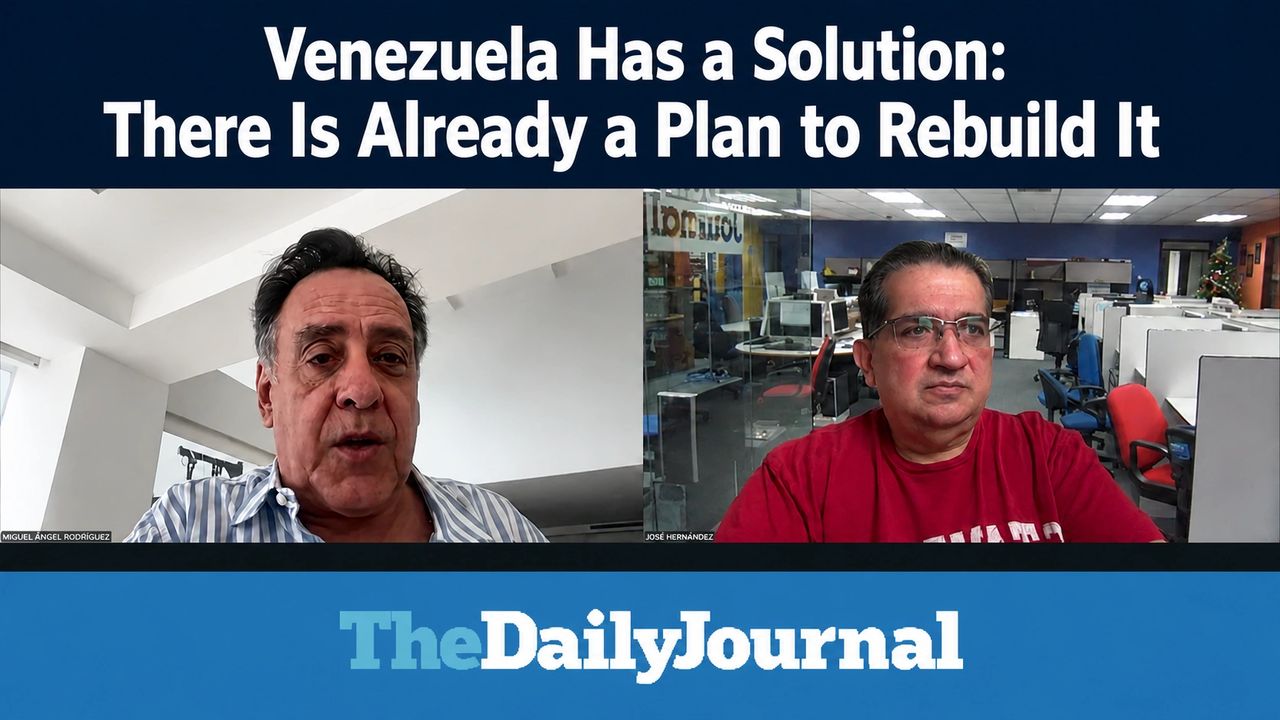
Julio A. López, editor in chief. — Roberto Smith Perera does not belong to the group of improvisers who usually emerge during times of national crisis. Smith earned a degree in Mathematics from Simón Bolívar University and a doctorate in Public Policy from Harvard University. He built a career that combines academic expertise, public administration, and private entrepreneurship. He served as Venezuela’s minister of Transportation and Communications, ambassador to the European Union, architect of the economic program known as “El Gran Viraje,” and founder of Digitel Venezuela and Digicel El Salvador. For decades, he has worked in infrastructure, telecommunications, energy, and economic development. Now he presents one of the most ambitious proposals for Venezuela’s future: a six-trillion-dollar national reconstruction plan outlined in his book First World Venezuela.
In an exclusive conversation, Smith argues that Venezuela cannot escape its crisis through partial reforms or limited political agreements. In his view, decades of institutional deterioration now require a complete redesign of the state and the economy.
“Gradualism does not work for a country that has institutional collapse destroyed,” he says. “You cannot rebuild Venezuela while keeping intact the same judicial, electoral, and administrative structures that caused the collapse.”
Smith argues that Eastern Europe’s experience after the fall of communism offers crucial lessons for Venezuela. He specifically mentions Estonia, Lithuania, Hungary, and Poland, countries that carried out simultaneous and profound political and economic reforms.
“Countries that implemented partial changes failed. Countries that executed simultaneous transformations achieved takeoff,” he explains. “Poland multiplied its economy several times because it quickly established new institutional rules, economic openness, and legal stability.”
In his vision, Venezuela needs a “constitutional reset” that rebuilds the judicial system, tax structure, security forces, and economic framework under entirely new operating rules.
That vision shapes First World Venezuela, an 800-page document that describes a ten-year national transformation based on private investment, economic openness, and institutional reconstruction. The plan seeks to mobilize approximately six trillion dollars across fourteen strategic sectors, ranging from energy and telecommunications to artificial intelligence, healthcare, education, and infrastructure.
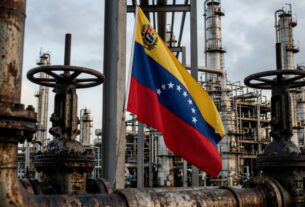
The proposal’s financial core rests on Venezuelan oil and gas. Smith openly rejects the historical narrative that labeled oil as “the devil’s excrement” and argues that energy wealth represents the very tool capable of financing the country’s reconstruction.
“Venezuela possesses the world’s largest proven oil reserves and one of the largest gas reserves in the Western Hemisphere,” the document states. Smith believes those resources can transform the country into “the Dubai of Latin America” if Venezuela combines institutional stability, international capital, and strategic alliances.
During the interview, Smith repeatedly stressed that reconstruction cannot move forward sector by sector or through isolated programs. He points to the creation of Digitel as an example, since the company required hundreds of millions of dollars in simultaneous investment in networks, stores, technology, and personnel.
“You cannot build a country by first building highways and then thinking about universities,” he explains. “National transformation cannot happen in fragments.”
In education, Smith even outlines scenarios that would have seemed unrealistic for Venezuela only a few years ago. He mentions the possibility of developing world-class universities funded by energy revenues, drawing inspiration from models at Texas A&M and academic projects in Saudi Arabia and the United Arab Emirates.
The plan also dedicates extensive sections to the geopolitical role Venezuela could play in a new hemispheric landscape. Smith believes the United States is now redefining its global strategic priorities and seeking to strengthen its economic and energy presence across the Western Hemisphere.
“The Western Hemisphere has once again become a strategic priority for the United States,” he argues. “And Venezuela can become one of its main energy partners.”
“The opportunity exists,” he says. “But strategic windows do not remain open forever.”