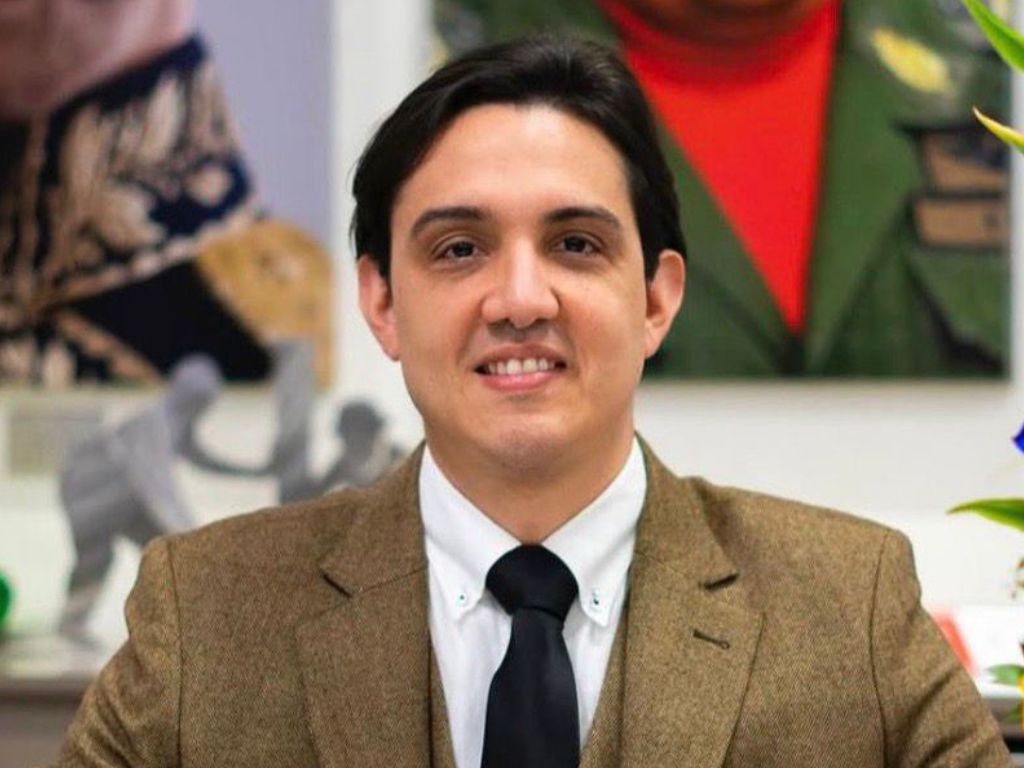
The Daily Journal.- The interim president of the Central Bank of Venezuela ( BCV), Luis Pérez, described the launch of the renegotiation of the country’s external obligations as a fundamental step that brings the nation “out of the shadows” in international markets.
In an exclusive interview with the Reuters news agency, Pérez explained that the process is primarily aimed at “alleviating” the burden of financial obligations that the State and state oil company PDVSA have been in default on for nearly a decade.
The head of the issuing authority expressed optimism regarding the global reception of the announcement, stating that “the entire planet is seeing with enthusiasm and goodwill that Venezuela has announced the process of debt restructuring and renegotiation.”
Although he avoided going into technical details, as those fall under the competence of the Vice Presidency for the Economy, Pérez emphasized the importance of re-establishing ties with multilateral organizations.
Reflecting on the institution’s recent past, the official was critical of previous isolation, saying: “Breaking relations with the International Monetary Fund should never have happened. It was a consequence of sanctions.”
In this regard, he confirmed that communication with the Fund is ongoing and that, so far, IMF authorities “have not requested additional information from Venezuela beyond statistics on prices, the external sector, among others.”
On the economic front, Pérez projected a recovery outlook, stating that Gross Domestic Product (GDP) “will grow close to 8% this year,” alongside a slowdown in inflation to single digits.
According to BCV data, the first quarter already showed a 2.5% rebound, despite the oil sector contracting by 2.1%, a decline that was offset by stronger non-oil activity.
Finally, the BCV president highlighted Washington’s role in the new scenario, noting that there is a “permanent dialogue with the Treasury Department” linked to the custodial account for oil revenues.
“The United States is playing a very important role, just as it played a role in the restrictions. It is impossible for the U.S. government not to also play a leading role in lifting the restrictions,” Pérez concluded.