By Julio A. López, Editor-in-Chief
Listen to the editorial audio here: https://clyp.it/rxqltryn
Caracas, June 14, 2026 – Against all odds, and despite the doubts—and even the refusal—of some of the largest U.S. oil companies to invest $100 billion in Venezuela’s oil industry following President Donald Trump’s call, investment funds have moved to the front of the race and have begun to assume the leadership position that major multinational corporations should have taken.
The reopening of Venezuela’s energy sector is triggering intense competition among investment funds, oil companies, and international financial groups seeking to secure a position in what many consider one of the largest energy opportunities in recent decades. U.S. firms already have advanced financial structures designed to acquire and develop Venezuelan oil assets.
Among the most significant developments, Miami-based Lionheart Capital plans to merge its publicly traded affiliate, Lionheart Holdings, with Keo Energy, which holds an interest in oil assets in the Maracaibo Basin. If the transaction proceeds, the deal will create the first Nasdaq-listed company to offer U.S. institutional investors direct access to Venezuelan oil assets.
The transaction could value the new company at approximately $1 billion.
The centerpiece of the transaction is PetroUrdaneta, a company that operates onshore oil fields in western Venezuela. Although it currently produces fewer than 2,000 barrels of oil equivalent per day due to decades of underinvestment, investor documents project production of approximately 54,000 barrels of oil equivalent per day by 2029 if the company secures the required capital and technology.
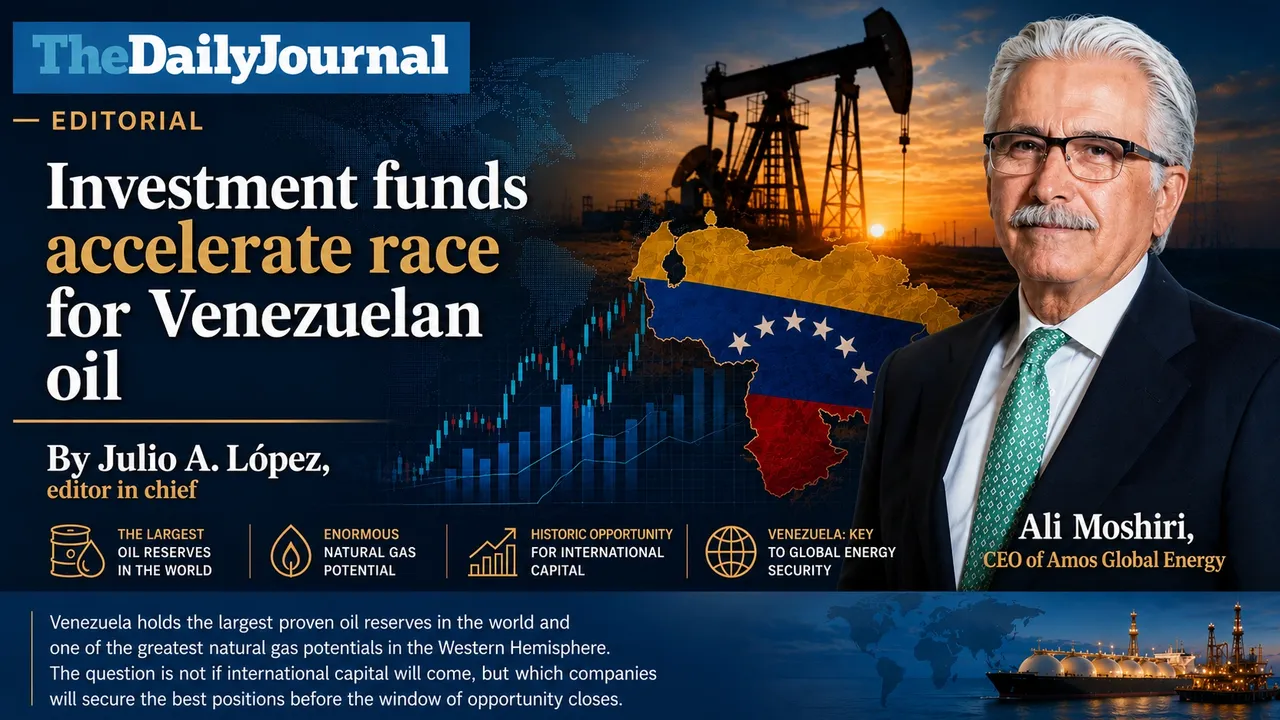
One of the figures attracting the most attention is Ali Moshiri, who confirmed that his fund, Amos Global Energy Management, seeks to raise $2 billion to invest in multiple Venezuelan oil assets. Since January, Moshiri has indicated that the fund already had specific investment targets and that institutional investors showed strong interest in the opportunity.
The enthusiasm extends beyond oil. Financial groups with ties to the United States have also begun creating funds focused on infrastructure, telecommunications, agriculture, and real estate. Among them is Intrépida, a fund backed by Grupo Cisneros that seeks to channel international capital into sectors beyond mining and hydrocarbons.
Geopolitical developments also influence investment decisions. Several executives interviewed by the Financial Times stated that uncertainty in the Middle East has increased Venezuela’s strategic appeal as a potential energy supplier for Western markets.
For many investors, the equation remains simple: Venezuela holds the world’s largest proven oil reserves, infrastructure that investors can restore, and growth potential few energy markets can match. The question no longer appears to be whether international capital will arrive, but rather which companies will secure the best positions before the window of opportunity closes.
Venezuela’s immense natural gas reserves add to the country’s oil potential. Offshore fields lie close to the natural gas processing and liquefaction facilities of Trinidad and Tobago, where companies such as Shell and BP operate. This potential gains even greater strategic importance as Europe watches a decline of nearly 30 percent from historical gas reserve levels and seeks to diversify and strengthen its energy supply sources.
In a world shaped by geopolitical uncertainty, conflict in the Middle East, and growing competition for energy security, Venezuela once again occupies a privileged position on the global hydrocarbons map. The combination of the planet’s largest proven oil reserves and one of the largest natural gas potentials in the Western Hemisphere makes the country a key factor in the stability of future energy markets. The real question is no longer whether international capital will reach Venezuela, but whether Venezuelans will stand ready to transform this historic opportunity into prosperity, employment, and sustainable development for future generations.