By Dr. Juan Barreto.— Day breaks. The night was no excuse for dozens of hands to join together, tearing through the concrete to find life again. Politics means joining forces to lift the rubble. The only ideological difference lies in the capacity for self-sacrifice and the unwavering spirit of those who stubbornly fight against tragedy—or of those who choose to profit from it.
Differences lie buried beneath the ruins; the pettiness of grandiloquent speeches, filled with shouting and slogans, is like the dust the breeze mistakes for the smell of decay. Hands dig through the rubble; the abstract concepts manipulated by sociologists slowly begin to take shape across the map of the ground. There stands society, the Venezuelans, those who exist in statistics only as numbers.
Tragedy unites and stirs everything together; it is the harsh reality that creaks and the tragedy that seeps into the bones. God, so many hands are thirsty, torn open by jagged slabs of concrete and shards of glass, yet they neither complain nor ask for help. They stubbornly persist, trying to find life in order to defeat tragedy. The night has passed. Dawn is about to break—but what does it matter? Who is keeping count?
Sergeant Martínez is a retired veteran firefighter who lives on a pension that does not even cover the cost of the transportation he needs to collect it. He is a veteran of the Arrecife tragedy and the 1999 Vargas mudslides, and he carries many other battles on his skin. He earns his living as a gardener. He is there. He is already an old man, yet he still possesses the strength of honest resilience and the courage of someone who loves life. That is why he does not fear leaving his own life on the ground. He knows how to look pain in the face and defeat it. Tragedy is his calling.
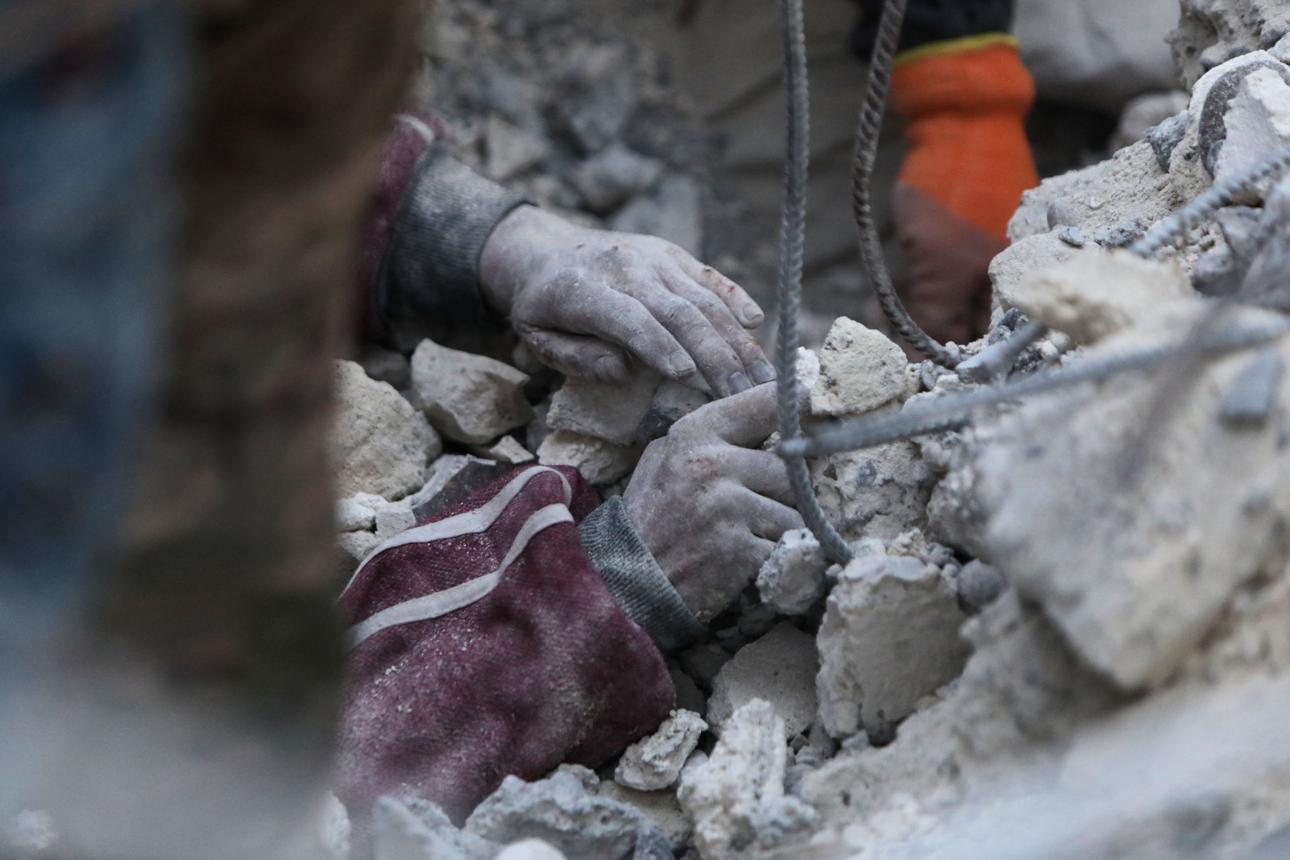
The neighbors drew him to ground zero as though by a magnet, and there he stands, his back bent, the tips of his fingers serving as his only tools. The calluses on his hands are his gloves, and the raw flesh of his bleeding fingers is the only protection for his bones. But that no longer matters. With his fading strength, he keeps breaking through the rubble. He has been there since the previous day. Now and then, someone walks by and gives him a sip of water.
People look at him with respect—the kind of respect earned by those whose presence commands silence. The sharp edges of the rebar, the glass, and the concrete have also torn into his legs. Twice, he has stepped the wrong way and tumbled down an embankment that collapsed like a mille-feuille pastry sliced apart by a knife. He is “the official aid” on the ground. He tells the others, “Be very careful. You cannot trust the concrete.” Then he goes back to digging in silence, and now and then he breaks that silence with another brief remark, always looking out for everyone else. His voice has become hoarse, strained.
Martínez does not eat; he no longer knows how long it has been since he last ate. Now and then, his stomach receives nothing more than a little black coffee—bitter and cold—and a silent rage mixed with the sorrow of so many tragedies endured and so much accumulated neglect. He is one of those who has given his life for others without expecting anything in return. What does he have left? An empty stomach, a weakened body, and yet another tragedy before him that he must defeat, just as the heroes who will never be recognized always do.
Don Quixote was mad; this man is far too sane, and that is unbearable. He is dehydrated to the limit, yet he does not collapse. He no longer even sweats. His skin has become a crust of mud and dried sweat that blends him into the Dantean landscape of a hell that suddenly opened before everyone’s eyes.
Suddenly, from the middle of the mountain of rubble, a cry rings out: “Over here! Over here! Over here!”
An army of zombies, digging through the debris mechanically, moves toward the sound of the shouting. They are civilians, elderly reservists, young men in T-shirts and shorts, wearing flip-flops, neighborhood boys carrying buckets full of dirt, breaking the concrete inch by inch with their bare hands, with a homemade hammer, or with a piece of rebar.
“Yes! Over here! We can hear something here!”
Like a relentless yet calm general, the firefighter fixes his gaze on the spot where the muffled cries are coming from. There are no megaphones here. There are no computers. There are no ministers giving orders. There is no rescue equipment. The State? The Government? The Party? Those are forgotten concepts that are nowhere to be found on the ground. They do not exist here. What does exist is resistance—the people who are organizing themselves. Reality’s desert has spoken.
Those who fight are the true owners of the streets. Every piece of bureaucratic jargon lies buried beneath the rubble of tragedy. The abuse of petty local power has vanished, swallowed by the cracks of the disaster. The official rhetoric of every political extreme has become an incomprehensible message buried beneath the dust of tragedy.
Yes, there is an official presence. A couple of National Police officers are trying to help however they can, but they have no clear direction. In their filthy uniforms, they try to keep curious onlookers away. There are also three soldiers, along with one National Guardsman. Someone left them there two days ago, and their orders are no clearer than anyone else’s. So they help however they can. People give them water and something to eat. They hand out supplies. They lend a hand.
“What are you doing here?”
“Well, we came to see what was happening, and we simply joined in. But we don’t know what our orders are or where the commanders are.”
They are there because they are flesh and blood. Beyond the uniform, horror overwhelmed them as well, and they joined in as ordinary citizens, as orphans without an operational plan, trying to help among the rubble while letting life itself guide them. There is no central command here. There is only a veteran firefighter, the only authority everyone respects, the only rank earned in battle with bleeding hands. No one questions him. He is Sergeant Martínez. His dedication, his calling, his story are written beneath his fingernails—those fingernails he has already lost under so much rubble. He is a general without insignia, whose authority remains unquestioned in the midst of chaos.
Someone remarks, “Under a minister…”
The firefighter replies, “I don’t see him here holding a shovel.”
In the distance, half of a wall still stands. Another wall collapsed only halfway. One word remains visible: “Strong.” A few young men rest against it. The firefighter shouts, “Be careful! What’s left of that wall is about to come down!”
A few meters farther away lies the tourism of horror: human misery laid bare, displaying its morbid fascination while feeding the fleeting marketplace of images. Influencers wander through the devastation, trying to profit from views and followers by putting other people’s suffering on display.
A little farther on, Mrs. Carmen walks frantically, clutching a little blue shoe, size 32, as she searches for her son Jonayker. “His name is Jonayker. He was playing. I think this is his shoe. Haven’t you seen a little boy about this tall?”
A drizzle begins to fall, and the smell of decay grows stronger with every passing minute. People try to show their solidarity, but sometimes it is useless. How can anyone come to terms with the aftermath of everything that is happening without becoming reckless, without using other people’s pain as the backdrop for earning a like, monetizing horror? Tragedy tourism is an expression of social degradation and of the political spectacle to which the country has grown accustomed.
Suddenly, a gruesome image appears: an amputated limb, an exposed corpse, the spectacle of misfortune. Farther away, a little boy, about five years old, walks alone. He cries mechanically, one foot bare, his gaze lost. “My mommy… my mommy’s name is Carmen. My mommy must be around here.”
At last, a small police cordon arrives, but the officers look at one another without knowing what to do. They return to their patrol vehicles and drive away.
Amid the noise, a shout shakes the dust, and suddenly the damp air of the drizzle seems to split apart as if by a miracle. Someone raises a piece of cloth and yells, “Over here! Over here! Bring the pickaxes! Get the volunteers over here!”
Sergeant Martínez, guided by the instincts of a veteran firefighter, starts running. “Yes! Yes! Right here! You can make it all the way in. Dig a tunnel!” He tries to crawl inside himself, but he cannot fit. Then he finds a young man and tells him, “You go! You go! You can do it!”
Amid the clay and twisted steel, the young man squeezes into a narrow opening. Within a few minutes, that skinny, undernourished young man emerges carrying a bundle in his arms. It is a little girl. She is alive. She is about three years old. She is in shock. She blinks.
“Give her water!” the firefighter shouts.
The little girl coughs up a grayish dust that looks like ash, and the crowd erupts in a muted cry of jubilation—a mixture of tears, relief, and pure celebration. Time stands still. Every hour and every drop of sweat suddenly makes sense. The little girl passes from hand to hand among the rescuers as they shout, “An ambulance! An ambulance!”
And no, there is no ambulance. But there are two nurses and one paramedic. The young man wearing the torn FC Barcelona jersey has never been to Barcelona. The crowd congratulates him as though he were a footballer who had just scored the winning goal. He does not look for cameras or cell phones. A smile of surprise and satisfaction slowly spreads across his face. He sits down on a rock and begins to cry. He asks for a drink of water, wipes his face with his dirty hand, and takes a deep breath.
He is an anonymous hero who will never make the headlines. He has been baptized by the mud and by the moment in which life suddenly finds its meaning. He will be forgotten. But he will never forget. Relentless everyday life will return him to where he belongs. He, too, is a firefighter—but at a gas station. He has been unemployed since January. He was on his way home when the earthquake struck, and he stayed behind to help rescue people because he was afraid of getting home and finding nothing left.
He does not know whether, when he finally gets there, he will still have a home, a family, or whether his refrigerator will be empty. He lives in poverty every single day. But now he is an anonymous hero who will forever carry within him the satisfaction of having risked his own life by thrusting his hands into hell to save an innocent little girl.
In the distance, a rumble rises, followed by a cloud of dust. Someone shouts, “The Americans! The Americans are here!”
Some people forget everything that just happened and run excitedly to welcome the foreigners. Víctor—that is the young man’s name, the one who has just pulled the little girl from the rubble—remains still. The firefighter walks over, sits beside him, and hands him a little water.
“And the little girl?” Víctor asks.
“They’ve already taken her away,” the firefighter replies.
“Well… I think we’re finished here.”
Sirens begin to wail. The thunderous roar of the aircraft landing nearby feels like another earthquake, bringing down the last remaining section of the wall that had still been standing.