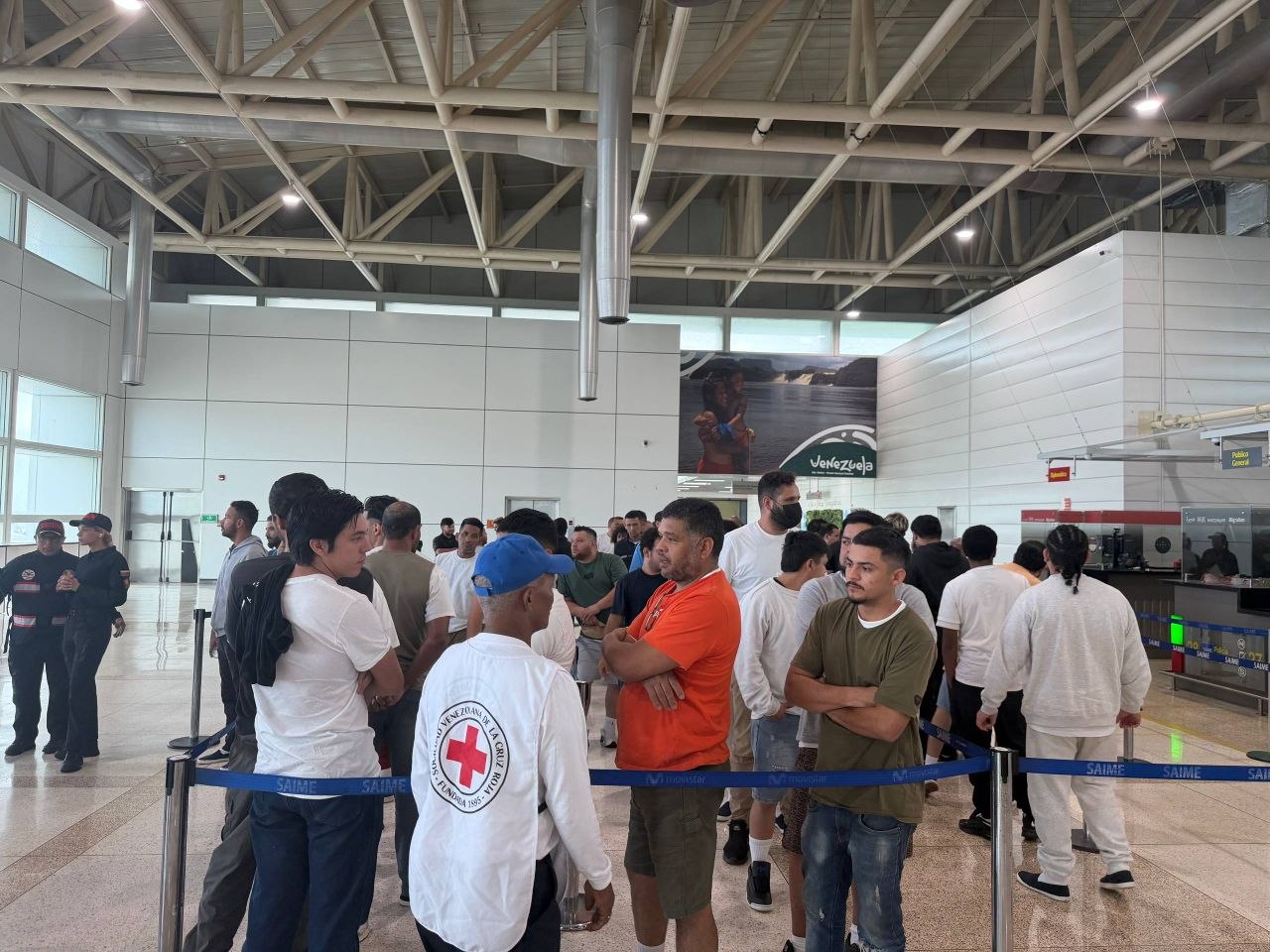
The Daily Journal.— The morning of Wednesday, June 24, began with images of relief. A video released by Melvin Maldonado, head of the official migrant repatriation mission, showed a group of Venezuelans who had just arrived after U.S. authorities deported them walking through Simón Bolívar International Airport in Maiquetía. They were the passengers on Flight 164 from Miami: men, women, and children who had just returned home after spending time in immigration detention centers in Texas, Georgia, or Florida.
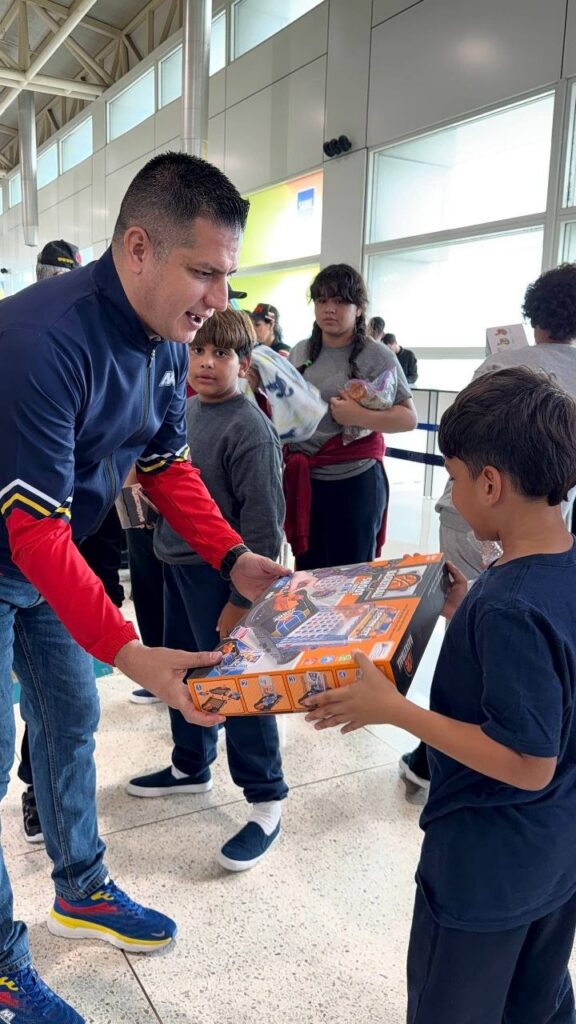
Melvin Maldonado, head of the Return to the Homeland Mission
The official message conveyed optimism:
“Today, Wednesday, June 24, 2026, Flight 164 from Miami, Florida, landed with 146 compatriots: 120 men, 19 women, five boys, and two girls, all ready to begin a new chapter in their beloved homeland,” the mission posted on its official Telegram channel. The statement added that officials had welcomed the Venezuelans “with dignity,” following all protocols to ensure “a joyful reunion in our nation.”
No one imagined that, only a few hours later, many of them would find themselves in the worst natural disaster in Venezuela’s recent history.
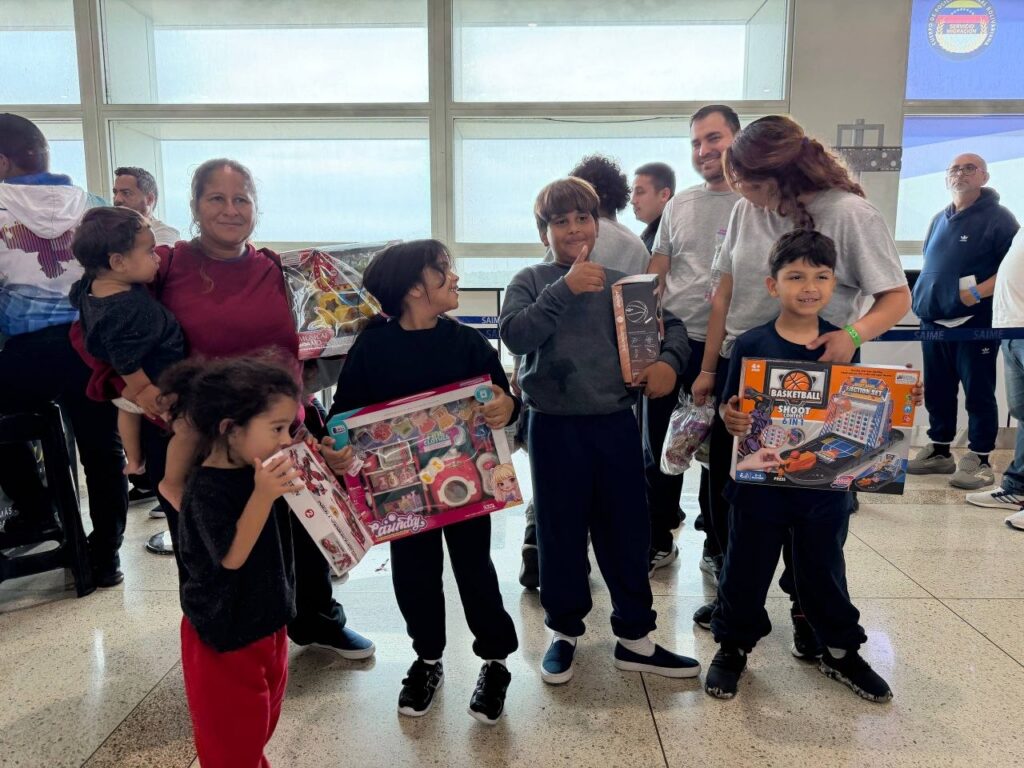
Seven children arrived on Flight 164 from Miami.
Their final destination was a Hotel in La Guaira
From the airport, officers from the Bolivarian National Intelligence Service (Sebin) escorted the deportees to the Hotel Santuario La Llanada in La Guaira state.
The building was not a conventional tourist hotel. Builders had erected it on a mountainside a little over half an hour from Caracas, and for decades it served as San Benito School. Later, the Negra Hipólita Mission used the facility to care for homeless people. During the COVID-19 pandemic, authorities converted it into an isolation center for travelers who arrived at Maiquetía Airport with COVID-19.
After Washington and Caracas resumed their deportation agreement, the complex became the first destination for Venezuelans returning from the United States.
The two earthquakes measuring 7.2 and 7.5 struck the country’s north-central region on the afternoon of June 24 and caught them there.
“They screamed for someone to open the doors”
Relatives of the survivors shared the first accounts of what happened inside the hotel.
Yulis Salcedo, the mother of one of the survivors, told local media that the migrants remained locked inside when the earthquakes began.
“They screamed for someone to open the doors because everything was shaking, but no one opened them. They left them locked inside as if they were thieves or killers.”
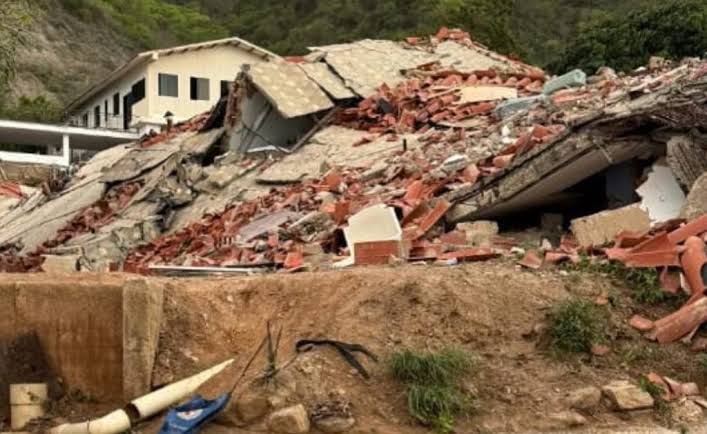
Hotel Santuario La Llanada
Her testimony became one of the first public allegations describing the conditions under which the deportees faced the collapse of the building.
So far, Venezuelan authorities have not responded publicly to those accusations.
A tragedy without a list of names
Seven days after the earthquake, the government still had not released an official list identifying those who died, survived, or remained missing from Flight 164.
Uncertainty forced dozens of families to visit hospitals, shelters, and the Bello Monte morgue in Caracas in search of answers.
Among them was Melany Toyo. Her cousin, Víctor Guanipa Toyo, 32, had arrived on the flight from Miami.
“The last and only communication we had from him came when he called his mother to tell her he had arrived in the country. That was the last thing we heard,” she told reporters gathered outside the morgue.
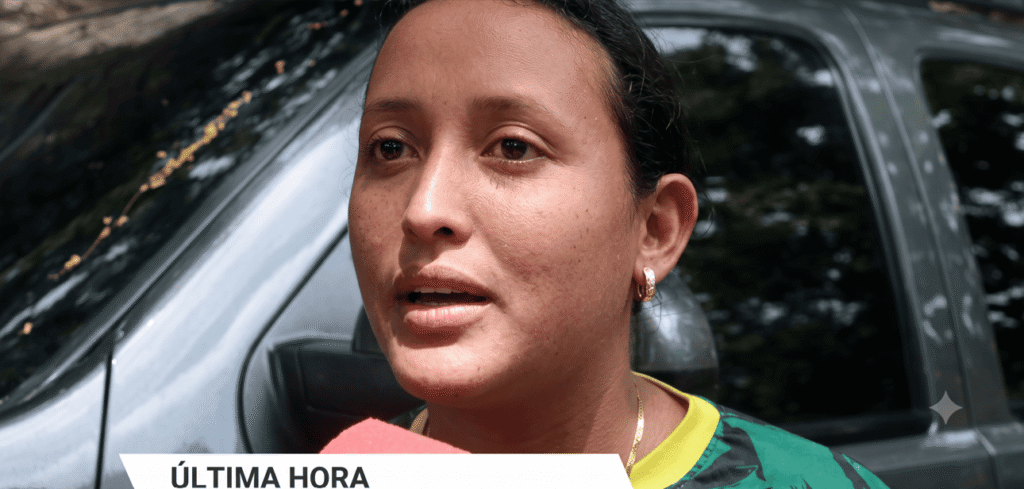
Melany Toyo speaks outside the Bello Monte morgue in Caracas.
She described the uncertainty families continued to endure.
“No one has a clear answer about what happened to the migrants who still haven’t been found.”
She also criticized the lack of official information.
“They are not providing truthful information. We came here looking for answers because there is a mother at home who cries while waiting to hear from her son, two children waiting for their father, and we truly need an answer, whether he is alive or hospitalized.”
According to her account, different government offices provided conflicting versions.
“Some say 16 survived; others say only the women survived.”
Thousands escaped. Others remained trapped
During Tuesday’s official briefing, Jorge Rodríguez, president of the National Assembly, said that approximately 30,000 people were in the areas of Caraballeda and Catia La Mar when the earthquakes struck.
He explained that between 13,400 and 13,500 people managed to leave the area on their own or with help from relatives during the first hours of the emergency.
Search operations rescued 6,461 people alive during the first six days.
Rescue teams saved the largest number of survivors during the first 48 hours: 2,407 on the first day and 2,973 on the second, after specialized teams from across the country and the first international rescue brigades joined the effort.
Rodríguez also reported that the earthquakes damaged 855 buildings nationwide. Among them, 189 collapsed completely, including 158 in La Guaira, the state where authorities had housed the newly deported migrants.
A return that turned into tragedy
For many of the passengers on Flight 164, returning to Venezuela was supposed to mark the end of a long journey through U.S. immigration detention centers and the beginning of a new life with their families.
Anderson Pérez, 33, who had been living in Montgomery, Alabama, called his family at four o’clock in the afternoon on June 24 to tell them that authorities would transfer him to his hometown of Barquisimeto the following day.
One week later, many of those same families continue searching hospitals, incomplete lists, and morgues for answers. At the same time, the government still has not released a specific report on the fate of these Venezuelans, who left their country to escape the crisis and whose forced return ended in tragedy.