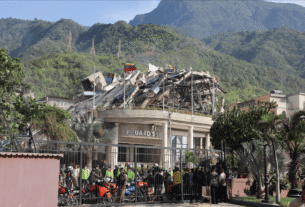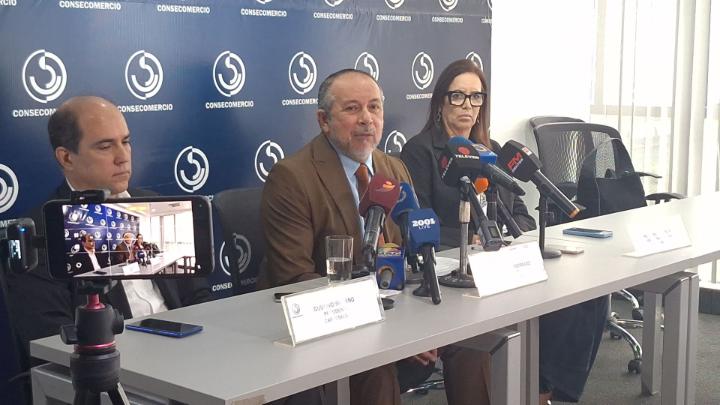
The Daily Journal.— Consecomercio has presented a legislative proposal to support Venezuela’s reconstruction following the earthquakes that affected several regions of the country. The proposal also calls for financial mechanisms and coordinated action between the public and private sectors to address the emergency.
In a statement, the business association said it submitted the draft Law for Assistance to Disaster Victims and National Reconstruction, titled “Ley Fuerza Venezuela” (Venezuela Strength Law). According to Consecomercio, the proposal draws on measures that Mexico implemented after the 2017 earthquakes.
The proposal includes a special credit program with preferential terms for businesses in the commercial sector to help revive economic activity and preserve jobs.
The draft legislation also calls for temporary tax relief for the sectors affected by the disaster. Consecomercio said rebuilding the country “will be a long, difficult, and demanding process,” making extraordinary public policies necessary to support the recovery of Venezuela’s productive sector.
As part of the initiative, the organization proposed establishing a public-private alliance cabinet to coordinate the planning, implementation, and monitoring of policies for infrastructure reconstruction and economic recovery.
Consecomercio also announced its membership in the Inter-Association Committee for Planning, Coordination, and International and National Assistance. According to the organization, the committee will promote establishing a trust fund to channel financial resources to areas affected by the earthquakes. Consecomercio added that an external auditor would oversee the fund to strengthen transparency and accountability.
Regarding financing, the business association reiterated its request for the release of Venezuelan assets frozen abroad, including funds held in the United Kingdom and Portugal, as well as the International Monetary Fund Special Drawing Rights (SDRs) allocated to Venezuela.
Consecomercio estimates the value of those assets at approximately $10 billion. The organization believes those resources could finance a substantial share of the country’s reconstruction needs, which it estimates at between $7 billion and $13 billion for infrastructure alone, excluding the broader economic impact on productive activity and gross domestic product (GDP).
The organization proposed placing those resources in a trust dedicated exclusively to rebuilding homes, hospitals, roads, and public services, while also supporting small and medium-sized businesses located in the regions most severely affected by the earthquakes.